 Ferndale
 Exterior Contracting for Custer, Washington
Custer sits in the rural stretch of Whatcom County between Ferndale and the Canadian border, close enough to the water that salt air is a real factor and far enough from town that a lot of homes here sit on larger lots with more exposed wall area, more open sky, and less wind protection from neighboring buildings or dense tree cover. That combination shapes how we think about siding, roofing, windows, and decks for this area. It's not a showroom look we're building for — it's a house that has to shed water for the next thirty or forty years without babysitting.
We work throughout Ferndale and the surrounding Whatcom County communities, and Custer gets the same crew, same materials, and same install standards as every other job on our schedule. There's no "rural discount" on workmanship. If anything, homes further from town need a tighter installation because a small problem left unchecked has more time to turn into a big one before anyone notices.
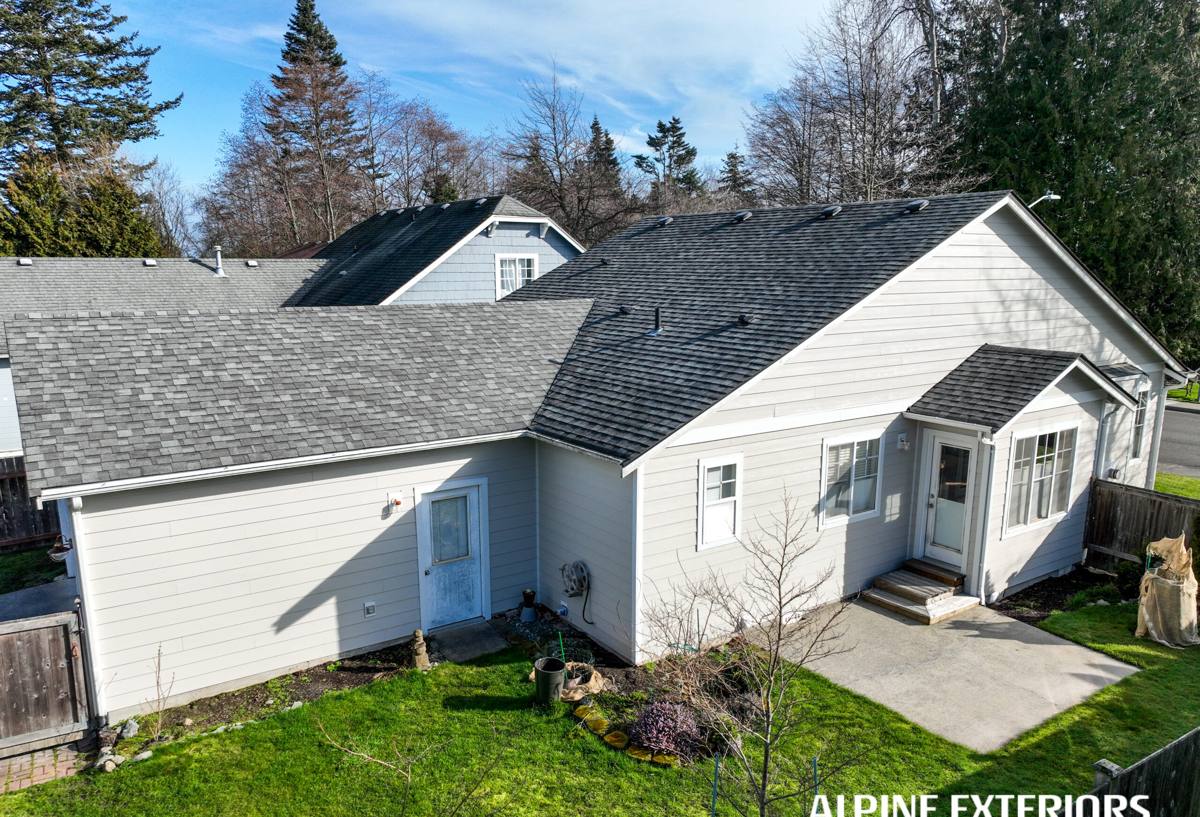
What the Climate Does to a Custer Home
Three things drive most of the exterior wear we see out here: salt air, driving rain, and a moss season that runs longer than most homeowners expect.
Salt Air
Proximity to Puget Sound and the Strait of Georgia means airborne salt reaches inland further than people assume, especially when it rides in on a west or northwest wind. Salt air accelerates corrosion on fasteners, flashing, and any exposed metal trim. It also degrades certain paint and coating systems faster than a purely inland climate would, which is part of why the factory finish on your siding matters as much as the siding material itself.
Driving Rain
Whatcom County doesn't just get a lot of rain — it gets a lot of wind-driven rain, which behaves very differently than a straight-down shower. Driving rain gets forced sideways and upward under laps, around trim, and into any gap in the water-resistive barrier that a calmer climate would never expose. Siding and window installations that aren't detailed for driving rain will eventually leak, even if they look fine from the curb.
Moss Season
Moss isn't just a roof problem here — it colonizes north-facing siding, shaded trim, and anywhere moisture sits without enough sun or airflow to dry it out. On a roof, moss lifts shingles and holds water against the surface, shortening its life. On siding, it holds moisture against the substrate and can stain or degrade materials that aren't built to handle sustained dampness. In Custer's more open, tree-lined lots, shaded north and east walls tend to see this first.
Siding: Why We Only Install James Hardie
We install James Hardie fiber cement siding exclusively. We don't install vinyl, LP SmartSide, Cemplank, Allura, primed spruce, or cedar, and that's a deliberate standard, not a lack of options.
- Vinyl can warp, crack, or fade under UV and temperature swings, and it relies on tight seams that driving rain can work its way behind over time.
- Wood products (cedar, primed spruce) look good going up but demand a maintenance schedule — recoating, caulking, spot repairs — that most homeowners underestimate, especially in a climate with this much sustained moisture and moss pressure.
- OSB-based siding (LP SmartSide) performs reasonably when installation is flawless, but any breach in the coating or a caulk joint that fails lets moisture into an engineered wood substrate that doesn't recover well from wetting.
- Other fiber cement brands (Cemplank, Allura) are legitimate products, but we've standardized on one manufacturer so our crews install one system to one spec, every time, with one warranty structure behind it.
James Hardie fiber cement is non-combustible, dimensionally stable, and comes with a factory-applied ColorPlus finish that's baked on and warranted against fading — which matters directly for salt-air exposure, since a factory finish holds up better than field-applied paint against airborne salt and UV. Hardie's HZ5 product line is engineered specifically for wetter, harsher climates like ours, and correctly installed with proper flashing, gapping, and drainage behind it, it's built to shed the kind of driving rain Custer sees every winter.
Roofing for a Long Moss Season
Roofing in this area is as much about moisture management as it is about the roofing material itself. We look at ventilation, underlayment quality, valley and flashing details, and how well the roof will drain and dry between storms — because a roof that stays wet longer is a roof that grows moss sooner and ages faster. On shaded or north-facing roof planes, which are common on the larger, tree-lined lots around Custer, we pay particular attention to airflow and drainage detailing during installation and repair, since those areas are the first to show moss and the last to dry out after a rain event.
Windows Built for Wind-Driven Rain
Window failures out here are rarely about the glass — they're about the flashing and sealant details around the window opening. A window that isn't properly flashed and integrated with the water-resistive barrier will eventually let driving rain behind the trim, and by the time you see a stain on an interior sill, water has usually been getting in for a while. We install and integrate windows with attention to head flashing, sill pans, and proper sealant joints so the assembly sheds water the way it's designed to, not just when the rain is falling straight down.
Decks in a Wet, Shaded Climate
Decks take a different kind of punishment: standing water on horizontal surfaces, ground-level moisture wicking up into structural framing, and moss or algae buildup on any deck surface that doesn't get consistent sun. On the larger, tree-shaded lots common in Custer, we pay close attention to board spacing, ledger flashing, and framing details that let air move and water drain, because a deck that traps moisture against wood framing is a deck with a shortened lifespan, regardless of how good the surface decking looks.
Comparing Exterior Materials for This Climate
| Material | Salt Air / Moisture Behavior | Maintenance Burden | Our Standard |
|---|---|---|---|
| James Hardie Fiber Cement | Non-combustible, factory-finished, engineered for wet climates (HZ5) | Low — occasional wash, no recoating cycle | What we install |
| Vinyl Siding | Can warp/crack with temperature swings; seams vulnerable to driving rain | Low, but limited repair options when damaged | Not installed |
| Cedar / Primed Spruce | Handsome but absorbs moisture; prone to moss and rot without upkeep | High — recoating, caulking, spot repair | Not installed |
| LP SmartSide (OSB-based) | Performs when coating is intact; vulnerable once breached | Moderate — coating inspection matters | Not installed |
| Other Fiber Cement (Cemplank, Allura) | Comparable material properties to Hardie | Low | Not our standard brand |
What Drives Cost on a Custer Exterior Project
Every property is different, but a few factors consistently move the price on jobs out here more than they might in a denser, in-town neighborhood.
- Access and lot size — larger rural lots can mean longer material staging distances and more linear feet of wall or roof to cover.
- Existing exterior condition — hidden moisture damage behind old siding or roofing adds scope once it's uncovered, which is common on older homes in wetter climates.
- Tree cover and shading — heavier shading on north and east walls or roof planes often means more moss remediation and drainage detailing work.
- Number of trades involved — bundling siding, roofing, windows, or decks in one project can reduce redundant mobilization and staging costs compared to hiring separate contractors for each.
- Material selection — siding profile, roofing type, and window grade all affect material cost independent of labor.
Why Hire a Local Crew
A contractor who works Whatcom County regularly knows what driving rain and a long moss season actually do to a house over time — not in the abstract, but from having repaired the results of installations that weren't detailed for it. That shows up in the small decisions: how flashing gets lapped, where a drainage gap gets left, how much slope a deck ledger needs. None of that is visible after the project is finished, which is exactly why it has to be right the first time. A local crew is also easier to reach if a warranty question or a storm-related concern comes up years down the road.
A Quick Homeowner Checklist
- Check north and shaded walls each fall for early moss or algae growth before it spreads.
- Look for staining or soft spots around window sills and trim after heavy wind-driven rain events.
- Keep gutters and downspouts clear so water isn't backing up against siding or fascia.
- Inspect deck ledger boards and framing annually for signs of trapped moisture.
- Ask any contractor bidding exterior work what specific product line and finish they're proposing, and why.
If you're in Custer and thinking about siding, roofing, windows, or a deck project, we're happy to come take a look and give you a straightforward, no-pressure estimate — no hard sell, just an honest read on what your house needs and what it would take to do it right.