 Ferndale
 What Primed Spruce Siding Actually Is
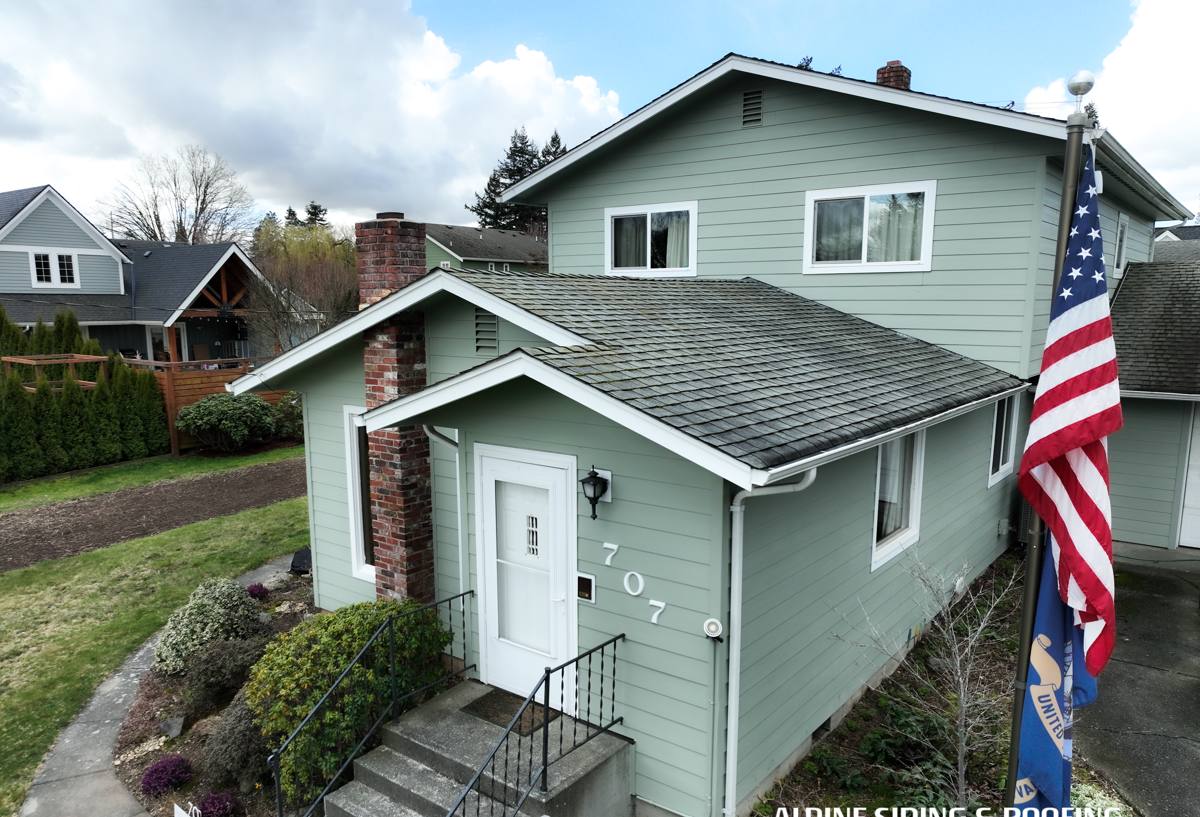
Primed spruce siding is solid wood — usually finger-jointed spruce or pine boards milled into lap or panel profiles, then coated at the factory with a basic primer before they ship. The primer is not a finished coating. It's a base layer meant to protect the wood for a limited window during transport and installation, with the understanding that the contractor or homeowner will apply real topcoats of exterior paint once the boards are hung. It's a real, time-tested building material, and a lot of homes in Whatcom County still wear it. That's exactly why we want to be straight with you about what it takes to keep it looking good and performing well here.
What Primed Spruce Gets Right
We're not going to pretend this product has no upside. Wood has a warmth and a traditional look that manufactured products still chase. A few things primed spruce genuinely does well:
- It's a natural, renewable material with a classic clapboard profile that fits older Ferndale farmhouses and craftsman-style homes.
- It's relatively easy to cut, fit, and repair in the field with standard carpentry tools.
- Upfront material cost is often lower than fiber cement or premium wood alternatives.
- It can be field-painted to virtually any custom color, since it isn't locked into a factory palette.
Where it runs into trouble isn't the material itself — it's what our climate does to it over years of exposure, and how much ongoing work is required to keep ahead of that.
Why Ferndale's Climate Is Hard on Painted Wood
Salt Air Off the Sound
Ferndale sits close enough to Bellingham Bay and the Strait of Georgia that salt-laden air reaches homes throughout Whatcom County, especially on west- and south-facing walls that catch the prevailing weather. Salt air accelerates the breakdown of paint films faster than it does inland, and once the film starts to chalk and thin, the wood underneath starts absorbing moisture at the surface.
Driving Rain
Our rain doesn't just fall straight down — Pacific storms push it sideways into siding, especially on two-story walls and anything facing the prevailing southwest wind. Lap siding depends entirely on its paint film and caulked joints to keep that driving rain out of the wood fibers. Any crack, pinhole, or worn spot becomes a direct path for water into end grain and seams.
A Long Moss Season
Shaded north walls, tree-lined lots, and the mild, wet stretch that runs from fall through spring give moss and algae a long runway to establish on any surface that stays damp. Once moss takes hold on painted wood, it holds moisture against the board around the clock, which is one of the fastest ways to start hidden rot behind an otherwise intact-looking paint job.
The Maintenance Reality: Paint Is the Whole Ballgame
With primed spruce, the paint film isn't a cosmetic choice — it's the entire waterproofing system. The wood itself has no meaningful resistance to moisture on its own. That means:
- Every cut end, notch, and drilled hole needs to be back-primed or field-sealed before installation, or it becomes an entry point for water.
- A full repaint cycle is typically needed every 5 to 8 years in our climate — sooner on sun- and salt-exposed walls, sooner still if the first paint job was rushed or under-coated.
- Caulked joints at butt seams, corners, and trim need regular inspection, since caulk fails well before paint does and is easy to miss from the ground.
- Any deferred maintenance compounds — a small crack that goes unpainted for one wet Whatcom County winter can turn into soft, rotted wood by the next.
None of this makes primed spruce a bad product. It makes it a product that requires an owner who's committed to a maintenance calendar for as long as they own the house. That's a real cost, even if it never shows up on a materials invoice.
Moisture, End Grain, and Rot
Solid wood siding moves with humidity — it swells when wet and shrinks when it dries out, cycle after cycle. That movement is what eventually opens hairline cracks in even a well-applied paint film, particularly along butt joints where two boards meet end to end. End grain is the weak point: it soaks up water many times faster than the face of the board, which is why butt joints and cut ends are almost always where rot starts on wood siding, not the flat field of the wall.
| Factor | Primed Spruce (Field-Painted) | James Hardie Fiber Cement |
|---|---|---|
| Moisture absorption | High at end grain and joints; swells and shrinks with humidity | Engineered to resist moisture-driven swelling and cracking |
| Repaint cycle in NW climate | Every 5-8 years, sooner on exposed walls | ColorPlus factory finish rated well beyond that interval |
| Rot risk | Real risk at cut ends, joints, and any paint failure point | Not organic material — won't rot |
| Pest vulnerability | Attractive to woodpeckers, carpenter ants, and moisture pests | Not a food or nesting source |
| Warranty structure | Typically material-only from the mill; workmanship separate | Long-term transferable warranty covering product performance |
This is the core of our decision. It isn't that primed spruce fails on day one — it's that the maintenance and moisture-management burden climbs every year it sits in a climate like ours, and the consequences of falling behind are expensive to fix.
Finger Joints, Movement, and Caulk Failure
Most primed spruce siding available today is finger-jointed — short pieces of wood glued end to end into a longer board before milling. It's an efficient use of lumber, but those glue joints are a second weak point beyond the paint film itself. Under repeated wet-dry cycling, finger joints can telegraph through the paint as faint lines, and in worse cases they can separate slightly, creating a hairline gap that traps water. You often can't see this happening from the ground; it shows up on close inspection, or worse, when a section of board comes off soft during a repaint.
Pests and Wildlife
Wood siding, primed or not, is still wood — and wood invites wood-eating and wood-nesting pests. Woodpeckers will go after softened, moisture-compromised boards looking for insects underneath, and once they start on a wall, the damage spreads. Carpenter ants and moisture-loving insects are drawn to any section where rot has already started behind failing paint. Fiber cement removes this category of problem entirely, since there's no organic material for pests to target.
Cost Over the Life of the Siding
Sticker price at installation tells only part of the story. When we walk homeowners through the real lifecycle cost, we look at three things: the install cost, the repaint/maintenance cost over 20-30 years, and the repair cost if maintenance falls behind even once.
| Cost Factor | Primed Spruce | James Hardie |
|---|---|---|
| Initial install | Often lower | Higher, reflects factory finish and product engineering |
| Repaint over 25 years | 3-5 full repaint cycles | None expected; ColorPlus finish is factory-baked |
| Rot repair risk | Real, especially if maintenance lapses | Minimal |
| Resale/appraisal perception | Varies with visible condition | Generally viewed as a durable, low-maintenance upgrade |
Over a 20- to 30-year ownership window, the repaint labor alone on primed spruce often adds up to more than the price difference would have been to install fiber cement in the first place — and that's before factoring in any rot repair.
Why We Install James Hardie Instead
We standardized on James Hardie fiber cement because it's engineered specifically to handle what wood struggles with: moisture cycling, coastal air, and long wet seasons without demanding a repaint every few years. Hardie's HZ product lines are climate-engineered for regions like ours, the ColorPlus factory finish is baked on under controlled conditions rather than applied on a ladder in variable weather, and it's non-combustible. Backed by a strong transferable warranty, it's the product we're willing to put our name behind on a Ferndale roof, wall after wall, without asking a homeowner to sign up for a repainting schedule to keep it watertight.
That's the whole reason we don't offer primed spruce, LP SmartSide, vinyl, Cemplank, Allura, or cedar as options — not because those products can't be installed correctly by someone, but because we'd rather install one product exceptionally well and stand behind it long-term than spread ourselves across materials we can't fully guarantee in this climate.
Questions Worth Asking Before You Choose Wood Siding
- Who is responsible for back-priming cut ends and drilled holes during install — and is that spelled out in the contract?
- What's the realistic repaint interval for this specific wall's sun and rain exposure, not just the general product spec?
- Does the warranty cover the wood itself, the factory primer, or only material defects — and who covers labor if a section rots?
- How will butt joints and corners be sealed, and how often should those seals be inspected?
- What does a deferred-maintenance wall typically cost to repair once rot sets in behind the paint?
If you're weighing wood siding against fiber cement for a home in Ferndale or elsewhere in Whatcom County, we're glad to walk your specific walls with you and talk through what each option really means for upkeep and longevity. Reach out for a free, no-pressure estimate — there's no obligation, just an honest look at what your home needs.