 Ferndale
 Siding in Blaine: A Different Set of Problems Than Inland Whatcom County
Blaine sits right on Semiahmoo Bay, a few miles from the Canadian border, and that location changes what a house's exterior has to deal with compared to a home ten miles inland in Ferndale or Lynden. Homes here get a steady dose of salt-laden air off the water, wind-driven rain that hits siding at an angle instead of just running down it, and a damp, shaded growing season for moss and algae that can stretch nearly year-round. None of that is exotic or rare — it's just the baseline for coastal Whatcom County — but it does mean the exterior materials and installation details that work fine on a dry inland lot can fail faster on a bluff-view or waterfront-adjacent property in Blaine.
We're a local crew that works across Whatcom County, and Blaine is part of our regular service area alongside Ferndale, Birch Bay, and the county's other coastal communities. That matters because siding, roofing, windows, and decks all have to be specified and installed with the site's actual exposure in mind — not a generic Pacific Northwest average.
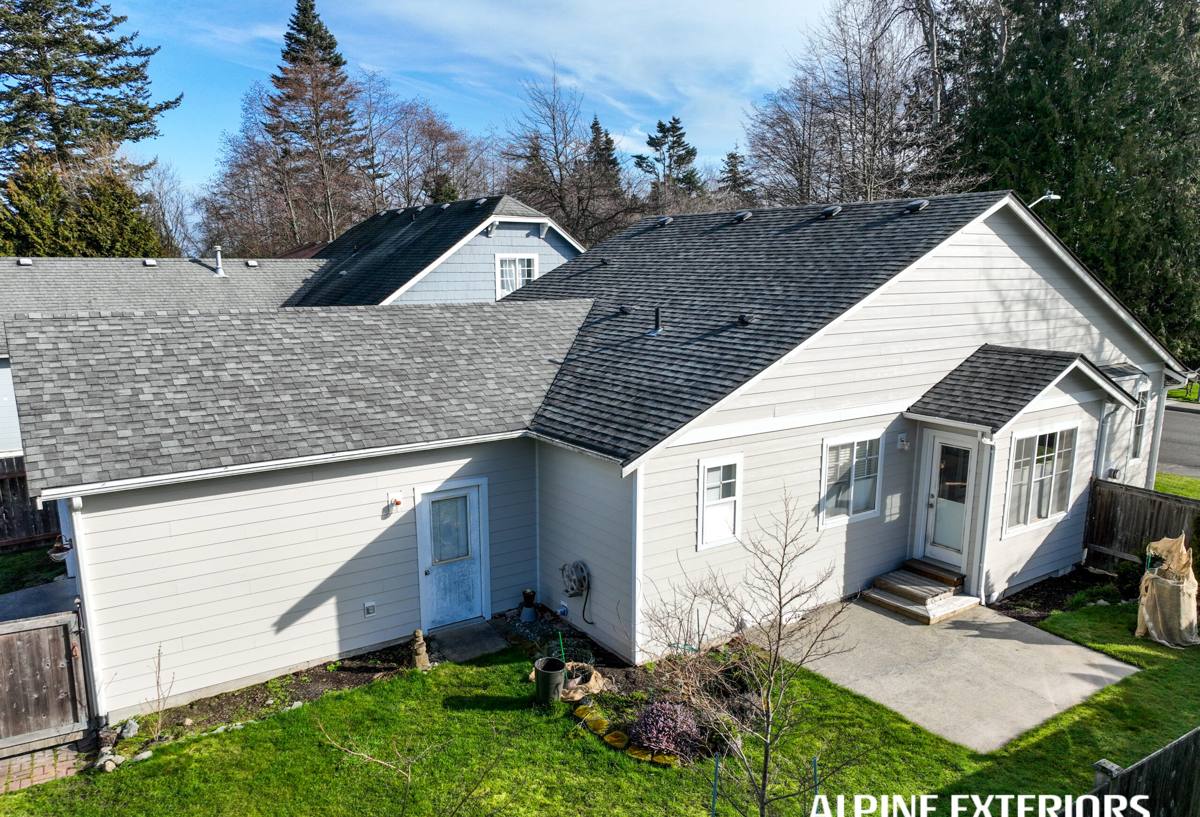
What Salt Air Actually Does to a House
Salt air is corrosive to exposed metal — fasteners, flashing, gutter hardware, light fixtures — and it accelerates the breakdown of anything with a weak factory finish. On siding specifically, the risk isn't that salt "eats" the material directly in most cases; it's that salt-laden moisture gets into joints, fastener heads, and any spot where the factory coating has been compromised, and then normal weathering does the rest faster than it would a few miles inland.
Where This Shows Up First
- Corner boards and trim edges that catch wind-blown spray
- Fastener heads where the coating is thin or was touched up on-site
- South and west-facing walls exposed to prevailing weather off the water
- Any joint or seam where caulking has started to fail
The practical takeaway is that fastener choice, coating quality, and joint detailing matter more in Blaine than they do in a sheltered inland location. This is a big part of why we standardized on one siding system rather than offering several — we'd rather install one product correctly, every time, than try to manage the trade-offs of several products across different exposure conditions.
Why We Only Install James Hardie Fiber Cement
Ferndale Siding installs James Hardie fiber cement siding exclusively. We don't install vinyl, LP SmartSide, Cemplank, Allura, primed spruce, or cedar. That's a deliberate business decision, not a marketing line, and it's worth explaining honestly rather than just asserting it.
The Honest Version of Why
Vinyl is inexpensive and low-maintenance in mild conditions, but it's a petroleum-based product that can warp or crack in temperature swings and doesn't hold paint if you ever want to change the color. Wood products like cedar or primed spruce look great and are genuinely traditional in this region, but they need real, ongoing maintenance — repainting, caulking, moisture checks — and that maintenance burden gets worse, not better, in a salt-air, high-moisture environment like Blaine's. Engineered wood products such as LP SmartSide use a wood-strand substrate with a protective treatment, which works well for many homeowners, but wood-based cores are inherently more moisture-sensitive than a cement-based product, and that sensitivity matters more here than in a dry climate. Other fiber cement brands like Cemplank and Allura are direct competitors to Hardie and use a similar underlying technology; our decision to standardize on Hardie specifically comes down to their factory-applied ColorPlus finish, their HZ5 product engineering for wet climates, and the depth of their installer network and warranty support in this region.
What Hardie Gets Right for This Climate
James Hardie fiber cement is non-combustible, doesn't rot, and isn't a food source for the moss and mildew that thrive in Blaine's damp, shaded microclimates. Its ColorPlus factory finish is baked on under controlled conditions, which gives it better fade and moisture resistance than field-applied paint, and it holds up to sun, rain, and salt exposure without the warping risk that vinyl carries or the maintenance cycle that wood carries. It's not a maintenance-free product — nothing exterior is — but the maintenance it needs is lighter and less time-sensitive than the alternatives.
James Hardie Product Lines We Work With
| Product | Best Use | Notes for Blaine |
|---|---|---|
| HardiePlank lap siding | Most common residential application | Standard choice for full re-sides and new construction |
| HardiePanel vertical siding | Accent walls, modern or craftsman styling | Pairs well with lap siding for dimension |
| HardieTrim boards | Corner boards, window and door trim | Critical detail point for keeping moisture out of joints |
| HZ5 engineered formulation | Wet, marine, and freeze-prone climates | The formulation we specify for coastal Whatcom County installs |
The HZ5 designation matters more than most homeowners realize — it's James Hardie's climate-specific engineering, and it's built for exactly the combination of moisture and temperature swings that Blaine and the rest of coastal Washington see.
Roofing, Windows, and Decks: The Same Exposure Logic Applies
Siding isn't the only part of a Blaine home dealing with salt air and driving rain. Roofing takes direct wind-driven rain and needs flashing and underlayment details that account for wind-driven water finding its way under shingles at eaves and valleys. Windows near the water benefit from good weatherstripping and correctly flashed openings, since a poorly sealed window is one of the most common paths for moisture intrusion behind the wall assembly. Decks — especially uncovered ones — see near-constant moisture and moss growth in shaded yards, which makes material choice and proper drainage detailing (not just surface board selection) the difference between a deck that lasts and one that needs early repair.
We handle all four trades because they're connected: a re-side project is a natural time to check flashing at window and door openings, evaluate roof edge details, and look at whether a deck's ledger board connection is holding up. Doing this work in isolation, trade by trade, means those connection points get missed.
What We Check on a Blaine Exterior Assessment
- Condition of existing siding, trim, and caulked joints, especially on wind-exposed walls
- Flashing at windows, doors, and roof-to-wall transitions
- Moss and algae buildup on siding, roofing, and shaded deck surfaces
- Fastener and hardware corrosion on any exposed metal
- Drainage and grading around the foundation and deck footings
Moss Season: Longer Here Than Most People Expect
Because Blaine sits close to the water with a lot of shaded, moisture-holding microclimates, moss and algae growth isn't limited to a short winter window the way it might be further inland or on a sun-exposed lot. Moss on siding is mostly a cosmetic and maintenance issue, but moss and algae buildup on a roof can hold moisture against shingles and shorten their service life, and heavy growth in shaded deck areas makes boards slick and accelerates surface wear. Simple annual maintenance — gentle cleaning, keeping gutters clear so water sheds properly, and trimming back vegetation that keeps a wall shaded and damp — goes a long way toward keeping moss from becoming a bigger problem.
What a Siding Project Looks Like With Us
Typical Process
- On-site assessment of current siding, trim, and any moisture-related damage
- Discussion of Hardie product lines, colors, and coverage for your home
- Written estimate with a clear scope — no surprise change orders for foreseeable conditions
- Removal of old siding and inspection of the sheathing and moisture barrier underneath
- Installation to James Hardie's published fastening and clearance specifications
- Final walkthrough and warranty paperwork
That inspection of the sheathing underneath old siding is one of the most important steps on a coastal property — it's the point where hidden moisture damage from years of a failing exterior gets caught before new siding goes over it.
What to Look For in a Local Contractor
Whatcom County has plenty of siding contractors, and not all of them install fiber cement the way the manufacturer specifies — correct fastener spacing, proper clearances at the ground and roofline, and correct joint treatment all affect how well the product performs over time, especially in a demanding coastal environment like Blaine's.
| What to Ask | Why It Matters in Blaine |
|---|---|
| Are you a certified or experienced Hardie installer? | Installation errors are the leading cause of siding problems, not the material itself |
| Do you specify HZ5 for coastal exposure? | The wrong formulation for the climate reduces long-term performance |
| Will you inspect sheathing before re-siding? | Hidden moisture damage is common on older coastal homes |
| What does the warranty actually cover? | Manufacturer and labor warranties differ — get both in writing |
| Are you licensed and insured in Washington? | Protects you if something goes wrong during the project |
A Straightforward Recommendation
If you're weighing options for a Blaine home — whether that's a full re-side, a repair after storm damage, or planning ahead for a roof, window, or deck project — our honest recommendation for exterior siding in this climate is James Hardie fiber cement, installed to the manufacturer's specification with the right product line for the exposure. It's not the cheapest option on day one, but it's the one we're willing to stand behind here, on the coast, where salt air and moss season don't take a break.
If you'd like a second opinion on your current siding, roofing, windows, or deck, or you're ready to talk through options for a Blaine property, we're happy to come take a look. Estimates are free and there's no pressure — just a straight assessment of what your home actually needs.