 Ferndale
 Lummi Island's Climate Is Harder on Siding Than People Expect
Lummi Island sits out in the salt water of Whatcom County, and that changes what a house has to deal with compared to a home a few miles inland in Ferndale or Bellingham. Homes here get direct exposure to salt-laden air coming off the water, near-constant marine moisture, and long stretches of the year where surfaces simply don't dry out. Add in the region's wet fall-through-spring stretch and the moss and algae growth that comes with it, and you have a set of conditions that will find every weakness in a home's exterior over time.
None of this is unique to Lummi Island in a dramatic way — it's the same basic Pacific Northwest coastal pattern you see up and down the Salish Sea. But it is more concentrated here than on a typical mainland lot, simply because the island is surrounded by water and gets more direct wind and salt exposure on most sides of a structure. That matters when you're deciding what to put on the outside of a house you want to last decades, not just look good for a few years.
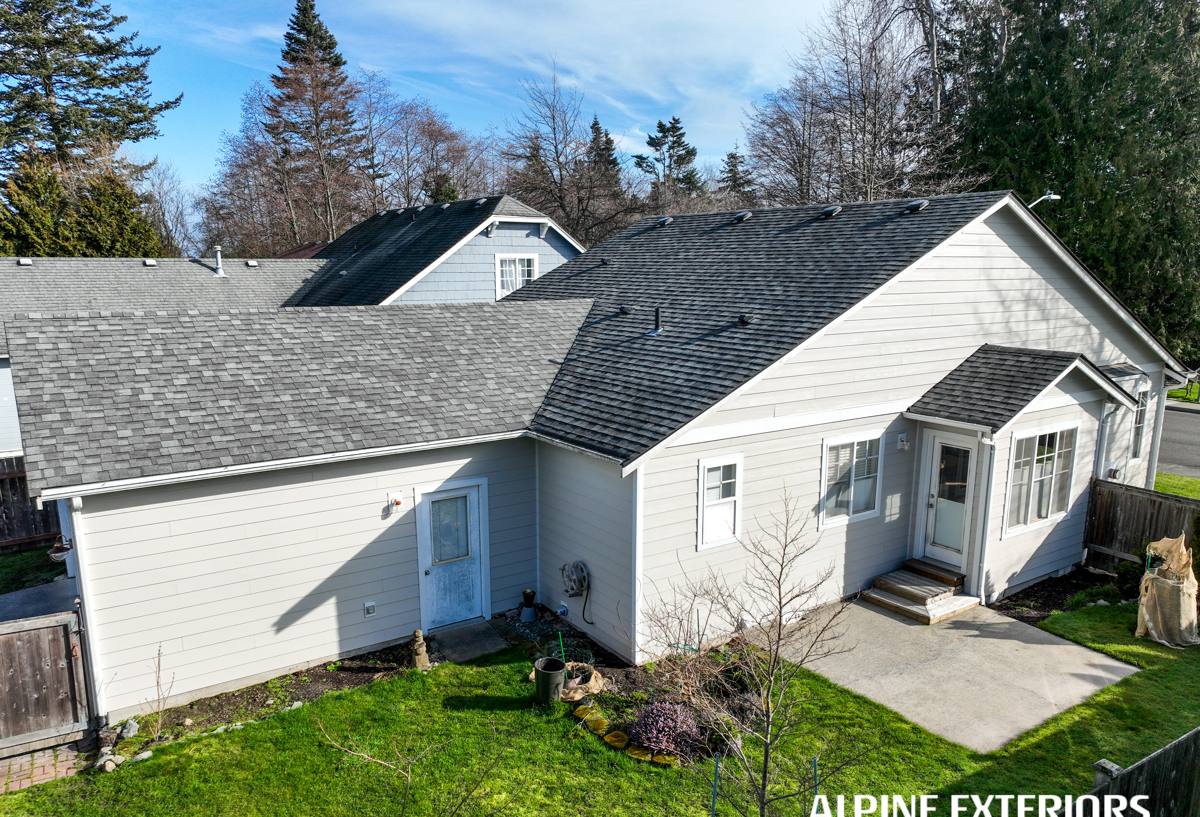
What Salt Air Actually Does to Exterior Materials
Salt air is corrosive to metal fasteners, flashing, and trim, and it accelerates the breakdown of finishes on materials that aren't built to handle it. On siding specifically, the bigger issue is usually moisture combined with salt residue sitting on the surface. Wood-based products — cedar, primed spruce, and engineered wood siding like LP SmartSide — rely on their outer coating and careful field caulking to keep water out. In a marine environment, that coating gets tested constantly: salt residue holds moisture against the surface longer, and any crack in the finish becomes an entry point for water that then has a harder time drying out because the air around it stays humid so much of the year.
Vinyl siding doesn't rot the way wood products can, but it has its own problems in this climate. It expands and contracts with temperature swings, and in coastal wind exposure the panels can loosen, warp, or crack at the fastener points over time. It also isn't fire-resistant, which matters more each year as wildfire smoke and ember exposure become a bigger part of the conversation in Washington, even on the west side of the state.
Why Moss Season Is a Bigger Deal Than It Sounds
"Moss season" in Whatcom County isn't a few weeks — it's most of the year when conditions stay damp and shaded. Moss and algae need moisture and organic debris to get a foothold, and they thrive on surfaces that don't shed water well or that trap it in seams, laps, and end joints. On a home shaded by trees or facing away from direct sun for much of the day, moss can start creeping onto siding within a couple of years if the material and the installation don't account for it. Once moss establishes itself, it holds moisture against the surface underneath it, which speeds up whatever deterioration process is already happening — rot in wood products, coating failure in painted products, and general grime buildup on anything with a porous or textured surface.
Why We Standardized on James Hardie Fiber Cement
We install James Hardie fiber cement siding exclusively. We don't install LP SmartSide, vinyl, Cemplank, Allura, primed spruce, or cedar, and that's a deliberate call based on what we see holding up in this climate versus what tends to need attention within the first decade.
Fiber cement is made from cement, sand, and cellulose fibers. It doesn't rot, it isn't a food source for insects, and it's non-combustible — which matters in a state where wildfire risk has become a real factor even for coastal communities. James Hardie's ColorPlus finish is baked on at the factory under controlled conditions, rather than field-applied on site, which means the color and the protective coating go on more consistently than a paint job done outdoors in variable weather. That factory finish is also what backs Hardie's stronger, transferable limited warranty on the finish itself, not just the substrate.
Hardie also builds region-specific product lines under its HZ5 engineering, designed around the moisture and temperature patterns of climates like ours. That's a meaningful difference from a generic siding product — it's engineered for the freeze-thaw, humidity, and rain exposure patterns of the Pacific Northwest specifically, not a one-size-fits-all national product.
What This Means for a Home on Lummi Island Specifically
In a higher-salt, higher-moisture environment like Lummi Island, the practical benefits show up in a few specific ways:
- No rot risk from trapped moisture at laps, seams, or end joints
- A factory-applied finish that isn't relying on field caulking and paint to keep water out
- A surface that doesn't provide the same organic food source for mold and mildew that wood-based products do
- Non-combustible material, which matters for insurance conversations as much as safety
- Color and texture options engineered to hold up under UV and salt exposure without fading or chalking as quickly as lower-grade coatings
Siding Isn't the Only Thing Taking a Beating Out There
We do full exterior work — siding, roofing, windows, and decks — because on a coastal property these systems are all fighting the same conditions and they need to work together. A roof with compromised flashing sends water down onto siding and trim below it. Windows with failed seals let moisture into wall cavities regardless of how good the siding is. Decks facing direct salt spray and rain need materials and fastener choices that account for corrosion, not just foot traffic.
When we look at a home on Lummi Island, we're looking at the whole envelope, not just one component in isolation. A siding replacement is also a good time to check flashing details around windows and doors, look at roof edges and transitions, and make sure water is actually being directed away from the structure rather than just delayed.
Decks in a Marine Environment
Decking exposed to direct salt air and rain needs fasteners and hardware rated for corrosion resistance, and it needs a design that lets water drain and surfaces dry rather than pooling. We pay attention to this on every deck build or repair out on the island, because the failure mode out there — corroded fasteners, softened ledger boards, trapped moisture under boards — shows up faster than it would on a sheltered inland lot.
Cost Factors for Siding Projects in a Coastal Location
Every home is different, but a few factors consistently move the price on Lummi Island and similar coastal properties:
| Factor | Why It Affects Cost |
|---|---|
| Ferry/barge logistics | Material delivery and crew scheduling around ferry timing can add coordination time compared to a mainland job |
| Existing siding removal | Rot or moisture damage found underneath old siding may require sheathing repair before new siding goes on |
| Home size and complexity | Number of stories, roof lines, and trim details all affect labor time |
| Wind and salt exposure orientation | Sides of the home facing prevailing wind and water may need extra attention to flashing and joint sealing |
| Product line and finish selection | Hardie offers multiple panel styles, textures, and colors at different price points |
Why a Local Crew Matters Out Here
Working on Lummi Island isn't the same as working a job in downtown Ferndale. Getting a crew, equipment, and material out to the island takes planning around ferry schedules, and it helps to have already done that logistics work before rather than figuring it out mid-project. A crew that knows the island's access points, the typical wind exposure on different parts of the property, and the realities of getting a job done efficiently out there is going to run a smoother project than one encountering all of that for the first time.
It also matters that we're a Whatcom County crew, not an out-of-area company passing through. We see how James Hardie siding performs on homes throughout this region over years, not just at installation. That ongoing local presence is part of why we stand behind the work — we're not going anywhere, and neither is the reputation we're building one job at a time.
What Correct Installation Looks Like
Fiber cement siding is only as good as its installation. James Hardie publishes detailed installation specifications, and following them matters more in a coastal environment than almost anywhere else, because installation mistakes that might go unnoticed for years inland — inadequate clearance from grade, poor flashing integration, incorrect fastener spacing — get exposed faster by constant moisture and salt exposure.
Some of what proper installation includes:
- Correct clearance between siding and grade, decks, and roof lines to prevent wicking
- Proper flashing and weather-resistant barrier integration behind the siding, not just at the surface
- Manufacturer-specified fastener type, spacing, and penetration depth
- Caulking and sealing only where Hardie's specifications call for it — over-caulking can trap moisture just as poorly as under-caulking
- Correct panel and joint treatment at corners, window and door openings, and butt joints
This is also where a lot of siding problems on older homes in this region actually originate — not from the product itself, but from field mistakes made during installation that weren't caught until years later when moisture damage showed up.
Signs Your Current Siding Is Losing the Fight
A few things worth watching for on a Lummi Island home, regardless of what siding is currently installed:
- Persistent moss or algae growth that comes back quickly after cleaning
- Soft spots, bubbling, or visible warping, especially near the bottom of walls or around windows
- Paint that's peeling or chalking faster than expected between repaints
- Visible gaps or separation at seams and corner boards
- A musty smell or visible staining on interior walls that share an exterior wall
Any of these are worth a look before they turn into a bigger repair. Catching moisture intrusion early is almost always cheaper than dealing with the structural repair that follows once it's been sitting behind the wall for a season or two.
If you're weighing a siding, roofing, window, or deck project on Lummi Island, we're happy to come take a look and talk through what we're seeing on your specific property — no pressure, no obligation. Reach out for a free estimate using the form below.