 Ferndale
 Birch Bay Sits Right at the Edge of Two Tough Climates for Siding
Birch Bay faces the Strait of Georgia, which means homes here catch a version of Whatcom County's weather that's a step harsher than what a house a few miles inland deals with. Salt-laden air drifts off the water and settles on every exterior surface. Wind has open water to build speed across before it hits a wall, so rain doesn't just fall here, it gets driven sideways into siding joints, trim intersections, and anywhere a fastener penetrates the surface. And because this part of Whatcom County stays damp and mild for most of the year, homes tucked under trees or shaded by neighboring structures deal with a moss and algae season that can run nearly year-round.
None of that is unique to any one street or subdivision in Birch Bay — it's the baseline condition for anything built along this stretch of coastline, from older cottages that were never intended as full-time residences to newer homes built to modern code. This page walks through what that combination of salt air, wind-driven rain, and constant moisture actually does to exterior siding over time, how we approach the work in Birch Bay specifically, and why our crews install only James Hardie fiber cement rather than vinyl, engineered wood, cedar, or other fiber cement brands.
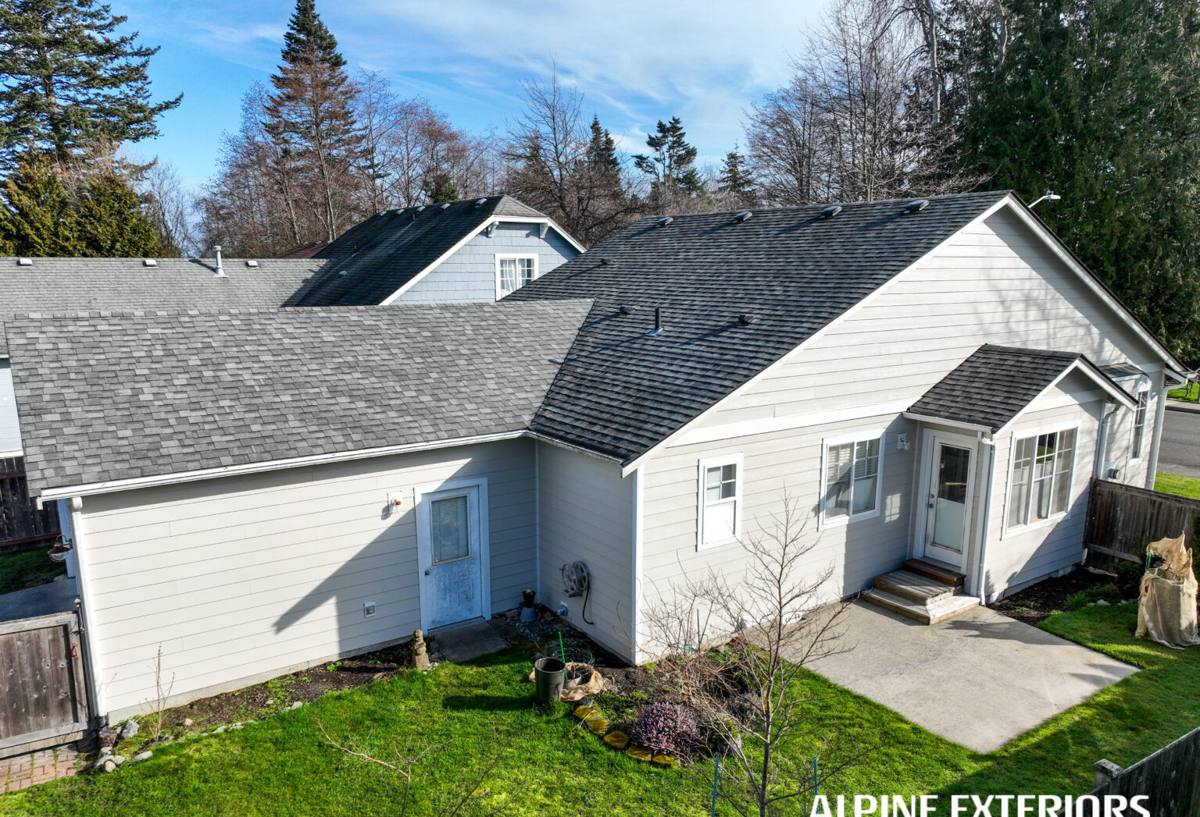
What the Local Climate Does to a Home's Exterior
Salt Air
Proximity to the water means airborne salt is a constant, low-grade presence on siding, trim, and fasteners in Birch Bay. It's a slow effect rather than a dramatic one — you won't see damage after one season — but over years, salt accelerates corrosion on exposed metal fasteners and trim, and it can interact with lower-quality coatings and adhesives in ways that shorten their useful life. It's part of why fastener selection and finish quality matter more here than they would for a home twenty miles inland.
Wind-Driven Rain
Straight-down rain is easy for almost any siding product to shed. Rain pushed sideways by wind coming off open water is a different problem, because it finds its way into gaps at butt joints, around window and door trim, and at any penetration where flashing or caulk has started to fail. Over enough winters, homes with marginal flashing details or aging sealant start showing water intrusion at exactly those weak points, often well before the siding itself looks obviously worn.
Moss, Algae, and a Long Damp Season
Whatcom County's combination of mild temperatures and persistent moisture means moss and algae growth isn't limited to a short window — shaded north-facing walls, areas under overhangs, and anywhere airflow is restricted can stay damp enough to support growth for much of the year. On porous or wood-based siding, that growth can hold moisture directly against the material. On a factory-finished, non-organic surface, it's mostly a cleaning issue rather than a structural one, which is a meaningful difference over the life of the siding.
Humidity and Limited Drying Time
Between rain events, marine air keeps humidity elevated and drying time short compared to a drier inland climate. Materials that absorb moisture don't fully dry out before the next rain rolls in, which matters most when comparing wood-based products to non-organic fiber cement, covered below.
Why We Install Only James Hardie Fiber Cement
We get asked regularly why we don't offer vinyl, LP SmartSide, cedar, or other fiber cement brands like Cemplank or Allura. The honest answer is that we made a standardization decision based on what actually holds up under the conditions described above, and we'd rather do one product to a high standard than several products adequately.
Vinyl Siding
Vinyl is inexpensive and low-maintenance in a lot of climates, and it isn't a bad product in general terms. But it's a thin material that hangs on the wall rather than being rigidly fastened flat, which is part of its designed expansion tolerance — and that same looseness makes it more vulnerable in sustained coastal wind than a mechanically fastened, rigid product. It can also show its age faster under constant salt exposure, with fading and a slightly chalky look developing over years.
Cedar and Primed Spruce
Whatcom County has a strong tradition of natural wood siding, and there's a reason cedar in particular has a following here — it looks good and it's a genuinely regional material. But real wood siding, cedar or primed spruce, is an organic material in a climate that rarely lets surfaces fully dry. That means an ongoing maintenance commitment: refinishing on a cycle, checking for soft spots, and staying ahead of any point where moisture gets past the finish. In a marine climate like Birch Bay's, a maintenance gap of even a season or two can let rot get started somewhere it's hard to see.
Engineered Wood (LP SmartSide and Similar)
Engineered wood siding has a real track record and plenty of homeowners who like it. It's still a wood-fiber product at its core, though, and in a climate where humidity rarely lets surfaces fully dry, any compromise in the factory edge seal — an unsealed field cut, a cracked fastener hole, a joint that opens up over time — creates an entry point where the wood core can wick moisture and swell. That's a maintenance-sensitive product in a climate that doesn't forgive maintenance gaps.
Other Fiber Cement Brands
Not all fiber cement is engineered the same way. We standardized on James Hardie specifically because of its HZ5 product line, engineered for climates with sustained moisture exposure like ours rather than the freeze-thaw cycling of colder inland regions, its factory-applied ColorPlus finish that resists the fading and chalking that field-painted siding shows over time, and the depth of its installation documentation and warranty backing. Non-combustibility comes up often in conversations too — fiber cement doesn't contribute fuel to a fire the way wood-based products can, which matters given how many homes in this area sit close to trees.
Comparing Siding Options for a Birch Bay Home
| Factor | Vinyl | Cedar / Engineered Wood | James Hardie Fiber Cement |
|---|---|---|---|
| Wind performance in coastal gusts | Can loosen or flex under sustained wind | Solid when properly fastened and sealed | Rigid, mechanically fastened panels and planks |
| Salt air exposure | Can fade and chalk over years | Finish and fasteners need regular upkeep | Factory finish and quality fastener specs built for it |
| Moss and algae resistance | Growth stays on the surface | Growth can hold moisture against the material | Non-organic surface, growth is a cleaning issue only |
| Moisture tolerance | Doesn't rot but traps humid air behind it | Organic material, can swell or rot if finish fails | Non-organic, doesn't swell or support rot |
| Combustibility | Can melt or deform in high heat | Combustible (wood-based) | Non-combustible |
How the Work Happens in Birch Bay
Every project starts with a walk of the exterior to see what's actually happening under the current siding, not just what's visible from the road. On older homes — and Birch Bay has plenty of them, including homes originally built as seasonal cottages — that means checking for soft spots near windows, doors, and lower courses, looking closely at flashing where the roof meets the wall, and paying attention to how water has historically moved around the foundation on a lot this close to the water table.
Once we know what we're working with, installation follows James Hardie's published fastening, clearance, and joint-treatment specifications closely. That isn't optional detail work — it's the difference between fiber cement that performs for decades and fiber cement that develops the same problems as a poorly installed product. That includes correct clearance from grade, decks, and roof lines, the right fastener type and spacing for coastal wind exposure, and properly lapped, sealed joints and flashing at every penetration.
What a Typical Project Includes
- Exterior inspection and moisture check before any tear-off begins
- Removal of existing siding and inspection of the sheathing underneath
- Repair or replacement of any damaged sheathing or framing found during tear-off
- Installation of a proper water-resistive barrier and correctly integrated flashing
- James Hardie plank, panel, or shingle siding installed to manufacturer spec
- Trim, corner boards, and fascia work matched to the chosen Hardie product line
- Final walkthrough covering caulking, touch-up needs, and care instructions
Why a Local Crew Matters for This Work
Siding quality mostly comes down to details that never show up from the curb — how flashing is lapped, how much clearance is left at the bottom course, whether cut ends are sealed, whether fasteners are driven to the right depth and spacing. A crew that works Whatcom County's coastal communities regularly has already seen how those details play out under Birch Bay's specific combination of wind, salt, and moisture. That matters more here than in a milder inland market, because wind-driven rain and salt air find weaknesses that a drier climate would let slide for years without consequence.
It also matters for code compliance. Local building requirements around moisture management and exterior wall assemblies aren't identical everywhere in the county, and a contractor who pulls permits and works in this area regularly knows what inspectors are actually looking for, rather than applying a generic standard from somewhere else.
Roofing, Windows, and Decks Alongside Siding
Siding rarely fails on its own, separate from the rest of the building envelope. We handle roofing, windows, and decks in addition to siding, because a lot of the moisture problems we find trace back to how these systems interact — a roof-to-wall flashing detail is really a roofing and siding issue at the same time, and window flashing integration determines whether new siding stays dry around openings for years instead of a season or two. When we quote a siding project in Birch Bay, we're looking at the whole exterior, not just the wall surface, and we'll say so honestly if something else needs attention first.
Signs Birch Bay Homeowners Should Watch For
- Green or black staining, especially on shaded or north-facing walls
- Soft or spongy spots when pressing on siding near windows, doors, or bottom courses
- Visible gaps, warping, or buckling in siding panels, particularly after a windy winter
- Rust streaks or corrosion around fasteners and trim
- Musty odors or staining on interior walls that back up to exterior siding
- Cedar or wood siding that hasn't been refinished on schedule and is showing bare or graying patches
None of these signs automatically mean a home needs full replacement, but they're worth a professional look before the next wet season rather than after moisture has already worked its way into the sheathing.
What to Expect From an Estimate
An honest estimate starts with an inspection, not a sales pitch. We'll look at your current siding's condition, check for any hidden moisture or structural issues, talk through which James Hardie product line fits your home and budget, and give you a straightforward number rather than a low figure that grows once work starts. Cost varies with home size, existing condition, number of stories, and how much trim and detail work is involved, and we'll walk you through those factors specifically rather than leaving you guessing.
If you're in Birch Bay and thinking about siding, roofing, windows, or decks — whether you're dealing with a specific problem or just planning ahead of the next wet season — we're happy to come take a look and give you a straightforward, no-pressure estimate using the form below.