 Ferndale
 Siding Built for Lynden and Ferndale Weather
Lynden and Ferndale sit in the same corner of Whatcom County, but they don't take the same weather beating. Ferndale, closer to Bellingham Bay and the Salish Sea, deals with salt-laden air moving in off the water along with the wind that comes with it. Lynden, tucked into the Nooksack River valley near the Canadian border, is more agricultural and inland, but it gets its own version of the same problem: long stretches of damp, overcast weather, driving rain off the Pacific systems that funnel through the valley, and a moss and mildew season that can run most of the year on a shaded north wall. Different starting points, same result for siding — constant moisture exposure with very little dry-out time between storms.
We work both areas regularly, and we install one product on every home: James Hardie fiber cement siding. Not vinyl, not LP SmartSide, not primed wood, not Cemplank or Allura. That's not a marketing line — it's a standard we hold ourselves to because of what we've seen happen to the alternatives in exactly this climate.
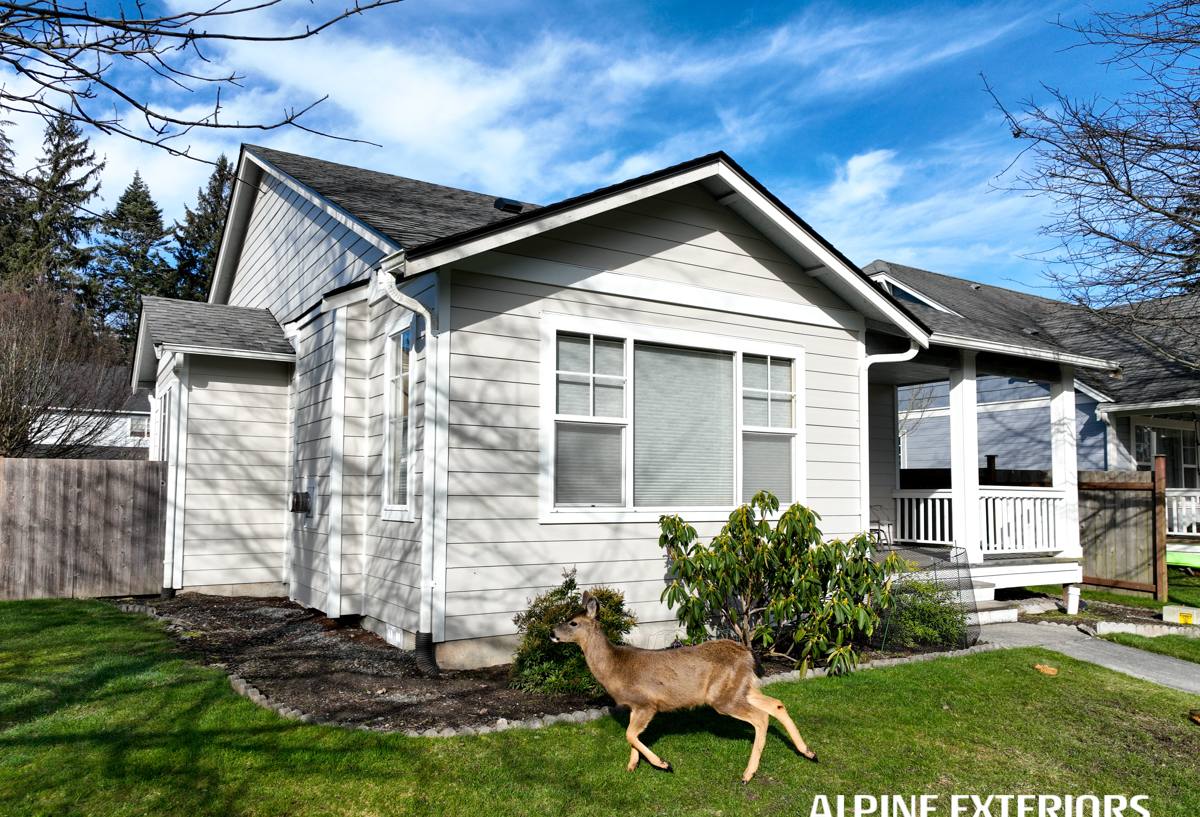
What Whatcom County Weather Does to a House
Moisture That Doesn't Let Up
The Pacific Northwest doesn't get the intense, short downpours some regions do — it gets weeks of low-grade, steady rain and mist. That matters more for siding than a single hard storm would. Materials that are fine in an occasional soak-and-dry cycle start to struggle when they're damp for days at a time. Wood-based products absorb moisture at seams, fastener holes, and cut edges, and in a climate like ours that moisture rarely gets a real chance to fully dry out before the next system rolls in.
Moss, Algae, and Shaded Walls
Anyone who's owned a home in Whatcom County for more than a season knows the drill: north- and west-facing walls, areas under eaves and tree cover, and anywhere airflow is limited will grow moss and green algae film faster than sun-exposed walls. It's cosmetic on a sound material, but on a material that's absorbing moisture, moss cover makes things worse by holding water against the surface even longer.
Wind and Salt Air Near the Water
Ferndale properties closer to the bay and the I-5 corridor toward the water get a steadier dose of salt-carrying air than homes further inland around Lynden. Salt air accelerates corrosion of exposed metal fasteners and trim, and it can be harder on paint finishes over time. It's a slower, quieter kind of wear than storm damage, but it adds up over a couple of decades.
Why We Only Install James Hardie
We get asked fairly often why we don't offer vinyl or LP SmartSide as a lower-cost option. The honest answer is that we used to see the long-term callbacks on both in this climate, and we made a decision to standardize on one product instead of offering several and hoping the homeowner picks the right one.
Fiber Cement vs. the Alternatives
| Material | How it handles our rain and moss season | Long-term consideration |
|---|---|---|
| Vinyl siding | Doesn't absorb water, but seams and panels can warp or gap over time; doesn't stop moisture reaching the wall behind it | Shorter realistic lifespan in wind-exposed and coastal-influenced areas; fades and becomes brittle with UV and age |
| LP SmartSide / primed wood products | Engineered or solid wood core is vulnerable at cut edges, fastener points, and butt joints if caulking and paint aren't maintained | Requires more consistent homeowner upkeep to prevent swelling and edge rot in a wet climate |
| James Hardie fiber cement | Non-combustible, engineered specifically for wet regional climates (HZ10 product line), holds paint and factory finish well | Correct installation to Hardie's specs is what determines the outcome — workmanship matters as much as the material |
What Hardie Gets Right for This Region
James Hardie makes a climate-specific product line (HZ10) engineered for regions like ours with sustained damp weather, and their ColorPlus factory-applied finish is baked on under controlled conditions rather than field-painted, which gives more consistent, longer-lasting color and better resistance to fading and moisture intrusion at the finish layer. It's also non-combustible, which matters more each year as wildfire smoke seasons stretch further north into Washington. None of that makes it maintenance-free — no siding is — but it starts from a stronger baseline for this specific climate.
How a Siding Replacement Actually Goes
Assessment First
We start by looking at what's actually happening on the house — moisture behind the current siding, condition of the sheathing and house wrap, problem areas around windows, trim, and roof-to-wall transitions. On older Lynden farmhouses and older Ferndale homes near the water, this step often turns up moisture issues that have nothing to do with the visible siding condition.
Installation to Spec
Hardie siding performs the way it's supposed to only when it's installed to manufacturer specification — correct fastener placement, proper clearances at grade and roofline, correctly lapped and caulked joints, and compatible flashing details. A lot of the siding problems we get called out to inspect on other companies' installs trace back to shortcuts at this stage, not a flaw in the material itself.
Finish and Detail Work
Trim, corners, and transitions around windows and doors are where water intrusion problems usually start on any home. We treat those details as part of the siding job, not an afterthought, because a good field of siding with a poorly flashed window trim will still leak.
Roofing, Windows, and Decks While We're There
We don't only do siding. Roofing, windows, and decks are part of the same envelope, and in this climate they're connected — a roof that's shedding water poorly onto a wall, or a window that's not flashed correctly, will undermine even a well-installed siding job. If you're already planning siding work, it's worth having us take a look at roof condition, window seals, and any deck or covered porch structure at the same time, since a lot of the moisture problems we find start at those transition points rather than in the field of the siding itself.
What a Lynden or Ferndale Homeowner Should Check
- Look for cracked, bubbling, or peeling paint, especially on north- and west-facing walls
- Check for soft spots or visible swelling around butt joints, corners, and window trim
- Note any areas with heavy, persistent moss or algae growth that never seems to dry out
- Look at caulking around windows, doors, and trim for cracking or gaps
- Check for visible gaps, warping, or panel movement, particularly on wind-exposed sides of the house
- If you can access it, look for any staining or darkening on the inside of exterior walls, which can indicate moisture getting through
Cost Factors for a Siding Replacement
Every home is different, but a few things consistently drive the cost of a project up or down in this area:
| Factor | Why it matters |
|---|---|
| Extent of moisture or sheathing damage found underneath | Rot or damaged sheathing has to be repaired before new siding goes on, which affects both cost and timeline |
| House size, wall complexity, and trim detail | More corners, gables, and window trim mean more labor and material cuts |
| Siding profile and color selection | Hardie offers multiple plank widths, textures, and ColorPlus finishes at different price points |
| Access and site conditions | Rural Lynden properties and tighter in-town Ferndale lots can each present their own access challenges for scaffolding and material staging |
| Whether roofing, window, or trim work is bundled in | Addressing related envelope issues at the same time can be more efficient than separate projects later |
Why a Local Crew Matters Here
Whatcom County's mix of coastal-influenced towns like Ferndale and inland agricultural communities like Lynden means the same siding job can face different exposure conditions just a few miles apart. A crew that works this specific area regularly knows which walls on which types of homes tend to hold moisture, where moss builds up fastest, and which details tend to fail first when they weren't installed correctly the first time. That local pattern recognition is worth more than a generic install checklist, and it's part of why we keep our crews working close to home rather than spreading thin across a wider region.
Get a Straightforward Estimate
If your siding in Lynden or Ferndale is showing its age — or you just want an honest read on where it stands — we're happy to take a look. The estimate is free, there's no pressure attached, and we'll tell you plainly what we see, whether that means a full replacement, targeted repairs, or simply keeping an eye on it for now.