 Ferndale
 Siding in Sandy Point: Built for Salt Air and Salish Sea Weather
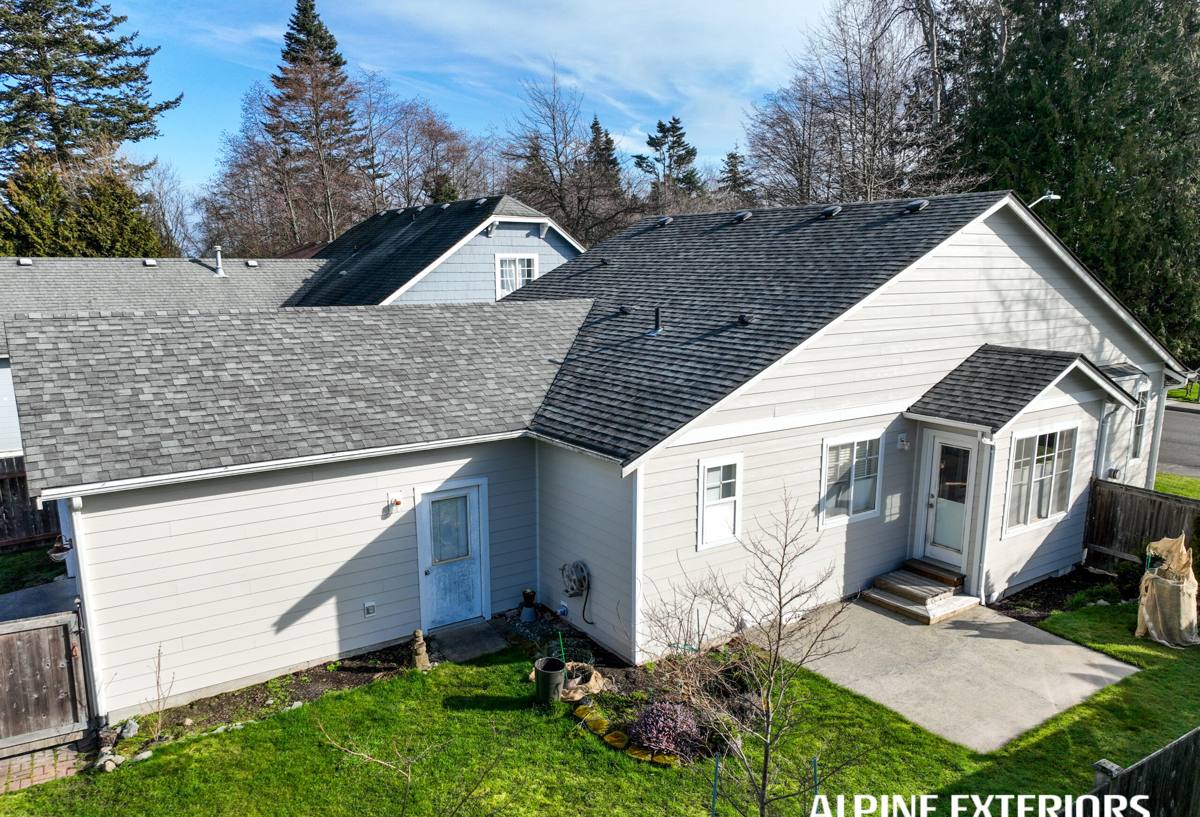
Sandy Point sits right up against the water on the Salish Sea, and that location shapes everything about how a home's exterior ages here. Homes in this stretch of Whatcom County deal with a combination most inland Ferndale properties don't see at the same intensity: constant salt-laden air, driving rain that comes in sideways off the water, and a moss and mildew season that can stretch for most of the year in the shade pockets between homes and tree lines. We've worked on siding, roofing, windows, and decks throughout this area, and the pattern is consistent — the exterior products that hold up inland don't always hold up the same way a few hundred feet from the shoreline.
This page is about what that means for your siding specifically, and why we've standardized on one product system rather than offering a menu of options that don't all perform the same way out here.
What Sandy Point's Climate Actually Does to Siding
Salt Air and Corrosion
Airborne salt doesn't just affect metal — it accelerates the breakdown of caulking, fasteners, and lower-quality trim materials, and it can leave a film on siding surfaces that traps moisture against the substrate. Over years, that's a slow, steady drain on any exterior material that isn't built to shrug off repeated wetting and drying cycles.
Driving Rain and Wind-Driven Moisture
Waterfront and near-waterfront lots catch wind off the Salish Sea with little to slow it down. That means rain doesn't just fall on Sandy Point homes — it gets pushed sideways into seams, laps, and butt joints. Siding systems that rely on tight factory tolerances and correct flashing details matter more here than they do on a sheltered inland lot, because water finds the weak points faster.
Moss, Mildew, and Shade
Whatcom County's marine climate keeps things damp for long stretches of the year, and Sandy Point's tree cover and proximity to water add to that. North-facing walls and shaded siding runs are prone to moss and mildew growth if the material underneath doesn't drain and dry well. Siding that absorbs and holds moisture stays wet longer between rain events, which is exactly the condition moss needs to take hold.
Why We Only Install James Hardie Fiber Cement
We get asked fairly often why we don't offer vinyl, LP SmartSide, or other engineered wood options, especially since some of those products are less expensive up front. The honest answer is that we made a standard for ourselves based on what actually holds up over a full ownership cycle in this climate — and in an environment like Sandy Point's, that standard matters even more.
Non-Combustible Core
James Hardie siding is fiber cement — primarily sand, cement, and cellulose fiber. It doesn't burn, which matters in Whatcom County's increasingly active wildfire seasons and gives homeowners a real, material difference versus wood-based or vinyl products.
Moisture and Rot Resistance
Fiber cement doesn't swell, delaminate, or rot the way engineered wood siding can when water gets past a seam or a poorly sealed joint. In a spot like Sandy Point, where wind-driven rain is a regular event rather than an occasional storm, that resistance to moisture intrusion is one of the biggest reasons the product holds its shape and finish over time.
Factory-Applied ColorPlus Finish
Hardie's ColorPlus finish is baked on at the factory under controlled conditions, which gives it better adhesion and UV resistance than most field-applied paint jobs. That matters on a coastal property where sun, salt, and moisture are all working against a painted surface at once. It also means touch-ups are simpler and color stays consistent longer.
Climate-Engineered Product Lines
Hardie makes region-specific formulations (their HZ5 line is engineered for climates with freeze-thaw cycles and heavy moisture exposure, which fits the Pacific Northwest well). That's a level of climate-specific engineering that most competing products don't offer.
What We Chose Not to Install, and Why
| Product | Where It Falls Short for This Climate |
|---|---|
| Vinyl siding | Can warp or become brittle with temperature swings; seams and panels give wind-driven rain more paths to work behind the material; limited fire resistance |
| LP SmartSide / engineered wood | Wood-strand core is vulnerable to swelling and edge deterioration if moisture reaches a cut edge or compromised seal, which is a real risk in a high-rain, high-humidity environment |
| Cemplank / Allura (other fiber cement brands) | Similar core material to Hardie, but we standardize on one product line and installer training system rather than juggling multiple manufacturer specs |
| Primed spruce / cedar | Requires the most ongoing maintenance of any option — repainting, caulking, and moisture monitoring — and is the most susceptible to rot in a marine climate |
None of these are "bad" products in every setting — they each have a place. But for a company installing siding in a coastal Whatcom County environment, we decided we'd rather stand behind one system we trust fully than offer several and let cost be the deciding factor over long-term performance.
How Our Siding Process Works in Sandy Point
Assessment and Estimate
We start with an on-site look at your home's exposure — which walls take the brunt of the wind and rain, where moss and mildew have already gotten a foothold, and what's happening with your current trim, flashing, and water management details. That assessment shapes the estimate and the installation plan.
Moisture Management First
Good siding starts underneath the siding. We pay close attention to weather-resistive barriers, flashing at windows and doors, and proper drainage planes, because even the best cladding fails early if water gets trapped behind it. This is especially non-negotiable on a property exposed to as much wind-driven rain as Sandy Point sees.
Installation to Manufacturer Spec
James Hardie's warranty and performance depend on correct installation — proper fastening, clearances, joint treatment, and caulking. We install to those specs as a baseline, not an upsell.
Roofing, Windows, and Decks Alongside Siding
Because we handle roofing, windows, and decks in addition to siding, we can look at your whole exterior envelope at once. A siding job that ignores a failing roof edge or a window that's letting water in behind the wall isn't solving the actual problem — it's just putting a new surface over an old leak.
Why a Local Crew Matters Here
Sandy Point isn't a typical suburban lot layout, and a crew that only works inland jobs may not think about things like salt exposure on fasteners, wind loading on a waterfront-facing wall, or how tree cover affects drying time on a shaded elevation. Being based in Ferndale means we're on these streets regularly, we understand how Whatcom County's marine climate behaves differently block by block, and we're not learning the local conditions on your project.
Cost Factors for a Sandy Point Siding Project
| Factor | Why It Affects Cost |
|---|---|
| Home size and elevation count | More siding area and more corners, gables, and cutouts add labor and material |
| Current condition | Rot, moisture damage, or failed flashing found during tear-off adds repair work before new siding goes on |
| Access and site conditions | Waterfront lots, slopes, or tight setbacks can affect staging and scaffolding needs |
| Trim and detail level | Board-and-batten accents, shadow lines, or custom trim profiles take more time than a straightforward lap siding install |
| Existing siding removal | Full tear-off versus siding over an existing layer (when code and condition allow) changes the labor scope |
Signs Your Sandy Point Home May Need Siding Attention
- Persistent moss or dark streaking on north-facing or shaded walls
- Soft spots, bubbling, or visible swelling along seams and butt joints
- Peeling or chalky paint that keeps returning within a couple of years of repainting
- Gaps or separation at caulked joints, especially around windows and corners
- Visible warping or panel movement after windy, wet stretches
- Rising energy bills that could point to a compromised weather barrier behind the siding
If you're noticing any of these, it's worth having someone look before small issues turn into structural repairs.
Get a Straightforward Look at Your Home
If you're weighing a siding project in Sandy Point, we're happy to come take a look, explain what we're seeing, and walk you through what a James Hardie installation would involve for your specific home and exposure. There's no pressure and no obligation — just a straight answer about what your exterior needs. Reach out using the form below to schedule a free estimate.