 Ferndale
 Why Color Choice Is Bigger Than It Looks
Picking a siding color feels like the fun part of a project, right up until you realize it's also one of the most permanent decisions you'll make about your home. Paint can be redone in a weekend. Siding color, if you've chosen a factory-applied finish like James Hardie's ColorPlus Technology, is meant to stay put for well over a decade. That's a good thing when you get it right — and a real headache if you don't think it through first.
In Whatcom County, color choice has an extra layer most homeowners don't consider until they've lived through a few Ferndale winters: our climate is genuinely hard on exterior finishes. Salt-laden air off the Strait of Georgia and Bellingham Bay, long stretches of driving rain, and a moss and algae season that can run most of the year all work on a home's exterior finish in ways that inland climates never see. The color you pick isn't just an aesthetic choice — it interacts with how well that finish survives here.
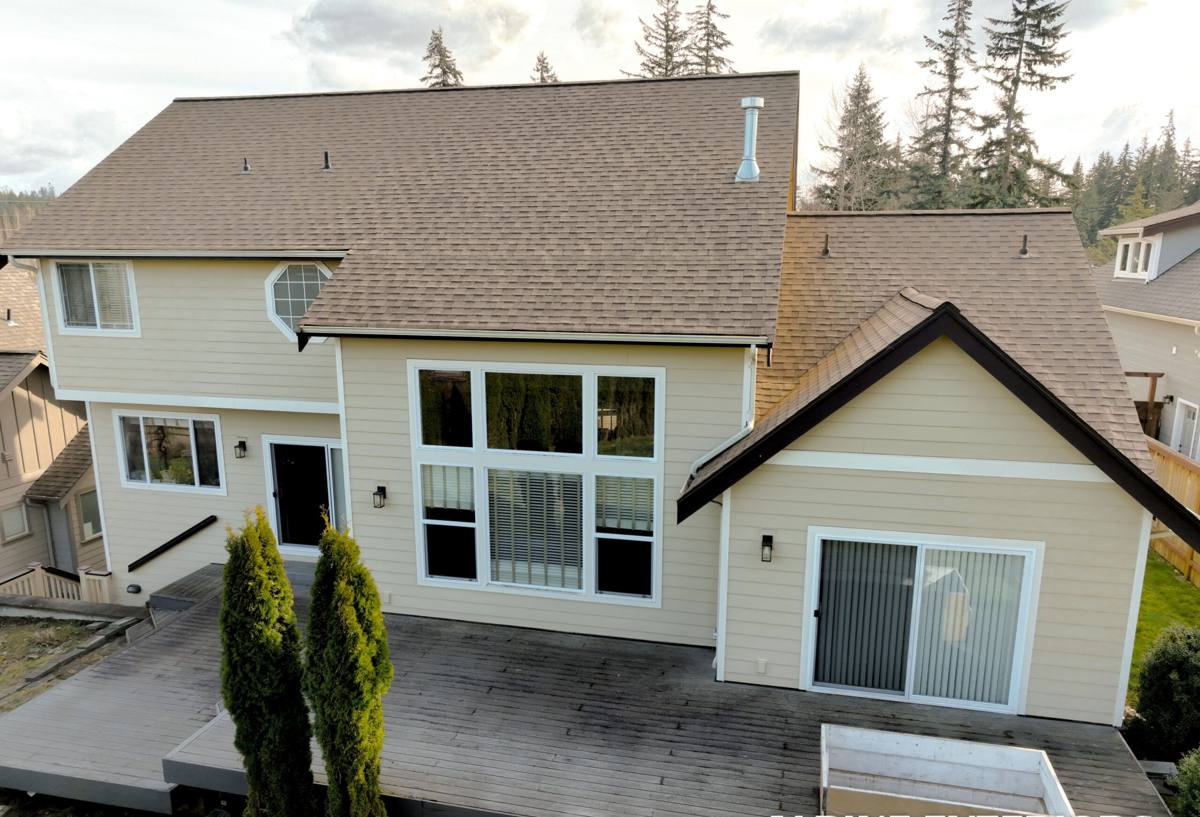
What ColorPlus Technology Actually Is
ColorPlus isn't paint in the traditional sense. It's a factory-applied, baked-on finish system that James Hardie cures onto the fiber cement board under controlled conditions before it ever reaches a job site. The process typically involves multiple coats — a primer, color coats, and a clear topcoat — applied and cured in a controlled environment rather than brushed or sprayed on-site in whatever weather happens to show up that week.
That matters for two practical reasons:
- Factory curing produces a harder, more uniform finish than field-applied paint, which cures at ambient temperature and humidity — conditions that fluctuate constantly here.
- Consistency from board to board is tighter, since color isn't being mixed and applied by hand on a ladder in variable light.
The result is a finish designed to resist fading, chipping, and cracking for years longer than a typical field-applied paint job, backed by a dedicated finish warranty separate from the substrate warranty on the board itself.
Why This Matters More on the Coast
Salt air accelerates the breakdown of most conventional paint films through a combination of moisture retention and mineral deposition on the surface. Add Ferndale's rainfall pattern — long, low-intensity soakings rather than short intense storms — and you get siding that stays damp longer than it would in a drier climate. Damp surfaces are exactly where algae and moss get a foothold, and dark, porous, or poorly cured finishes are the most hospitable surface for that growth to take hold.
How James Hardie Organizes Its Color Palette
Rather than an open-ended custom color wheel, James Hardie ColorPlus colors are offered in curated palettes designed to work together — siding, trim, and accent tones that are selected to complement each other rather than clash. This isn't a limitation so much as a shortcut: the color science and coordination work has already been done, which takes a lot of guesswork out of a decision homeowners often find overwhelming.
Within the palette, colors generally fall into a few practical categories:
- Neutral field colors — grays, tans, whites, and warm off-whites that make up the bulk of most siding jobs and tend to hold value well at resale.
- Deeper accent tones — navy, charcoal, forest green, and similar colors often used on a front door wall, gable, or accent band rather than the whole house.
- Trim whites — a small set of whites and creams designed specifically to pair with the field colors without looking mismatched.
Board texture also affects how a color reads in daylight. A smooth lap board and a cedar-textured lap board in the identical color name will look noticeably different once light and shadow hit the surface — something worth seeing on an actual sample rather than a screen.
Choosing Colors for a Ferndale Home
Light vs. Dark: The Real Tradeoff
Darker colors are popular right now, and Hardie's factory finish holds pigment well even in deep tones. But darker siding absorbs more heat and, more relevantly for this climate, shows water spotting, mineral deposits, and the early stages of moss or algae growth more visibly than a lighter, similarly finished color. That doesn't mean avoid dark colors — plenty of homes here wear a deep charcoal or navy well — it means go in knowing that darker colors will show the effects of a wet climate sooner, even though the finish itself is holding up fine underneath.
Matching the Neighborhood Without Disappearing Into It
Ferndale has a mix of housing stock — older in-town homes, newer developments, and rural properties on larger lots along the way toward Lynden or out toward the water. What reads as "correct" for a craftsman bungalow downtown can look flat on a newer build with more roofline and window variety. If you're in a neighborhood with an HOA or architectural guidelines, get the color approved before you commit — Hardie's palette makes this easier since many HOAs already have pre-approved lists built around it.
Test Before You Commit
- Look at large-format samples, not paint chips — color reads very differently at siding scale.
- View samples in direct sun, shade, and overcast light — Whatcom County spends a lot of days under the third one.
- Hold the sample against your actual roof, stone, or brick, not just a photo of them.
- Check the sample against trim and window color choices together, not in isolation.
- If possible, view the sample both dry and wet — a good approximation of how it'll look on a rainy week, which is most weeks here.
Factory Finish vs. Field-Applied Paint
| Factor | ColorPlus (Factory-Applied) | Field-Applied Paint |
|---|---|---|
| Cure environment | Controlled, consistent, multi-coat | Ambient — temperature and humidity dependent |
| Typical repaint interval | 15+ years before touch-up needed | 5-8 years in this climate |
| Warranty | Dedicated finish warranty from Hardie | Paint manufacturer warranty only, if any |
| Board-to-board consistency | High — controlled batch application | Variable — depends on applicator and weather |
| Upfront cost | Built into the siding price | Often lower initial material cost, higher lifecycle cost |
| Touch-up availability | Matched touch-up product available | Requires remixing/matching existing paint |
The honest takeaway: field-applied paint isn't a bad product, but it's fighting a harder battle in this climate from day one. A factory-cured finish starts the clock further ahead and, in our experience, that gap only widens with Ferndale's moisture load over time.
The Warranty Behind the Color
ColorPlus Technology carries its own finish warranty, separate from the substrate warranty covering the fiber cement board itself. That finish warranty specifically addresses the things color-related failure looks like — fading, chipping, cracking, and peeling of the finish coat — and it's transferable to a new owner if you sell within the warranty period, which is worth mentioning to a future buyer if you're weighing resale value.
It's worth understanding what the warranty covers versus what normal weathering looks like. Some gradual color shift over many years is expected and normal for any exterior finish exposed to UV; it isn't the same as the finish failing. A contractor who installs Hardie regularly should be able to walk you through the difference and register the warranty correctly at installation, since a warranty that isn't registered properly isn't worth much when you need it.
Where Color Meets the Right Product Line
Color is only part of the equation — it sits on top of a specific board, and the board needs to be right for the exposure. Hardie's climate-engineered HZ product lines are formulated differently for different regions specifically because moisture behavior varies by climate. A board and finish combination appropriate for a dry inland climate isn't necessarily the right call for a home a few miles from saltwater. Getting the product line right is a separate conversation from color, but it's one worth having with your contractor before you fall in love with a specific shade on the wrong board.
Keeping Your Color Looking Right, Season After Season
- Rinse siding annually with a garden hose and soft brush — pressure washers can drive water behind the finish and damage caulking.
- Trim back vegetation and tree limbs that hold shade and moisture against siding, a common contributor to moss growth in shaded yards.
- Keep gutters clear so overflow doesn't run down and streak the siding surface repeatedly in the same spot.
- Address caulking around trim and penetrations as it ages — failed caulk lets water sit against the finish edge, which is where problems usually start.
- Watch north-facing and heavily shaded walls first — they're the areas that develop moss and algae soonest in this climate.
Common Mistakes Homeowners Make Choosing a Color
The most frequent regret isn't a bad color choice on its own — it's choosing from a small chip or a screen photo and being surprised by how different the color looks at full scale on an actual house, in actual Pacific Northwest light. The second most common mistake is choosing a color that looks great on a sunny showroom day and forgetting that a home here spends a large share of the year under grey, overcast skies. The third is treating trim as an afterthought — a field color and trim color that don't work together will bother you every time you pull into the driveway, long after the excitement of a new siding job has worn off.
If you're weighing colors, product lines, or just want to see large-format ColorPlus samples against your own home's roofline and trim, we're happy to bring them out. It's a free, no-pressure estimate — no obligation, just a straight conversation about what will actually hold up here.