 Ferndale
 Point Roberts: A Small Peninsula With a Big Weather Problem
Point Roberts sits on its own finger of land jutting into the Strait of Georgia, cut off from the rest of Whatcom County by the international border. It's a place with a split personality: quiet, low-density, and surrounded on three sides by open water. That water is exactly why siding here wears out faster than it does twenty miles inland. Homes on or near the point take direct salt-laden wind off the strait, and there's very little terrain to slow it down before it hits a wall.
We work throughout Whatcom County out of Ferndale, and Point Roberts is one of the more demanding stops on our service map — not because the work is different, but because the exposure is harder on the materials. If you own a home out there, you've probably already noticed it: paint that fails early, trim that stays damp longer than it should, and siding that never quite gets a chance to dry out between storms.
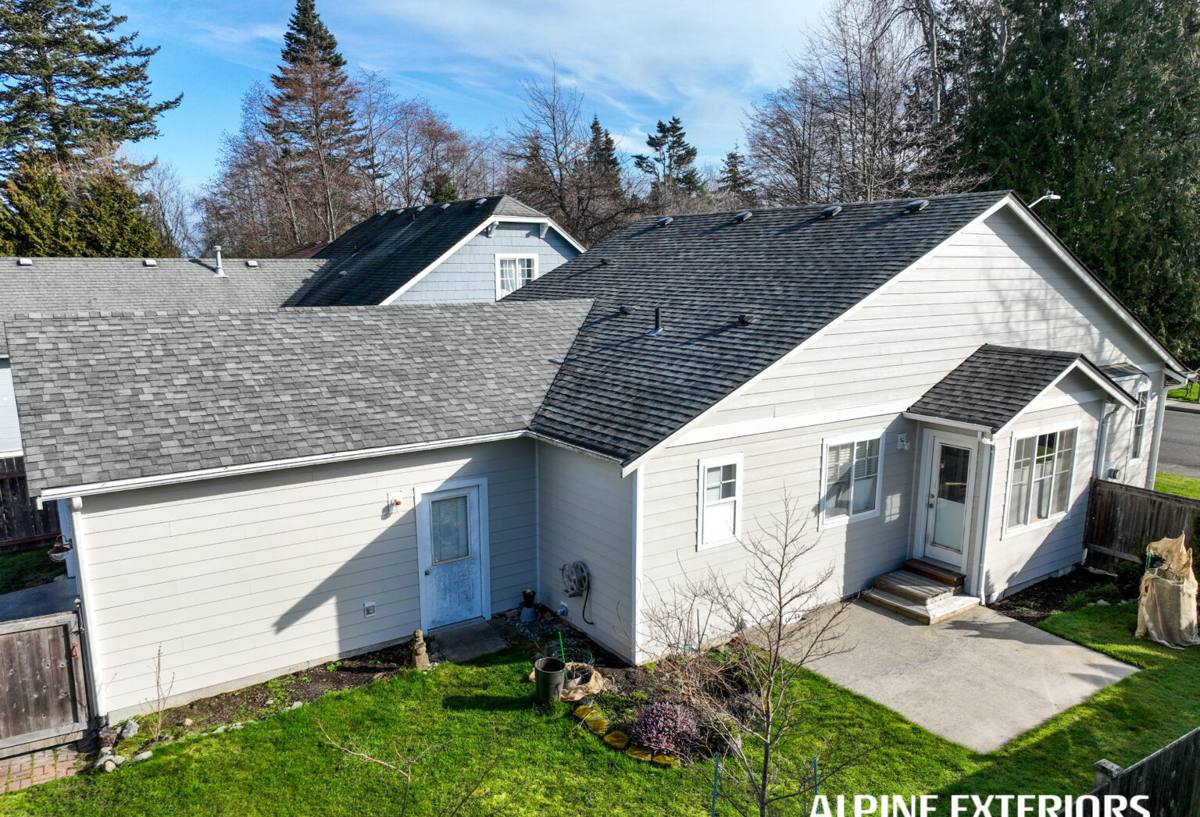
What Salt Air, Driving Rain, and Moss Actually Do to a House
Salt Air
Airborne salt is corrosive and hygroscopic — it pulls moisture out of the air and holds it against whatever surface it lands on. On siding, that means fasteners, trim edges, and any exposed wood fiber stay wetter, longer, than they would a few miles inland. Over years, that constant low-grade dampness is what drives paint failure, swelling, and eventually rot in materials that aren't built to handle it.
Driving Rain
Point Roberts gets weather straight off the water, and wind-driven rain doesn't just fall on a wall — it gets pushed into every seam, lap, and fastener hole. Siding systems that rely on caulk and paint film as their primary defense start failing at exactly those joints first, which is where water intrusion behind the wall usually begins.
Moss and Mildew
Whatcom County's long wet season means moss and mildew have months to establish themselves on north-facing walls, shaded siding, and anywhere airflow is limited. Moss holds moisture against the surface even longer than salt air alone does, which compounds the problem rather than just adding to it. Left alone, that persistent damp layer is what eventually works its way into seams and fastener points.
Why We Standardized on James Hardie Fiber Cement
We install one siding product: James Hardie fiber cement. We don't offer vinyl, LP SmartSide, Cemplank, Allura, primed spruce, or cedar, and that's a deliberate call, not a limitation in what we're able to install. Each of those alternatives has real strengths — cedar looks beautiful, vinyl is inexpensive, LP SmartSide installs quickly — but in a marine-exposure environment like Point Roberts, they each carry a maintenance or moisture-management burden that we're not willing to put a homeowner's name on.
Fiber cement is cement, sand, and cellulose fiber, engineered to be dimensionally stable in a way wood-based products aren't. It doesn't swell and shrink with every wet-dry cycle, it's non-combustible, and it takes a factory-applied finish that isn't relying on field-applied paint as its first line of defense. James Hardie also makes an HZ5 product line specifically engineered for climate zones like ours — cold, wet, and coastal — with formulations tuned to resist moisture and freeze-thaw cycling better than their standard product.
ColorPlus Technology
Most Hardie siding we install carries ColorPlus, a factory-baked finish applied and cured under controlled conditions before the boards ever reach the jobsite. That matters in a place like Point Roberts because field-applied paint is only as good as the weather window it was applied in and the prep work underneath it — and coastal weather doesn't give a painter many clean windows. A factory finish removes that variable and comes with its own finish warranty on top of the substrate warranty.
Material Comparison: Salt-Air and Wet-Climate Exposure
| Material | Moisture/Salt Resistance | Moss & Mildew Behavior | Maintenance | Fire Rating |
|---|---|---|---|---|
| Vinyl | Doesn't absorb moisture, but seams and fastener slots can let water behind the panel | Grows on the surface; cleans off but returns | Low, but can crack/warp in wind and cold | Combustible |
| LP SmartSide (wood-strand) | Engineered wood core is moisture-sensitive at cut edges and panel joints | Can support growth if finish is compromised | Moderate; edge sealing and caulk upkeep matter | Combustible |
| Cedar | Absorbs and releases moisture with weather; needs consistent finish maintenance | Prone to moss/mildew without regular cleaning and refinishing | High; refinishing on a recurring cycle | Combustible |
| James Hardie Fiber Cement (HZ5) | Engineered for wet, coastal climate zones; dimensionally stable | Resistant surface; doesn't feed growth the way wood fiber can | Low; factory finish reduces repainting cycles | Non-combustible |
Roofing, Windows, and Decks Face the Same Exposure
Siding isn't the only building component fighting salt air and driving rain out at Point Roberts — it's just the most visible one. Roofing takes the brunt of wind-driven rain and needs flashing details that actually shed water instead of relying on sealant. Windows in a marine environment need weatherstripping and flashing that accounts for wind-driven moisture at the frame, not just a tight fit. Decks, especially anything facing open water, deal with the same freeze-thaw and moisture cycling that siding does, just underfoot instead of on a wall.
We handle all four — siding, roofing, windows, and decks — because on an exposed property they're rarely separate problems. A window that's leaking at the flashing can damage the siding around it; a roof edge that isn't draining properly can send water straight down a wall. Looking at the whole envelope on one visit catches things a siding-only inspection would miss.
Signs Your Siding Is Losing the Fight
- Paint that's peeling, chalking, or bubbling well before you'd expect a repaint
- Soft or spongy spots when you press on siding, especially near the bottom courses or trim
- Persistent green or black staining on north-facing or shaded walls
- Visible gaps opening up at seams, corners, or around window and door trim
- Higher heating bills without an obvious cause, which can point to moisture getting into the wall assembly
- Siding that stays visibly damp long after the rest of the exterior has dried
Any one of these on its own isn't necessarily an emergency, but on a property with this kind of exposure, it's worth having someone look at the whole wall assembly rather than just patching the visible symptom.
What a Project Looks Like Out at Point Roberts
Because Point Roberts is separated from the rest of Whatcom County by the border, we plan logistics for a project there differently than we would for a job in Ferndale itself — material staging, crew scheduling, and timing all get worked out up front so the job runs efficiently once we're on site. That planning happens before a single board gets ordered, not as an afterthought.
The technical side of the install doesn't change: proper water-resistive barrier, correct flashing at every penetration, manufacturer-spec fastening, and rain-screen detailing where the exposure calls for it. On a site like this, the installation details around window openings, corners, and the base of the wall matter more than they would somewhere with less weather to contend with — that's where a shortcut installer's work fails first.
Why a Local Whatcom County Crew Matters Here
Point Roberts homeowners sometimes get quotes from crews that have never worked a marine-exposure property and don't adjust their approach for it. The install techniques that hold up fine in a sheltered inland neighborhood aren't automatically enough for a wall that's taking salt spray and driving rain off open water. A crew that's used to standard exposure will sometimes treat flashing and rain-screen details as optional rather than necessary.
Working out of Ferndale, we're close enough to know this climate and far enough into the county to have seen how different exposure levels affect the same products differently. That's part of why we don't offer a menu of siding options — we've settled on the one product system that performs consistently across the exposure range in this county, from sheltered inland lots to a property sitting a few hundred feet from the strait.
Get an Honest Look at Your Home
If you're dealing with early paint failure, persistent moss, or you're just planning ahead for a home that takes real weather off the water, we're happy to take a look. There's no pressure and no obligation — just a straightforward assessment of where your siding, roofing, windows, or decks stand and what your options are. Fill out the form below to request a free estimate.