 Ferndale
 What LP SmartSide Actually Is
LP SmartSide is an engineered wood siding product. At its core it's strand-based OSB (oriented strand board) or treated wood substrate, run through a manufacturing process that impregnates it with a resin-based treatment called SmartGuard, then finished with a zinc borate treatment intended to resist fungal decay and insects. It's sold in lap boards, panels, trim, and soffit, and it's a legitimate, code-compliant product that a lot of reputable contractors install every year.
We're not writing this page to tell you LP SmartSide is a bad product. We're writing it because we made a business decision years ago to install one siding system — James Hardie fiber cement — and homeowners in Ferndale deserve to know why, especially before they compare quotes.
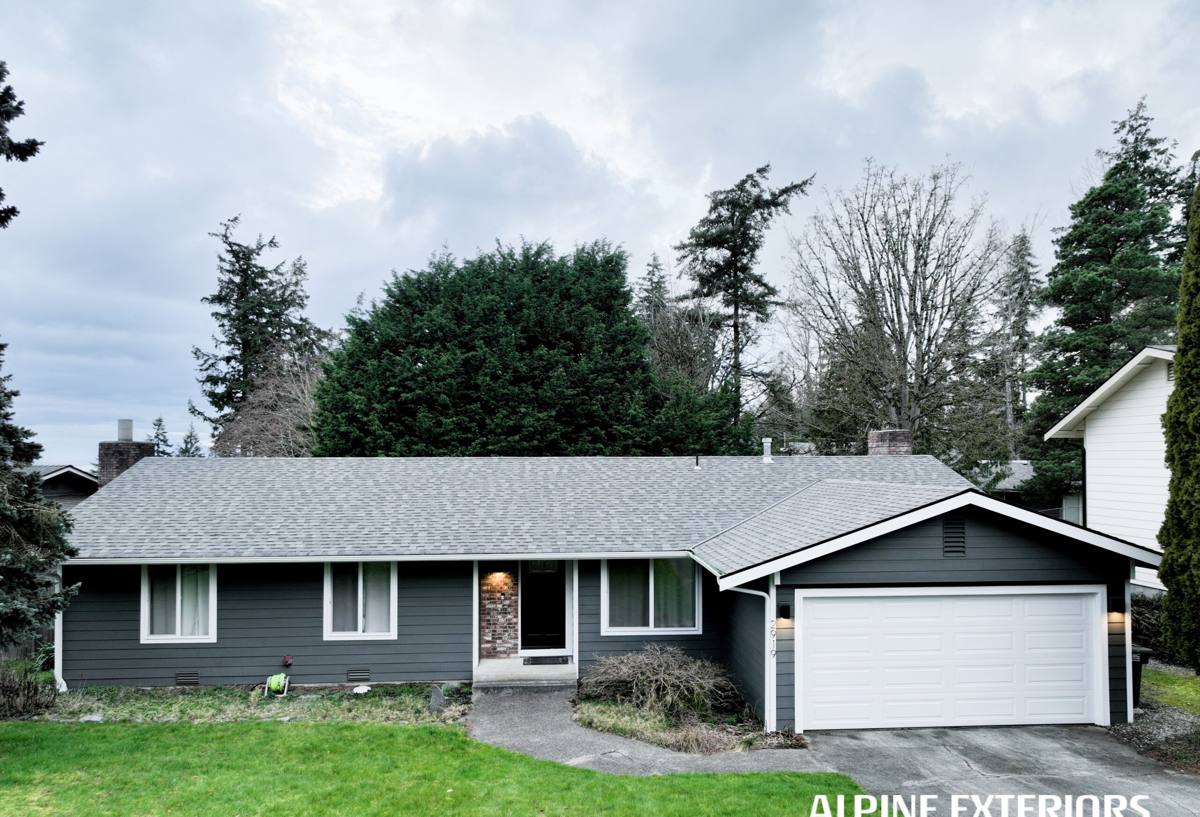
What LP SmartSide Gets Right
Credit where it's due:
- It's lighter than fiber cement, which can mean faster installation and lower labor hours on some jobs.
- It cuts and nails more like traditional wood siding, which is familiar territory for a lot of framing-background crews.
- It takes paint well and has a genuine wood-grain texture that some homeowners prefer over the look of fiber cement.
- LP backs the product with a warranty program, and when it's installed and maintained exactly to spec, it can perform for decades.
That last phrase — "installed and maintained exactly to spec" — is where our concerns start.
Why We Stopped Installing Engineered Wood Products
It's Still Wood at the Core
Treatment and resin coatings change how wood-based siding resists moisture and rot, but they don't change what it fundamentally is. Cut edges, drilled holes, and field-modified corners expose the untreated core unless every single cut is field-sealed with the manufacturer's specified caulk or edge sealer. Miss one cut, one nail hole, one butt joint — and that's a moisture entry point that behaves like ordinary wood once water gets in.
Maintenance Isn't Optional, It's Warranty-Critical
LP's warranty coverage is conditioned on the homeowner keeping up with painting, caulking, and inspection on a defined schedule. That's a reasonable ask on paper, but in practice it shifts a real burden onto the homeowner for the life of the siding. Skip a repaint cycle by a couple of years, and you're not just risking cosmetic fade — you're risking both the material's performance and your warranty claim if something goes wrong later.
Installation Sensitivity
Engineered wood siding is unforgiving of installation shortcuts. Improper fastener placement, insufficient clearance from grade, missing flashing details, or gaps at trim intersections don't show up as problems on day one — they show up two, five, or ten years later as swelling, delamination at the edges, or soft spots. That means the quality of the crew matters enormously, and a homeowner often can't tell good installation from bad installation until it's too late to fix cheaply.
Long-Term Cost Predictability
Because upkeep is baked into the ownership cost, engineered wood siding tends to need repainting on a shorter cycle than factory-finished fiber cement. Over a 20-30 year ownership window, that recurring labor and material cost adds up — and it's a cost most homeowners don't fully price in when they compare an initial quote.
The Whatcom County Climate Factor
Ferndale sits close enough to Bellingham Bay and the Strait of Georgia that salt-laden air is a real factor on exterior materials here, not a theoretical one. Add Whatcom County's pattern of driving, wind-blown rain off the Pacific and a long, damp moss season that can stretch from fall through spring, and you have a climate that specifically punishes any siding product where moisture management depends on an unbroken factory seal plus years of homeowner follow-through.
Moss and algae growth on north-facing walls and shaded elevations is common in this part of Washington. On engineered wood products, sustained organic growth against the surface can hold moisture against the substrate longer than the treatment was designed to tolerate, especially at seams and butt joints. It's manageable with regular cleaning and repainting — but again, that's ongoing homeowner responsibility, not a one-time installation decision.
How LP SmartSide Compares to James Hardie
| Factor | LP SmartSide (Engineered Wood) | James Hardie (Fiber Cement) |
|---|---|---|
| Core material | Treated strand wood / OSB | Cement, sand, cellulose fiber |
| Combustibility | Combustible (wood-based) | Non-combustible |
| Factory finish | Primed; field paint typically required | ColorPlus baked-on finish available, no field paint needed |
| Moisture behavior | Resin/borate treated; vulnerable at unsealed cut edges | Engineered for freeze-thaw and moisture cycling |
| Repaint cycle | Shorter, ongoing homeowner responsibility | ColorPlus finish rated for extended color/finish life |
| Climate-specific engineering | General-purpose product line | HZ5 line engineered for Pacific Northwest moisture exposure |
| Warranty structure | Conditioned on documented maintenance schedule | Long transferable limited warranty on substrate and finish |
None of this means LP SmartSide fails outright in this climate when it's properly detailed and maintained. It means the margin for error is smaller here than in a drier inland climate, and the ongoing maintenance obligation is heavier — and that's the trade-off we decided we didn't want to put on our customers.
What We Install Instead, and Why
We install James Hardie fiber cement siding exclusively. A few reasons that decision holds up specifically for Whatcom County homes:
- Non-combustible core — cement-based, not wood-based, so it doesn't share the same fire or rot mechanisms as engineered wood products.
- HZ5 climate engineering — Hardie's HZ product lines are formulated by region, and the HZ5 formulation is built for the wetter, moisture-heavy exposure common in the Pacific Northwest, including the salt air and driving rain Ferndale sees off the water.
- ColorPlus factory finish — a baked-on finish applied under controlled conditions, which holds color and resists fading and moisture intrusion far longer than a field-applied paint job on primed board.
- Strong transferable warranty — coverage that doesn't hinge on the same level of homeowner-side maintenance documentation that engineered wood warranties often require.
- Proven longevity when installed to spec — fiber cement has a long track record in wet coastal climates, and correct installation (proper clearances, flashing, fastening) is something we control directly as the installer.
Fiber cement isn't magic — it also has to be installed correctly, with the right clearances, flashing, and fastening details, to perform the way it's designed to. The difference is that once it's installed right, the ongoing burden on you as the homeowner is dramatically lower.
If You Already Have LP SmartSide on Your Home
This page isn't meant to alarm anyone who currently has engineered wood siding — plenty of installations in this area are holding up fine because they were installed carefully and maintained on schedule. If that's you, here's what actually protects that investment:
- Inspect caulked joints, butt seams, and cut edges annually, especially before the wet season sets in.
- Re-caulk or reseal any joint where the sealant has cracked, shrunk, or pulled away.
- Keep paint film intact — repaint on the manufacturer's recommended cycle, not just when it looks faded.
- Watch for soft spots, swelling, or dark staining near the bottom courses and around window and door trim — these are early signs of moisture intrusion.
- Clean moss and algae growth off shaded and north-facing walls before it holds moisture against the surface for extended periods.
- Keep soil, mulch, and plantings pulled back from the bottom edge of the siding to maintain proper ground clearance.
If you're seeing swelling, delamination, or soft board anywhere on your siding, that's worth a professional look before it spreads — those symptoms tend to get more expensive to address the longer they sit.
Making the Comparison Yourself
When you're getting quotes for a siding replacement in Ferndale or anywhere in Whatcom County, ask every contractor the same three questions: what's the core material, what does the warranty actually require of you as the homeowner, and what happens at cut edges and seams during installation. The answers will tell you more than the brand name will.
We install James Hardie because it lets us hand a homeowner a finished exterior and an honest answer to all three of those questions — without asking them to take on a recurring maintenance obligation just to keep the warranty valid. If you'd like to talk through your specific home, your current siding, and what a Hardie installation would look like and cost, we're happy to walk the property with you. Reach out for a free, no-pressure estimate — there's no obligation, and we'll give you a straight answer even if replacement isn't the right move yet.