 Ferndale
 Exterior Challenges Homes Face Near Fairhaven
Homes in and around Fairhaven sit at the intersection of two demanding conditions: proximity to salt water and the long, wet Pacific Northwest winter that defines Whatcom County. That combination is harder on a house exterior than either factor alone. Salt-laden air accelerates corrosion of metal fasteners and trim. Driving rain, pushed sideways by wind off the water, finds every gap in flashing and caulk that a calmer climate would never expose. And months of overcast, damp weather feed moss and algae growth on roofs and siding that simply doesn't happen the same way in drier parts of the state.
We've built our business around understanding how these three things — salt air, wind-driven rain, and a long moss season — actually behave on a real building, not just in theory. That's the difference between an exterior that looks fine for a couple of years and one that's still doing its job two decades from now.
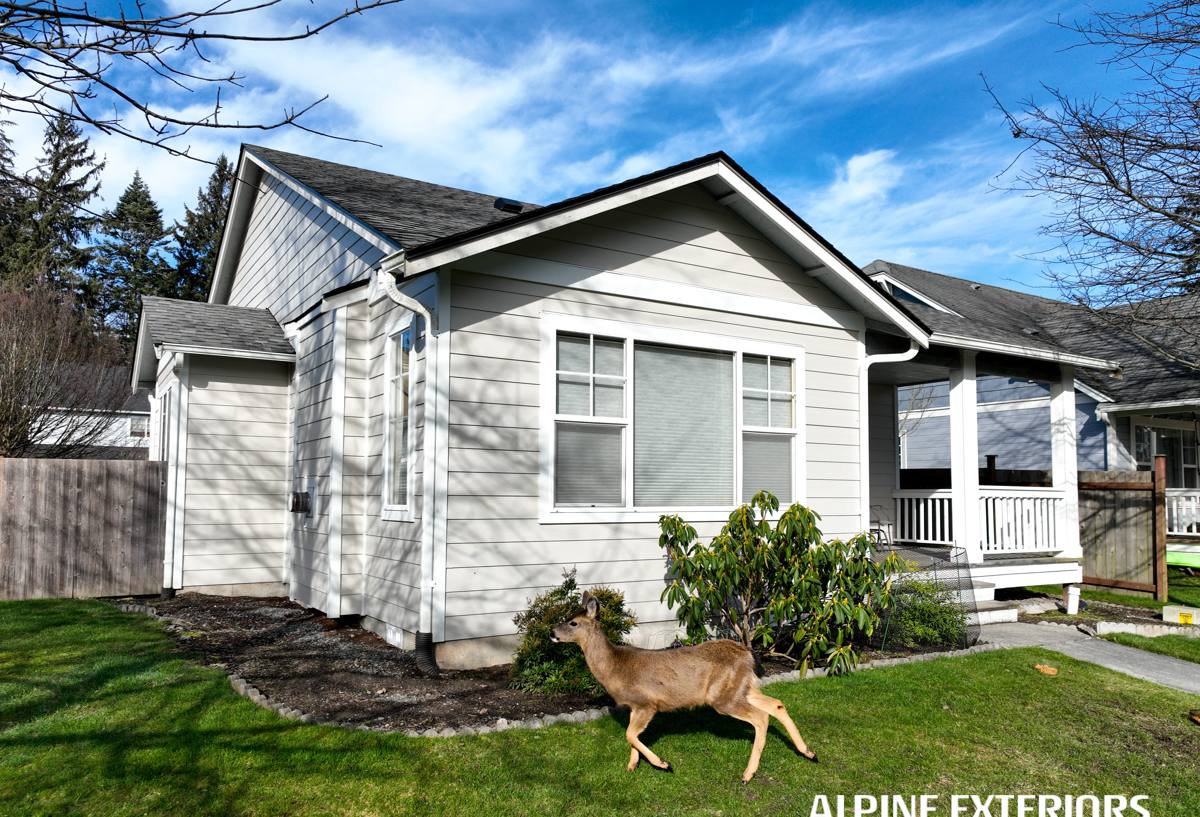
Salt Air and Coastal Exposure: What It Does to Siding
Salt air doesn't just corrode obvious metal like gutters and flashing — it works on fasteners hidden behind siding, on hinges and hardware, and on any painted or coated surface that isn't formulated to resist it. Over years, that corrosion can loosen siding attachment points, stain finishes, and create small failure points that let moisture behind the cladding.
Why Fastener Choice Matters More Here
In coastal-influenced areas, the fasteners and flashing details matter as much as the siding material itself. Standard fasteners that would be fine fifty miles inland can start showing corrosion streaks within a few seasons near the water. We spec corrosion-resistant fasteners and flashing on every job in this service area, not just as an upsell but because it's what actually holds up.
Finish Durability
A factory-applied finish that's baked on and warrantied for coastal exposure behaves very differently than field-applied paint over time. Paint film that's chalking, fading unevenly, or peeling within a handful of years is a common sight on older homes here — usually a sign the original finish wasn't built for this specific exposure.
Moss, Shade, and Driving Rain: The Long Wet Season
Whatcom County's wet season stretches long, and homes with mature trees, north-facing walls, or shaded lots stay damp for extended stretches. That's the exact environment moss and algae need to establish themselves — not just on roofs, where it's most visible, but on siding, especially in corners, under eaves, and anywhere airflow is restricted.
Driving rain adds a second problem: wind off the water pushes rain sideways into wall assemblies, testing every seam, joint, and penetration. A siding system that manages water well in a light, straight-down rain can still fail in a sideways storm if the installation details — flashing, house wrap integration, joint spacing — aren't done right. This is where installation quality matters as much as the product itself.
Why We Install Only James Hardie Fiber Cement Siding
We made a deliberate decision to install James Hardie fiber cement exclusively, and we don't install vinyl, LP SmartSide, cedar, primed spruce, or other fiber cement brands. That's not a marketing position — it's the result of years of seeing how different materials actually perform in this specific climate.
What Rules Out the Alternatives
Vinyl siding can warp and become brittle with age, and its seams and panel joints give wind-driven coastal rain more opportunities to find a way behind the cladding. Cedar and primed wood siding look great new, but they demand a maintenance schedule — recoating, caulking, moisture monitoring — that most homeowners underestimate, and in a climate this wet, skipped maintenance shows up fast as rot or paint failure. LP SmartSide is an engineered wood product, and like other wood-based sidings, it's more sensitive to sustained moisture exposure at cut edges and joints than fiber cement is.
Why Hardie Fits This Climate
James Hardie fiber cement is non-combustible, dimensionally stable, and doesn't absorb and swell with moisture the way wood-based products can. The ColorPlus factory finish is baked on under controlled conditions and backed by a real finish warranty, which matters in an area where field-applied paint takes a beating from salt air and UV. Hardie's HZ5 product line is specifically engineered for climates with more moisture exposure, which fits Whatcom County's coastal-influenced weather well. Combined with a strong transferable product warranty, it's the material we're comfortable standing behind long-term.
Siding Material Comparison for Coastal Whatcom County
| Material | Moisture Behavior | Maintenance | Coastal Durability |
|---|---|---|---|
| James Hardie Fiber Cement | Doesn't absorb/swell like wood; engineered HZ lines for wet climates | Low — factory finish, no recoating cycle | Strong; non-combustible, dimensionally stable |
| Vinyl | Water can migrate behind panels at seams | Low, but panels can warp/crack over time | Moderate; seams are a weak point in driving rain |
| Cedar / Primed Wood | Absorbs moisture; prone to swelling and rot if unmaintained | High — recoating and caulk inspection needed regularly | Weak without disciplined upkeep |
| LP SmartSide (engineered wood) | Better than raw wood, but cut edges/joints remain moisture-sensitive | Moderate — finish and joint maintenance | Moderate |
This table reflects general material characteristics, not a claim that every installation of every product fails — installation quality affects all of these. It's simply why, given this specific climate, we standardized on one system rather than offering all of them.
Roofing in a Moss-Prone Climate
Roofs in this area fight the same battle siding does, often worse, because they're horizontal and catch every bit of falling debris and standing moisture. Moss growth on a roof isn't just cosmetic — moss holds moisture against the roofing surface and, left unaddressed, can work its way under shingle edges and shorten the life of the roof system.
What We Look At
- Roof age and shingle condition relative to expected lifespan in this climate
- Moss and algae buildup, especially on north-facing or shaded slopes
- Flashing condition at valleys, chimneys, and penetrations — common leak points in driving rain
- Gutter and downspout function, since clogged gutters back water up under roof edges
- Attic ventilation, which affects moisture buildup from the inside out
Good roofing in this area is as much about drainage and ventilation as it is about the shingles themselves.
Windows That Hold Up to Wind-Driven Rain
Older or lower-grade windows are one of the most common sources of hidden water intrusion in coastal-influenced homes. Wind-driven rain tests window flashing and seals in a way that calmer inland weather doesn't, and a window that's merely "not leaking yet" isn't the same as a window that's properly flashed and integrated with the wall assembly. When we replace windows, proper flashing integration with the siding system is treated as part of the same job, not an afterthought — because a well-installed window with poor flashing detail can undermine an otherwise good siding job.
Decking Built for Wet, Salt-Tinged Air
Decks take a similar beating: standing moisture, shaded ground-level areas where wood stays damp longer, and hardware exposed to salt-influenced air. Fastener corrosion, board cupping, and slow rot at ledger connections are common issues we see on older decks in this area. Material choice, proper spacing for drainage and airflow, and corrosion-resistant hardware all matter more here than they would in a drier climate.
Why a Local Crew Matters
A crew that works this specific area regularly develops a feel for which details actually matter — where wind-driven rain hits hardest, which orientations grow moss fastest, how much of a maintenance gap a homeowner can realistically manage. That's different from a general knowledge of "Pacific Northwest weather." It comes from working on homes in this specific stretch of Whatcom County, season after season, and seeing what holds up and what doesn't.
It also means being reachable when something needs a follow-up look — a small flashing detail, a warranty question, a follow-up inspection after a bad storm — without the runaround of an out-of-area company.
Signs Your Exterior Needs a Closer Look
- Moss or dark streaking building up on siding or roof surfaces, especially on shaded or north-facing walls
- Paint that's peeling, bubbling, or chalking unevenly across a wall
- Soft spots, staining, or a slightly spongy feel to siding near ground level or under windows
- Rust streaks around fasteners, hardware, or flashing
- Gaps or separation at siding joints, window trim, or roof flashing
- A deck with cupped boards, soft spots near ledger connections, or corroded hardware
None of these are emergencies on their own, but in this climate, small gaps don't stay small for long. Catching them early is almost always cheaper than the repair that follows a wet winter.
What to Expect From Us
Whether it's a full siding replacement, a roof in need of attention, window upgrades, or deck work, we approach every job in this area the same way: understand what the specific exposure — sun, shade, wind direction, water proximity — is doing to that particular home, and build or repair accordingly. We'll walk the exterior with you, point out what we actually see rather than what sells the most work, and give you a straight answer about what needs attention now versus what can wait.
If you're noticing any of the signs above, or just want an honest read on your home's exterior condition, we're glad to take a look. Reach out for a free, no-pressure estimate using the form below.