 Ferndale
 Composite Decking Built for Lynden's Climate
Lynden sits in the Nooksack River valley in Whatcom County, and the climate here is not gentle on outdoor wood structures. Winters bring long stretches of driving rain, spring and fall carry heavy dew and fog that linger into the afternoon, and shaded corners of a yard can stay damp enough to grow moss for months at a time. A deck built with the wrong materials, or built correctly but without accounting for that moisture load, starts showing problems within a few seasons: soft spots, discoloration, slick moss patches, and boards that cup or split. Composite decking, installed the right way, is one of the more reliable answers to that climate — but "composite" isn't a single product, and installation quality matters as much as the material choice.
This page covers what we actually do when we build a composite deck for a homeowner in Lynden: what the local conditions demand, how the substructure needs to be built differently than it would in a drier climate, and what separates a deck that looks good for two years from one that looks good for twenty.
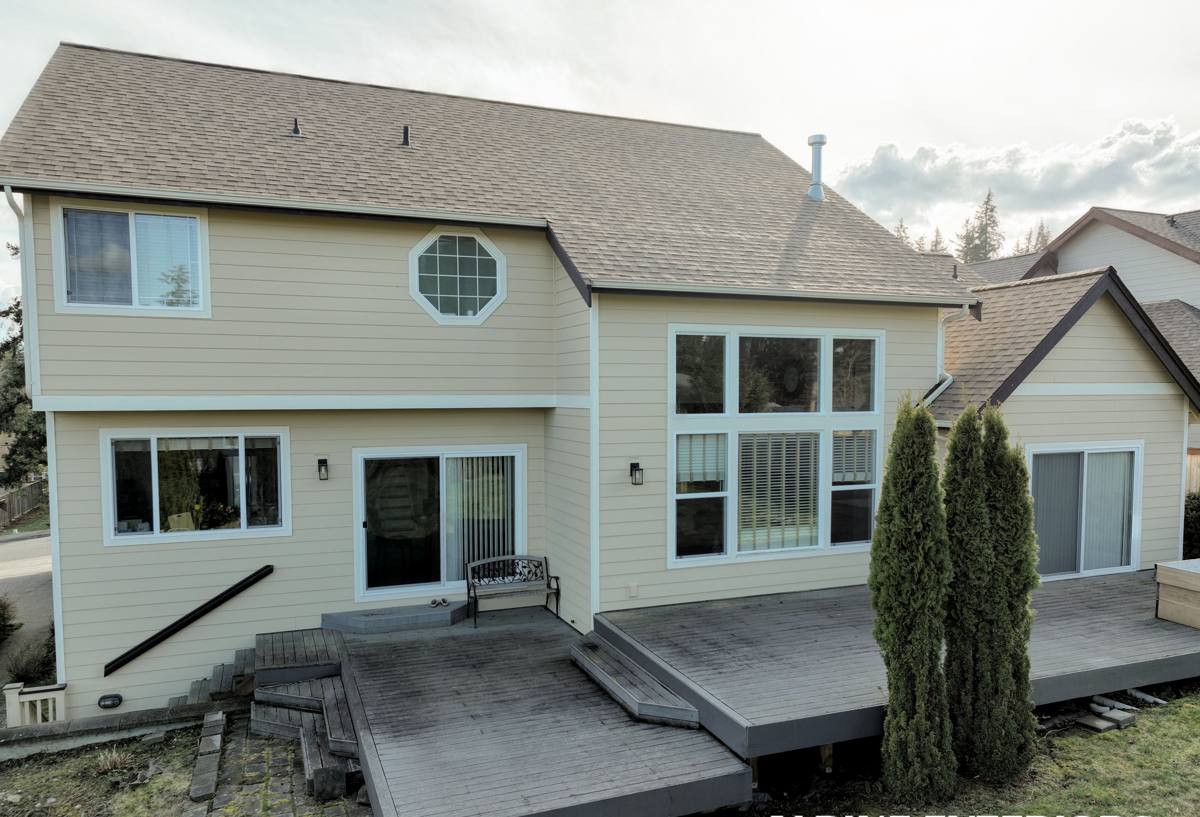
What Local Homes Actually Need From a Deck
Most of the decking problems we get called out to look at in this part of Whatcom County trace back to moisture management, not the decking material itself. Composite boards resist rot, but the framing underneath them usually doesn't get the same attention — and that's where failures start.
- Consistent standing moisture at ground level and under low decks, especially where lawns or planting beds are close to grade
- Moss and algae growth on any deck surface that doesn't get regular sun and airflow
- Freeze-thaw cycling in winter that works loose fasteners and stresses joints over time
- Wind-driven rain that gets pushed sideways under railings and against ledger boards, not just straight down
- Long gray stretches where a deck surface simply never fully dries out between rain events
A deck plan that ignores any one of these tends to fail early in a specific, predictable spot — usually the ledger connection at the house, the framing closest to grade, or a low point where water can't shed off the surface.
Why Composite Makes Sense Here
We install wood decking too, and for some homeowners it's still the right call. But for a climate like this one, composite decking has real advantages worth being honest about:
Moisture Behavior
Composite boards don't absorb water the way solid wood does, so they aren't prone to the swelling, cupping, and splintering that shows up on wood decks after a few wet winters. That matters a lot in a valley climate where the boards rarely get a long dry stretch to fully recover between rain events.
Maintenance Burden
Wood decking in this climate needs re-staining or sealing on a regular cycle to hold up — skip a year and moisture gets in. Composite doesn't need that upkeep, which is a real advantage for homeowners who don't want a recurring maintenance task tied to the weather window.
Moss and Algae Resistance
No decking surface is fully immune to moss in a climate this wet, but composite's dense, non-porous surface gives organic growth less to grab onto than raw wood grain, and it cleans up faster with a simple wash.
The Trade-Off We're Honest About
Composite decking costs more up front than pressure-treated wood, and installation is less forgiving — board spacing, fastening, and substructure prep all have to be done to spec, or you lose the durability advantage you paid for. We won't sell composite as a fix for a poorly built frame; the frame still has to be right.
What a Correct Composite Deck Installation Involves
Substructure and Framing
The joists, beams, and posts underneath a composite deck do more of the long-term work than the boards on top. We use fastener and hardware rated for exterior, wet-service conditions, and we pay close attention to any framing member that sits low to grade or in a shaded, slow-to-dry part of the yard — those spots get extra protection rather than the standard treatment.
Ventilation and Drainage
Composite decking still needs airflow underneath it. A deck built tight to grade with no way for moisture to escape will trap humidity against the framing even though the surface boards themselves are fine. We build in proper clearance and drainage paths so water moves off and out instead of pooling under the structure.
Fasteners and Board Spacing
Composite boards expand and contract with temperature more than people expect, and gaps that are too tight will buckle over a freeze-thaw cycle or two. We follow manufacturer spacing specs for the specific board profile being installed, and we use hidden fastener systems designed for that product rather than mixing hardware to save a step.
Ledger and House Connection
Where the deck attaches to the house is the single most common failure point we see on older decks in this area, composite or otherwise. Proper flashing at that connection keeps wind-driven rain from working its way behind the siding and into the wall framing — this is a detail that's easy to skip and expensive to fix later.
Composite Decking Options: A Straight Comparison
| Type | Moisture Resistance | Upfront Cost | Maintenance | Best Fit |
|---|---|---|---|---|
| Uncapped composite | Good, but surface can absorb some moisture over time | Lower | Occasional cleaning; more prone to staining and fading | Budget-conscious projects, covered or partially covered decks |
| Capped composite | Very good — protective shell resists moisture, staining, and fading | Mid-range | Low; periodic washing | Most Lynden-area decks exposed to full weather |
| PVC (cellular) decking | Excellent — no wood content to absorb moisture | Higher | Lowest; wipes clean easily | Waterfront-adjacent or heavy-shade, high-moss-risk yards |
| Pressure-treated wood | Fair — needs sealing to perform well | Lowest | High; annual inspection and periodic sealing | Homeowners who prefer real wood and will keep up maintenance |
For most homes in and around Lynden, capped composite is the sweet spot between cost and long-term performance. PVC earns its higher price on decks that sit in constant shade or close to standing moisture, where the extra moisture resistance actually gets used.
Our Process, Start to Finish
- On-site assessment — we look at drainage, grade, sun exposure, and the existing structure (if there is one) before recommending a board type or framing plan.
- Honest material recommendation — based on how that specific yard drains and how much shade the deck will sit in, not a one-size-fits-all pitch.
- Written estimate — clear scope, materials, and timeline before any work starts.
- Demo and framing — old structure removed if needed, new substructure built to spec with wet-climate hardware and proper ledger flashing.
- Decking installation — boards and fasteners installed to the manufacturer's spacing and fastening requirements for that specific product.
- Final walkthrough — we go over basic care and answer questions before we consider the job done.
Maintenance: What Composite Actually Requires
One of the reasons homeowners choose composite is lower maintenance, but "lower" isn't "none," especially in a climate that grows moss on nearly anything left damp and shaded. A realistic care routine looks like:
- A wash with a deck cleaner or mild soap and water once or twice a year, more often in shaded areas
- Keeping planters, rugs, and furniture legs from sitting in one spot too long, which traps moisture against the board surface
- Clearing leaves and debris out of gaps between boards before they hold water through the fall and winter
- Checking railing posts and stair connections annually for any movement, since fasteners can work loose with seasonal temperature swings
- Addressing any early moss or algae spots promptly rather than letting them spread across a shaded section
Why Hire a Crew That Already Works in Lynden
Building codes, typical soil and drainage conditions, and the specific way weather moves through this part of Whatcom County are all things that show up in the details of a deck build — how deep footings need to go, how much slope to build into the surface for drainage, where moss tends to take hold first. A crew that's already done this work locally isn't guessing at those details on your project. We know what a Lynden winter does to an improperly flashed ledger board, and we build to avoid that outcome from the start rather than fixing it two years in.
If you're weighing composite decking for a home in the Lynden area, we're happy to walk the site, talk through material options honestly — including where wood might still make sense for your situation — and put together a written estimate. There's no pressure and no obligation; just fill out the form below to get started.