 Ferndale
 Siding Built for Kendall's Corner of Whatcom County
Kendall sits in a part of Whatcom County where the weather doesn't do anything halfway. Rain falls often and falls hard, moisture hangs in the air for weeks at a stretch, and anything shaded by trees or a north-facing wall stays damp long after the rest of the yard has dried out. Homes here earn their keep. The exterior isn't just curb appeal — it's the layer standing between your framing and a climate that never fully lets up.
We're a local exterior contractor, and Kendall is inside our regular service area. That matters more than it sounds. A crew that only shows up here once in a while doesn't build the same instinct for how this area's homes actually perform over time — where moss gets a foothold first, which siding seams start to fail after a few wet winters, which roof valleys need extra attention because of how the rain comes in. We do this work throughout Whatcom County, and Kendall's climate and building stock are part of what we know cold.
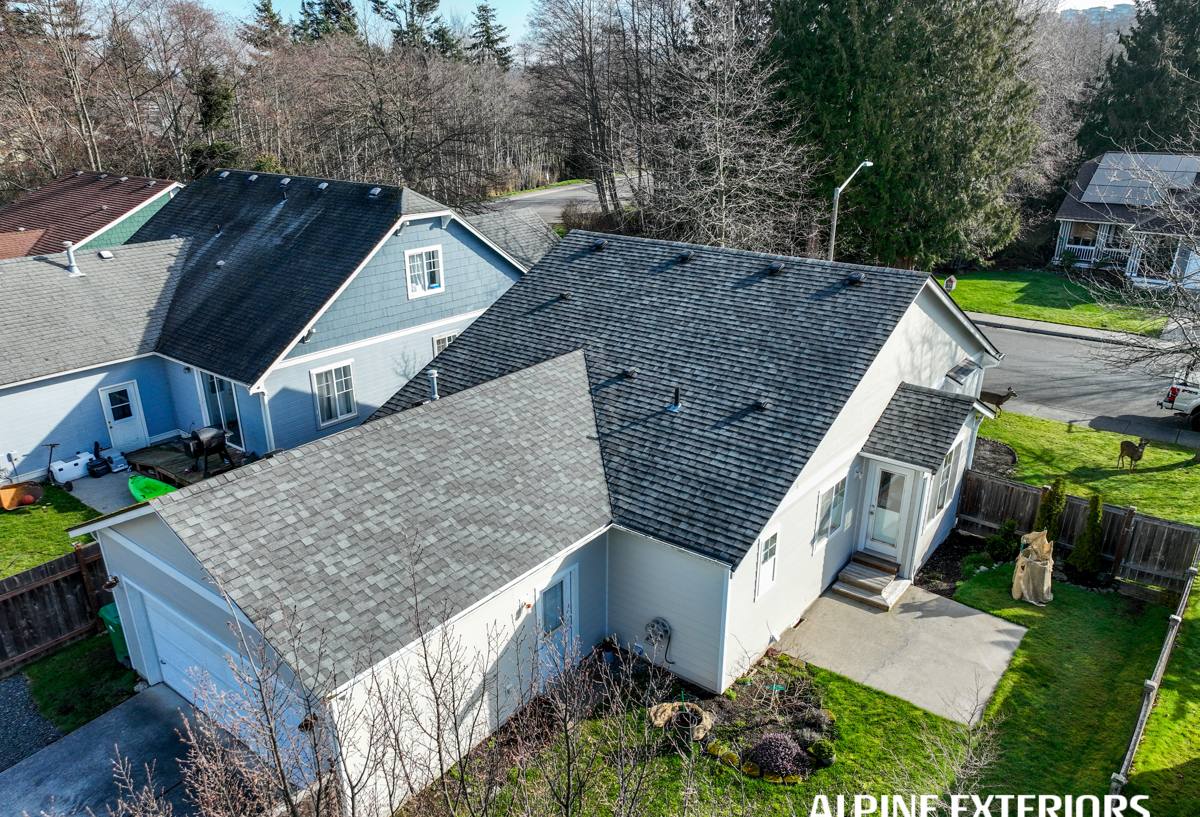
What the Climate Does to a House Out Here
Driving Rain and Wind-Driven Moisture
Whatcom County doesn't just get rain — it gets rain pushed sideways by wind often enough that siding, trim, and window flashing all take a beating from moisture that doesn't just fall straight down and run off. Wind-driven rain finds gaps that vertical rain never would: behind loose trim, under poorly lapped siding, around window and door casings that weren't flashed correctly the first time. Over years, that's how water gets behind an exterior wall system without anyone noticing until there's a soft spot or a stain on the interior drywall.
Long Moss Season
Between the tree cover common around Kendall and the sheer number of overcast, damp days in a typical Whatcom County year, moss has a long runway to establish itself on roofs, shaded siding, decking, and anywhere organic debris collects. Moss isn't just cosmetic. It holds moisture against whatever it's growing on, and sustained moisture against wood trim, a roof deck, or a moisture-sensitive siding product is exactly the condition that leads to rot and premature failure. The longer moss sits, the more damage it causes underneath.
Salt Air and General Marine Influence
This part of Washington sits close enough to the water that homes throughout the region deal with a marine-influenced climate — humid air, salt-tinged moisture on breezy days, and metal fasteners, flashing, and hardware that corrode faster here than they would somewhere dry and inland. It's one more reason we spec materials and fastening hardware built to hold up in a coastal-adjacent climate, not just a generic one.
Why James Hardie Is the Only Siding We Install
We get asked, fairly often, why we don't offer vinyl, LP SmartSide, cedar, primed spruce, or fiber cement alternatives like Allura or Cemplank. The honest answer is that we looked at how each of those products performs over a full ownership cycle in a climate like this one, and we decided we'd rather stand behind one product we trust completely than offer five and hope the homeowner picked the right one.
James Hardie fiber cement is engineered specifically for demanding, moisture-heavy climates. It's non-combustible, it doesn't feed moss and mildew the way wood-based products can, and its ColorPlus factory finish is baked on under controlled conditions rather than field-applied — which matters enormously in an area where a paint job has to fight rain and humidity almost year-round to cure properly. Hardie also builds region-specific HZ product lines engineered for exactly the moisture and climate conditions found in the Pacific Northwest, which is not something every siding manufacturer bothers to do.
| Material | Moisture Behavior in This Climate | Why We Don't Install It |
|---|---|---|
| Vinyl siding | Can warp, crack in cold snaps, and gaps at seams let moisture behind the panel | Doesn't hold up structurally or aesthetically the way fiber cement does over decades |
| LP SmartSide | Engineered wood strand product; can swell or delaminate at cut edges and seams if moisture gets in | Long-term moisture resistance depends heavily on flawless installation and maintenance |
| Cedar / primed spruce | Natural wood movement, prone to moss, rot, and repainting cycles in sustained damp conditions | High ongoing maintenance burden in a climate that rarely lets wood fully dry out |
| Other fiber cement (Allura, Cemplank) | Similar base material to Hardie but different formulation and finish process | We standardized on one manufacturer's warranty, finish system, and regional product engineering |
| James Hardie fiber cement | Non-combustible, dimensionally stable, factory-cured ColorPlus finish resists fading and moisture intrusion | What we install on every siding job |
This isn't a knock on every homeowner who chose something else in the past. It's a professional standard we hold ourselves to: in a climate like Whatcom County's, we'd rather install the product engineered for these exact conditions than something that asks for more maintenance and more luck.
What a Siding Project Looks Like for a Kendall Home
Every home is different, but the process generally follows the same shape:
- Walkthrough and assessment: we look at the existing siding, trim, flashing, and any moisture or moss damage already present before quoting anything.
- Moisture check behind the old siding: where there's evidence of past water intrusion, we check sheathing and framing condition before covering it back up.
- Removal and prep: old siding comes off, house wrap and flashing details get corrected or replaced as needed — this is where most long-term failures actually get prevented.
- Hardie installation to manufacturer spec: correct fastening, clearances, and joint treatment, because Hardie's warranty depends on installation being done right, not just the product being used.
- Trim, caulking, and finish detail: the small details around windows, corners, and rooflines that determine whether water sheds properly for the next 30-plus years.
- Final walkthrough: we go over the finished work with you before calling the job done.
Roofing, Windows, and Decks Matter Too
Siding doesn't work in isolation. A roof that's shedding moss and holding moisture will eventually send water down onto the siding and trim below it. Windows with failed seals let moisture in around the frame regardless of how good the siding is. Decks exposed to the same driving rain and moss conditions need the same attention to material choice and drainage. We handle all four — siding, roofing, windows, and decks — because on a home in this climate, they're really one connected system, not four separate projects.
Cost Factors Homeowners in This Area Should Know
| Factor | Why It Affects Your Project |
|---|---|
| Extent of existing moisture damage | Rotted sheathing or framing found during tear-off adds repair scope beyond the siding itself |
| Home size and wall complexity | More corners, gables, and trim detail means more labor and material |
| Current siding type | Removal of certain materials (especially old wood or damaged product) takes longer than others |
| Trim and finish level | Standard trim boards versus more detailed architectural trim changes both material and labor cost |
| Access and site conditions | Tree cover, slope, and staging access around the home affect labor time |
We give straightforward, itemized estimates rather than vague ballpark numbers, because a homeowner comparing quotes deserves to know exactly what they're paying for.
Why a Local Crew Matters
A contractor based outside the region can install siding. What's harder to fake is the accumulated sense of how a specific area's homes age — which sides of a house take the worst weather, how fast moss reestablishes itself after a roof is cleaned, how wind tends to drive rain into a wall in this particular corner of Whatcom County. We work throughout the area, including Kendall, on a regular basis, which means we're not guessing at conditions we've never dealt with before. We're also around after the job is done, not just during the sale.
Maintenance That Actually Protects Your Investment
- Keep gutters clear so water sheds off the roof and away from siding and trim, not down the wall face.
- Trim back tree branches and vegetation that keep siding shaded and damp longer than necessary.
- Address moss on roofs and shaded siding promptly rather than letting it establish and hold moisture.
- Inspect caulking and trim joints periodically — small gaps are cheap to fix early and expensive to ignore.
- Have your exterior looked at after major wind or storm events, since that's when flashing and trim damage tends to happen.
None of this is complicated, but it's the kind of routine attention that separates a house that looks and performs well after fifteen years from one that's already showing problems.
Get a Straightforward, No-Pressure Estimate
If you're in Kendall and dealing with siding that's showing its age, moss that keeps coming back, or you're just planning ahead for a project down the road, we're happy to come take a look and give you a straight answer about what your home needs. There's no pressure and no obligation — just a local assessment from a crew that works in this climate every day. Use the form below to request a free estimate.