 Ferndale
 Board & Batten Siding, Done Right, for Kendall Homes
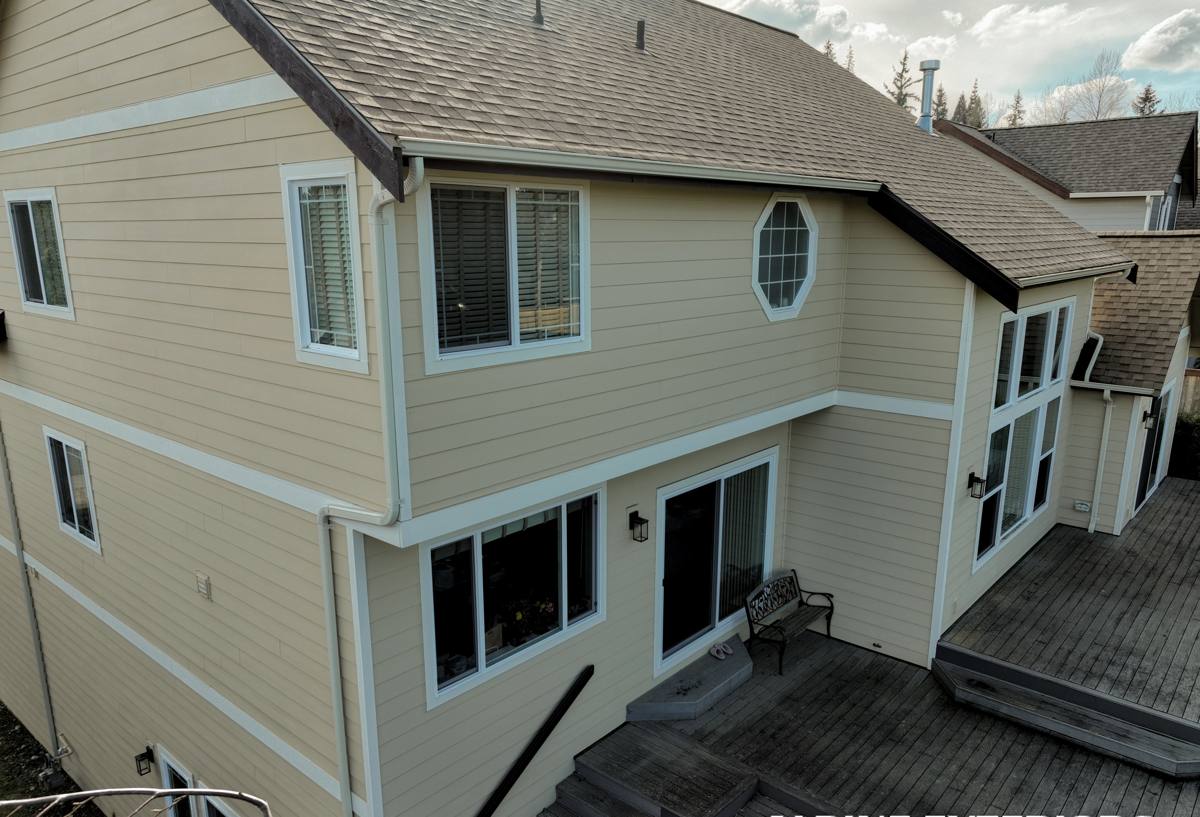
Kendall sits at the eastern edge of the territory our crews cover out of Ferndale, tucked into the Nooksack Valley country where the terrain starts climbing toward the foothills. It's a different setting than the flatter, more exposed ground closer to the water, but the weather that matters for siding decisions doesn't stop at any boundary. Whatcom County's marine air pushes inland through these valleys most of the year, and homes here still deal with long stretches of driving rain, damp shoulder seasons, and the kind of shaded, moisture-holding conditions that grow moss on anything that will hold it. Board and batten siding, when it's built and installed correctly, handles that environment well. When it's not, it's one of the more failure-prone siding styles out there — and we want Kendall homeowners to understand the difference before they sign a contract.
Why Board & Batten Fits This Area — and Why It Also Gets Misused
Board and batten is a vertical siding pattern: wide flat boards (or panels) installed with narrow battens covering the seams between them. It's a classic look for farmhouse, craftsman, and modern-rustic exteriors, and it shows up a lot on properties with some acreage or a more rural character — which describes a good share of homes around Kendall. The vertical lines also shed water differently than horizontal lap siding, which can be an advantage on walls that see heavy, direct rain.
The problem isn't the pattern — it's the material and the seams. Every batten joint and every board seam is a place water can get behind the cladding if it's not detailed correctly. On wood, engineered wood, or cheaper fiber cement products, repeated wetting at those seams is where rot and delamination start. We only install board and batten in James Hardie fiber cement, specifically because it's dimensionally stable and doesn't absorb water the way wood-based products do — the material itself won't swell, cup, or rot at the seams the way older approaches can.
What Moss Season Does to a Vertical Siding Pattern
Board and batten has more surface texture and more shadow lines than flat lap siding, which means more places for moisture and organic growth to hang on through a wet Whatcom County winter. On homes with shaded north or east walls — common in wooded lots around Kendall — moss and algae can establish on any siding surface that stays damp too long. Fiber cement doesn't feed mold and mildew the way wood does, and a factory-applied finish resists staining far better than field-applied paint, but no siding is moss-proof. Good roof overhangs, clean gutter work, and keeping vegetation trimmed back from walls still matter as much as the siding material itself.
What a Correct Board & Batten Installation Actually Involves
This is where most of the long-term performance of the siding gets decided — not in the product brochure, but in the details behind the boards.
Weather-Resistive Barrier and Rainscreen
Every board and batten job we install starts with a continuous weather-resistive barrier, properly lapped and flashed at every penetration, window, and transition. On most projects we also install a rainscreen gap — a small air space between the barrier and the siding — so any moisture that does get past the cladding has somewhere to drain and dry instead of sitting against the wall sheathing.
Fastening and Seam Layout
Battens need to land over real structure with proper fastener spacing and embedment depth, not just cosmetic placement. Board layout should be planned so seams fall in sensible locations and flashing details tie into windows, doors, and roof lines correctly — not patched in afterward.
Trim, Corners, and Transitions
Inside corners, outside corners, and transitions to stone, roofing, or other materials are the highest-risk spots for water intrusion on any siding job, and board and batten has more of these transitions than a plain lap job because of the vertical battens. These get built to shed water outward, every time, not caulked over as an afterthought.
Why We Install Only James Hardie for This Application
We don't install vinyl, LP SmartSide, cedar, primed spruce, or other fiber cement brands like Cemplank or Allura — on board and batten or anything else. That's a standard, not a sales pitch, and here's the reasoning specific to this siding style:
- Wood and engineered wood boards can look right for board and batten, but they absorb moisture at cut ends and seams, and repeated wet-dry cycling in a climate like this is exactly what causes swelling, cupping, and eventual rot.
- Vinyl board and batten is lightweight and can look convincingly like real board and batten from a distance, but it expands and contracts more with temperature swings, which can telegraph waviness at the seams over time, and it's not a fire-resistive material.
- Other fiber cement brands use different formulations and finish systems than James Hardie's ColorPlus process, and warranty coverage and factory finish durability vary brand to brand — we standardized on Hardie because of the combination of their engineered-for-climate product lines, the strength of their factory finish, and a warranty structure we're comfortable standing behind.
James Hardie's fiber cement is non-combustible, holds paint and factory finish far longer than wood substrates, and is engineered specifically for wet climates through its HZ5 product line — which is the specification we use throughout Whatcom County, including Kendall.
Comparing Board & Batten Approaches for a Wet Climate
| Material | Moisture Behavior | Seam/Batten Risk | Finish Longevity |
|---|---|---|---|
| James Hardie fiber cement | Dimensionally stable, doesn't absorb and swell | Low, when installed to spec | Factory ColorPlus finish, long-lasting |
| Wood or engineered wood | Absorbs moisture at seams and cut ends | Higher — seams are the common failure point | Field-applied paint, shorter repaint cycle |
| Vinyl | Doesn't rot, but expands/contracts with temperature | Can show waviness at seams over time | Color molded in, but limited to vinyl aesthetics; not repaintable easily |
| Other fiber cement brands | Similar base material, formulation varies | Depends on brand's finish and installation specs | Varies by manufacturer warranty and finish process |
Cost Factors for Board & Batten on Kendall Properties
Board and batten typically runs a bit more than plain lap siding of the same material, mainly because of the extra batten material and labor for the additional seams and fastening. Beyond the base material, a few things move the number on a specific project:
- Wall height and complexity — multi-story walls, dormers, and gables all add labor and material.
- Existing siding removal — tear-off and disposal of old wood, vinyl, or damaged siding adds time before installation even starts.
- Sheathing and moisture damage — if the old siding was hiding rot or a failed barrier, that repair happens before new siding goes on, and it's better to find and price it upfront than discover it mid-project.
- Rainscreen and flashing detail — proper drainage detailing costs a bit more upfront but is the single biggest factor in how long the job lasts.
- Trim and corner treatment — the number of corners, transitions, and window/door openings drives labor more than square footage alone.
Our Process for a Kendall Board & Batten Project
- On-site assessment — we look at wall exposure, existing siding condition, and any moisture or rot signs before quoting anything.
- Honest scope and estimate — including whether tear-off, sheathing repair, or additional flashing work is likely, not just a per-square-foot number.
- Barrier and rainscreen installation — the unglamorous part of the job that determines whether the siding lasts.
- Board and batten installation to manufacturer spec — correct fastening, seam layout, and trim detailing at every transition.
- Final walkthrough — so you understand what was installed and what basic maintenance (if any) it needs going forward.
Why Local Experience on This Style Matters
Board and batten is less forgiving of installation shortcuts than standard lap siding, simply because it has more seams and transitions per square foot of wall. A crew that installs it regularly in Whatcom County's rain and moss conditions knows where those transitions typically fail if they're rushed, and builds accordingly. That's a different level of attention than a crew installing it occasionally as a special order.
If you're weighing board and batten for a home in the Kendall area, we're happy to take a look at the property, talk through what the style would involve for your specific walls and exposure, and give you a straightforward estimate — no pressure, no obligation.