 Ferndale
 Decks Built for the Way Lynden Actually Weathers
A deck in Lynden doesn't have the same job as a deck in a dry inland climate. It sits under a long wet season, catches whatever moisture rolls in off the water, and spends months at a time shaded and damp enough for moss and algae to take hold. A deck that isn't built with that reality in mind will look fine the first summer and start showing problems by the third winter — soft spots, black streaking, rusted fasteners, railings that wobble because the posts never had a fighting chance against standing water.
We build and repair decks throughout the Ferndale service area, including the Lynden community, and we design every deck around Whatcom County's climate first, style second. That doesn't mean sacrificing how the deck looks — it means the framing, the drainage, and the material choices are all working in the same direction so the finished deck actually holds up.
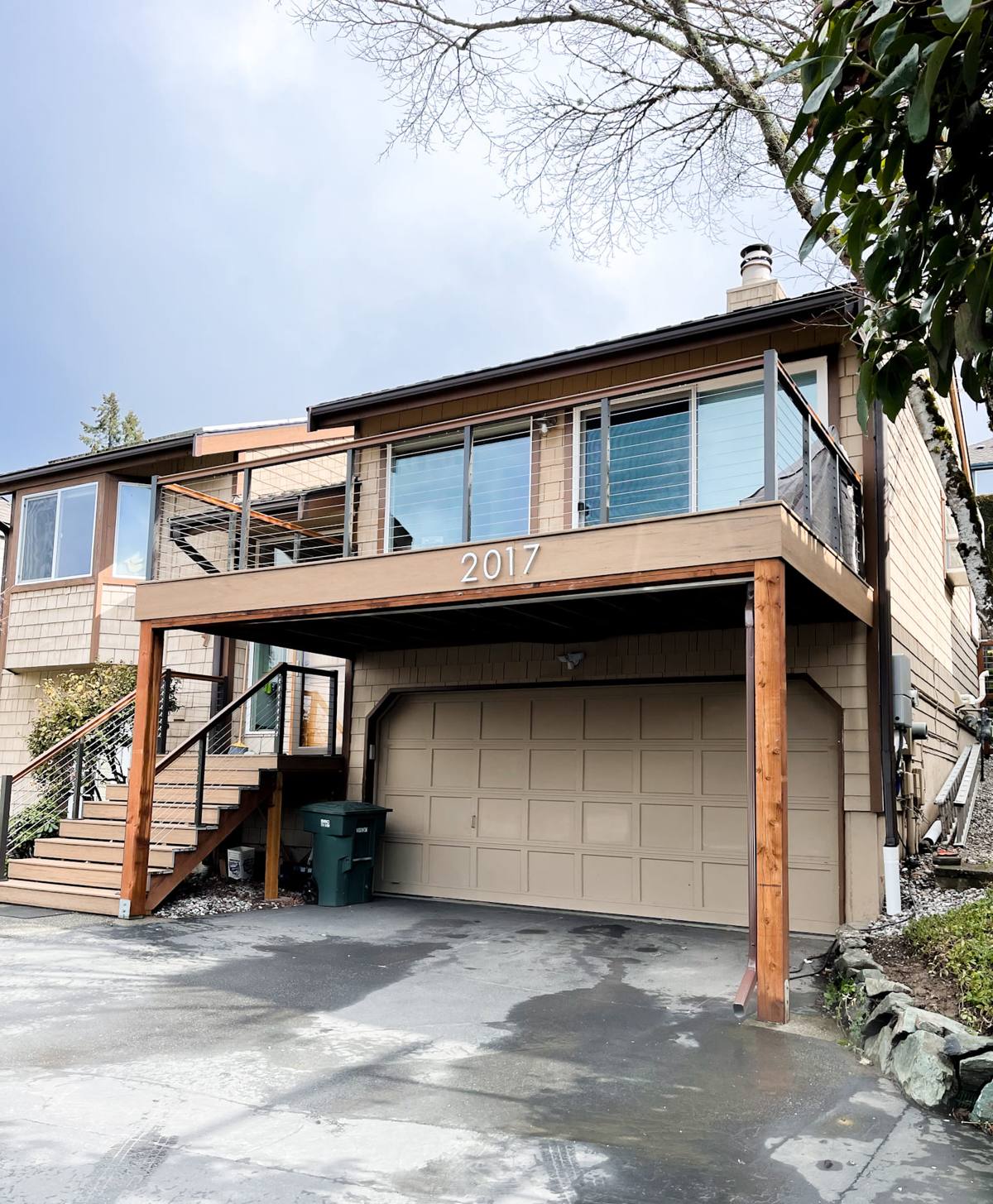
What Whatcom County Weather Does to an Outdoor Deck
Three things drive almost every deck problem we see in this region:
Driving Rain
It's not just the amount of rain — it's the duration. Wood and even some composite products need time to dry out between rain events. When that drying window never really opens, moisture gets trapped in end grain, around fasteners, and under improperly flashed ledger boards. That's where rot starts, almost always from the inside out, long before it's visible on the surface.
Salt Air
Being close to the water means airborne salt settles on everything outside, including your deck. Salt accelerates corrosion in fasteners, hidden hardware, and railing components. A screw or joist hanger rated for general outdoor use can start rusting years earlier here than it would further inland.
A Long Moss Season
Shaded decks, north-facing decks, and decks under tree cover in this area can stay damp for months. Moss and algae aren't just cosmetic — they hold moisture against the decking surface and make boards slick and dangerous underfoot, especially on stairs.
None of this means a deck can't hold up here. It means the build has to account for it from the framing stage forward, not just at the surface.
Decking Material Options for Lynden Homes
There's no single "right" material for every home — it depends on your budget, how much upkeep you want to do, and how much sun or shade the deck gets. Here's how the common options stack up for this climate specifically:
| Material | How It Handles Our Wet Climate | Maintenance | Relative Cost |
|---|---|---|---|
| Pressure-treated lumber | Good if properly sealed and re-sealed; prone to checking and moss growth if neglected | Annual cleaning and re-sealing recommended | $ |
| Cedar | Naturally moisture- and insect-resistant, but still needs sealing to prevent graying and moss | Sealing every 1–2 years | $$ |
| Capped composite | Excellent moisture resistance; the cap layer resists staining and slows algae growth | Periodic washing, no sealing | $$$ |
| Uncapped composite (older style) | More prone to moisture absorption and mold in shaded, damp spots than capped composite | Regular cleaning | $$ |
| PVC decking | Doesn't absorb moisture at all; very resistant to moss and mildew staining | Occasional washing | $$$ |
For decks that stay shaded most of the day — common with mature trees on Lynden-area lots — we generally steer clients toward capped composite or PVC, simply because they don't give moss and algae the same foothold that untreated or uncapped wood products do. For sunnier, more open decks, well-sealed cedar or pressure-treated lumber remains a solid, budget-friendly choice, as long as the maintenance schedule is kept up.
Framing and Substructure: The Part Nobody Sees
The visible decking gets all the attention, but the framing underneath is what determines whether your deck lasts fifteen years or thirty. In a climate like ours, this is where corners get cut most often — and where it costs the most to fix later.
- Ledger board flashing: Where the deck attaches to the house needs proper flashing to keep water from working its way behind the siding and into the wall framing. This is one of the most common failure points we find on older decks.
- Joist protection: Joist tape or an equivalent moisture barrier on top of the framing keeps water from pooling on bare lumber under the decking boards.
- Footings set below frost and drainage depth: Footings need to be sized and set appropriately for our soil and moisture conditions so the structure doesn't shift over time.
- Airflow underneath: Proper joist spacing and ground clearance let air move under the deck, which speeds up drying after rain and slows moss growth on the underside.
A deck that looks identical on top can have a completely different service life depending on whether these details were handled correctly underneath.
Fasteners, Hardware, and Railings That Hold Up to Salt Air
This is a detail a lot of homeowners never think about until hardware starts rusting through the decking boards. In a coastal-influenced climate, we use fasteners and structural hardware rated for corrosion resistance — not just standard exterior-grade hardware — particularly for joist hangers, structural screws, and any metal railing components. Cutting corners here is a false economy: replacing a handful of corroded screws is easy, but replacing rusted-through structural hardware means pulling up decking to get at it.
For railings, we talk through options based on how exposed the deck is to weather and salt air — powder-coated aluminum, properly finished wood, or composite railing systems all have different maintenance needs and different tolerances for our conditions.
Our Build Process, Start to Finish
Every custom deck we build in the Lynden area follows the same process, whether it's a simple ground-level platform or a multi-level deck with built-in features:
- On-site consultation: We walk the property, look at drainage patterns, sun and shade exposure, and how the deck will connect to the house.
- Design and material selection: We go over material options honestly, including trade-offs in cost, maintenance, and how each option performs in our climate specifically.
- Permitting: We handle the permitting process required for the scope of the project, so you're not left figuring out local requirements on your own.
- Framing and structural work: Footings, ledger flashing, joists, and moisture protection go in first — this is the stage that determines the deck's lifespan.
- Decking, railings, and finish work: The visible surface goes on last, with attention to fastener placement and drainage gaps between boards.
- Final walkthrough: We go over the finished deck with you, including a straightforward maintenance rundown for the material you chose.
Permits and Local Requirements
Deck construction in Whatcom County typically requires a permit once you're past a certain size or height, and requirements can vary depending on your specific property and jurisdiction. Rather than leaving that research to you, we handle the permitting conversation as part of the build process, so the project is built to code from the footings up. This matters more than it might seem — an unpermitted deck can create real problems later, whether that's at resale or with insurance, and it's not worth the risk to skip it.
Keeping a Deck Ahead of the Moss Season
Even a well-built deck needs some seasonal attention in this climate. The good news is that most of it is simple and doesn't take much time if you stay on top of it:
- Sweep leaves and debris off the deck surface regularly, especially in fall — trapped organic material holds moisture and feeds moss growth.
- Wash the deck surface at least once a year with a deck-safe cleaner to remove early moss and algae before it takes hold.
- Check gaps between boards periodically to make sure debris hasn't built up and blocked drainage.
- Re-seal wood decking on the schedule appropriate for the product — don't wait until the wood looks gray and worn.
- Look underneath the deck once a year for standing water, sagging joists, or signs of rot near the ledger board.
- Address slick, mossy spots on stairs and walking surfaces promptly — they're a real fall hazard in wet weather.
Staying ahead of these small tasks is far cheaper than dealing with structural repairs down the road.
Why a Local Crew That Works in Lynden Regularly Matters
Deck-building advice that works in a dry climate can be actively wrong here. A crew that mostly builds decks in different conditions may not think twice about flashing details, fastener grade, or how much airflow a deck needs underneath — because where they usually work, it doesn't matter as much. Here, it does.
We're based in Ferndale and build decks throughout this part of Whatcom County, including Lynden, so the climate considerations in this page aren't theoretical to us — they're what we build around on every project. That familiarity also means a smoother process for you: fewer surprises with permitting, material choices that make sense for your specific site conditions, and a crew that shows up understanding the ground they're building on.
Get a Free, No-Pressure Estimate
If you're considering a new deck or need to know whether an existing one is still sound, we're happy to take a look and give you an honest assessment. Use the form below to request a free estimate — no pressure, just a straightforward conversation about what your deck needs.