 Ferndale
 Window Installation Built for Lynden's Climate
Lynden sits inland from the coast, but it still shares the same marine-influenced weather pattern that runs through Whatcom County and down through Ferndale — long stretches of damp, overcast days, driving rain that comes in sideways more often than straight down, and a moss season that can run from October clear through April. Windows here don't just keep out cold air. They're the first line of defense against moisture that's looking for any gap, seam, or aging seal to work its way into a wall cavity.
A window that's installed even slightly wrong won't necessarily leak the first year. It'll leak the third or fourth year, once caulk shrinks, a sill pan wasn't properly sloped, or house wrap wasn't lapped correctly behind the nailing flange. By then the damage is inside the wall, not on the surface, which is why installation quality matters more than which brand of window you pick.
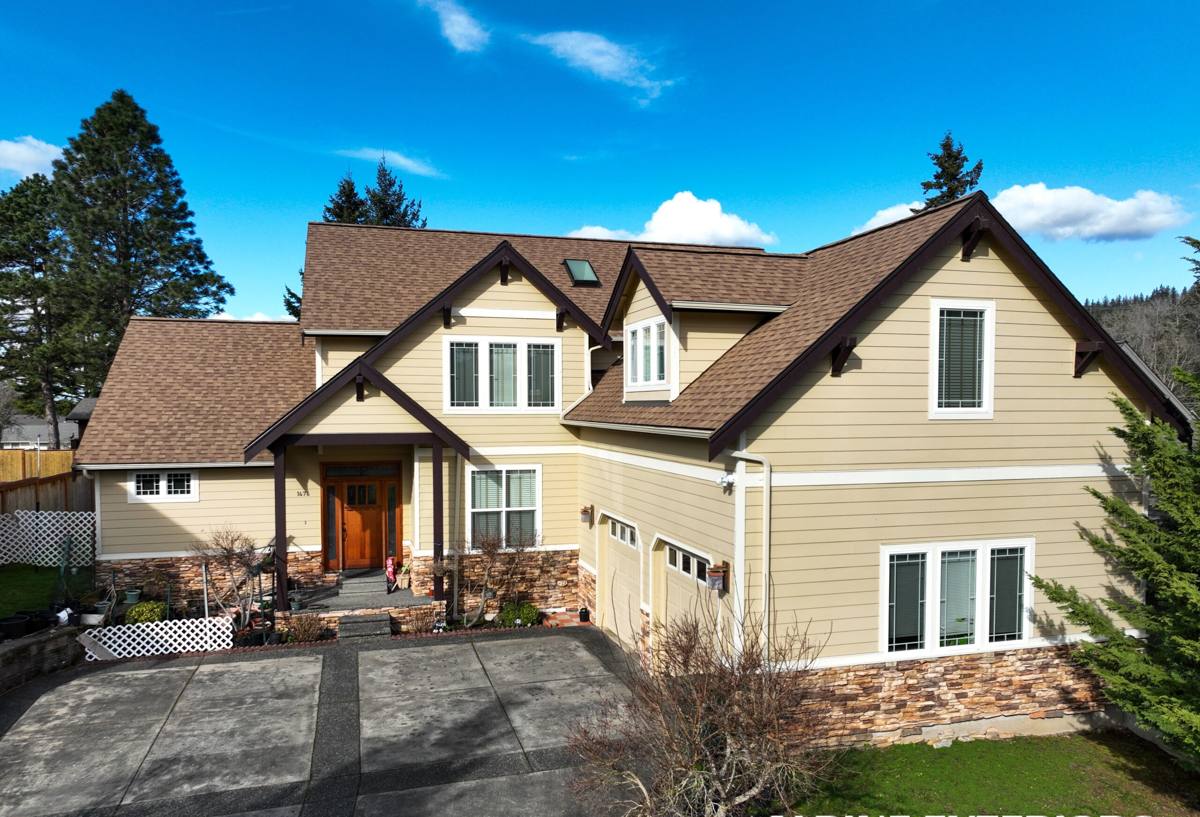
How This Climate Wears Down Windows Over Time
A few things show up again and again on Lynden homes we've worked on:
- Wood and vinyl frames that have absorbed moisture at the corners, where factory seals are weakest
- Condensation between panes, meaning the seal on a double-pane unit has already failed
- Soft or discolored trim and siding directly below windows — a sign water has been running down the face of the wall instead of being directed away from it
- Drafts around the sash that get noticeably worse once the wind picks up out of the south or southwest
- Moss or algae staining creeping onto window trim from a roofline or gutter that isn't shedding water the way it should
None of these are emergencies on their own. But left alone, they turn a window replacement into a window-and-wall-repair project, which costs more and takes longer.
What a Correct Window Installation Actually Involves
Swapping in a new window is the easy part. The work that actually determines whether it performs for the next 20-plus years happens in the rough opening, before the window ever goes in.
The steps that matter most
- Remove and inspect. Old windows come out carefully so we can check the sheathing, framing, and existing flashing for rot or moisture damage before anything new goes in.
- Sill pan flashing. A sloped, sealed pan at the bottom of the opening gives any water that gets past the window a way out, instead of a place to sit and soak into the framing.
- Proper flange integration with the water-resistive barrier. The window's nailing flange has to be lapped correctly with the house wrap above and below it — reversed or missing laps are one of the most common causes of hidden leaks.
- Shimming and leveling. A window that isn't square and properly shimmed will bind, won't seal against weatherstripping correctly, and puts stress on the frame that shortens its life.
- Insulating the gap. Low-expansion foam or backer rod and sealant fills the space between the frame and rough opening without bowing the frame inward.
- Exterior sealant and trim. The final bead of sealant is a backup, not the primary defense — if a job relies on caulk alone to keep water out, something upstream was skipped.
Every one of those steps is invisible once the trim goes back on. That's exactly why it matters who's doing the work.
Choosing the Right Window for a Lynden Home
Frame material matters less than installation quality, but it's still worth getting right for the climate and the type of home. Whatcom County has a wide mix of housing stock — older farmhouses, mid-century ranches, and newer construction — and the right window depends on the structure as much as the budget.
| Frame Material | Moisture Behavior | Maintenance | Typical Cost Factor |
|---|---|---|---|
| Vinyl | Won't rot; handles constant damp exposure well | Low — occasional cleaning | Lower |
| Fiberglass | Very stable in wet, temperature-swinging conditions; minimal expansion/contraction | Low | Mid to higher |
| Wood (unclad) | Attractive but vulnerable to moisture intrusion at joints without diligent upkeep | High — regular painting/sealing | Mid to higher |
| Aluminum-clad wood | Good exterior protection, but relies on the cladding seams staying sealed | Moderate | Higher |
We steer most Lynden customers away from unclad wood on the weather-facing sides of a house — not because the material is bad, but because the maintenance schedule it demands doesn't match how most people actually want to spend their weekends. Vinyl and fiberglass carry the moisture load of this climate with far less upkeep, and that's a fair trade-off to lay out honestly rather than push a look that costs more to maintain long-term.
Cost Factors Worth Knowing Before You Get a Quote
| Factor | Why It Moves the Price |
|---|---|
| Window size and shape | Custom or oversized units cost more than standard-size replacements |
| Full-frame vs. insert replacement | Full-frame lets us address flashing and rough-opening issues; inserts are faster but only appropriate when the existing frame is sound |
| Number of openings | Per-window cost typically drops as the total count on a job goes up |
| Existing damage | Rot or moisture damage found during removal adds repair work before the new window can go in |
| Trim and siding tie-in | Matching existing trim profiles or siding takes more time than a simple swap |
Our Process, Start to Finish
We keep the process straightforward because the last thing a homeowner needs is surprises partway through:
- Walkthrough and assessment. We look at each opening, check for existing moisture or rot issues, and talk through what full-frame versus insert replacement makes sense.
- Written estimate. Clear scope, clear pricing, no vague allowances.
- Product selection. We help you weigh frame material, glass package, and finish against your budget and how exposed that side of the house is to wind-driven rain.
- Install day. Careful removal, inspection of the opening, correct flashing and sealing sequence, and cleanup of the work area each day.
- Final walkthrough. We check operation, sealing, and trim with you before calling the job done.
Why a Crew That Already Works Lynden Matters
Window installation done right is a local trade, not just a product installation. A crew that regularly works Lynden and the surrounding Ferndale area already understands the housing stock — the difference between how an older farmhouse's walls are built versus newer construction, how much wind exposure a given orientation typically sees, and where moss and moisture problems tend to start on homes in this part of Whatcom County. That familiarity means fewer surprises once an opening is exposed, and a more accurate estimate up front instead of change orders after the fact.
It also means we're not disappearing after the invoice clears. If a seal needs a second look after the first hard winter storm, we're a short drive away, not a call center for a regional installer who subcontracted the actual labor.
Mistakes We See From Rushed or Out-of-Area Installs
A lot of the water damage we get called out to fix didn't come from a bad window — it came from a rushed or incomplete installation:
- Nailing flanges caulked to the wall instead of properly lapped with house wrap
- No sill pan flashing, leaving nowhere for incidental water to drain
- Foam insulation over-expanded and bowing the frame, causing the sash to bind
- New windows set into openings with existing rot that was never addressed
- Exterior trim caulked shut with no way for the assembly to shed water that does get behind it
Every one of these is preventable. None of them show up as a problem on day one — that's exactly why we don't cut corners in the steps nobody sees once the trim is back on.
Keeping New Windows Performing for the Long Haul
Once new windows are in, a little seasonal attention goes a long way in this climate:
- Clear debris and moss buildup from tracks and sills, especially after the fall leaf drop
- Check exterior sealant beads once a year for cracking or separation
- Keep gutters and downspouts clear so water isn't sheeting down the wall above a window
- Operate each window through its full range a few times a year so weatherstripping doesn't set in one position
If you're weighing whether it's time to replace windows on a Lynden home, or you want a second opinion on an installation someone else quoted, we're happy to walk the property with you. The estimate is free, there's no pressure, and you'll get a straight answer about what your home actually needs — use the form below to get started.