 Ferndale
 Lynden's Climate Puts Real Wear on Older Windows
Lynden sits inland from Bellingham Bay, but it still lives under the same marine weather pattern that defines Whatcom County: long stretches of driving rain, heavy fog off the Nooksack Valley farmland, and a moss season that can run from October through April in a wet year. Homes here don't deal with hurricane-force wind, but they deal with something just as damaging over time — persistent moisture that finds every gap, every failed seal, and every place where old flashing has started to give up.
Older wood and aluminum-frame windows in particular show their age in this climate. Wood swells, sticks, and eventually rots at the sill. Aluminum frames conduct cold straight through, which fogs glass and leaves streaks of condensation on the interior during the coldest, wettest months. Even newer vinyl windows installed without proper flashing can let water track behind the siding, where it does damage you don't see until a wall starts to feel soft.
The same marine air that carries salt in off the Strait and Bellingham Bay toward Ferndale also pushes moisture-laden weather inland toward Lynden. It shows up less as salt corrosion here and more as sustained dampness — the kind that keeps window sills wet for days at a time and grows moss on north-facing trim before anyone notices a problem underneath.
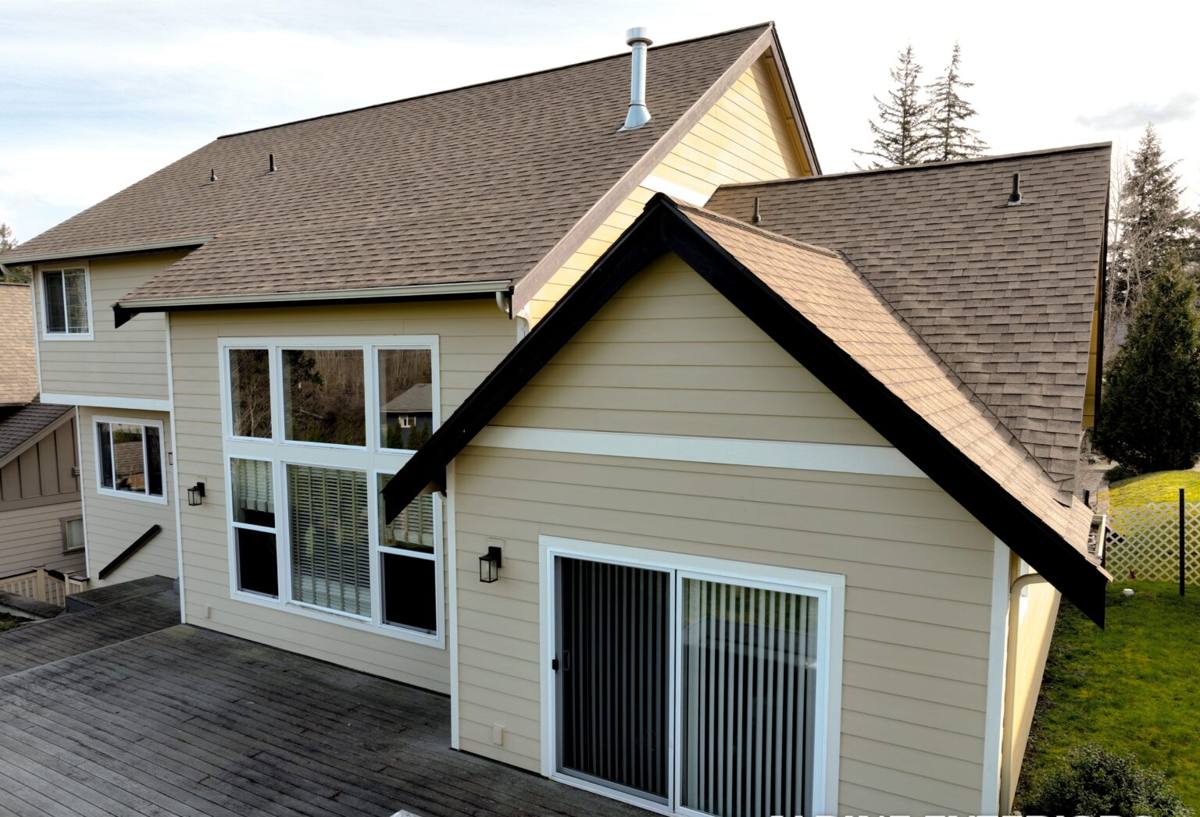
Signs a Lynden Home Needs Window Replacement
Windows rarely fail all at once. They give small warnings first, and in a climate like ours, waiting on those warnings usually means more repair work later, not less. Walk your home's exterior and interior and check for the following:
- Fogging or a milky haze between panes of double-glazed glass (a sign the seal has failed and the insulating gas has escaped)
- Soft, spongy, or visibly rotted wood at the sill, jamb, or exterior trim
- Windows that are difficult to open, close, or lock, or that have swollen shut in wet months
- Visible daylight or a noticeable draft around the frame when it's closed
- Paint that keeps peeling or bubbling on the interior sill, often a sign of moisture working its way in from outside
- Moss or dark staining building up on the exterior trim or brickmold
- A noticeable jump in heating costs during the fall and winter compared to prior years
Any one of these on its own might just need a repair. Several of them together, especially on a home more than 20-25 years old, usually means the windows have reached the end of their useful life.
What a Correct Window Replacement Job Actually Involves
Removal and Opening Inspection
The old window comes out carefully, and the opening gets inspected before anything new goes in. This is the step that gets skipped by crews in a hurry, and it's the most important one in our climate. If there's rot in the framing, a failed weather barrier, or water staining on the sheathing, that has to be addressed now — not covered up and left to keep rotting behind a brand-new window.
Flashing and Moisture Management
Proper flashing is what keeps wind-driven rain from working its way behind the siding and into the wall cavity. That means correctly lapped sill pan flashing, side flashing, and head flashing integrated with the home's existing water-resistive barrier — not just a bead of caulk around the edge. This is the single biggest difference between a window that lasts and one that causes a hidden moisture problem five years down the road.
Setting, Shimming, and Sealing
The new window has to be set plumb, level, and square, then shimmed and fastened according to the manufacturer's instructions so the frame isn't stressed or bowed. Insulation goes around the gap between the frame and the rough opening — not too little, which leaves cold spots, and not too much, which can bow the frame inward. Exterior sealant is applied at specific points, not everywhere, because sealing the wrong spots can actually trap water instead of letting it drain.
Trim, Finish, and Cleanup
Interior and exterior trim gets reinstalled or replaced, caulked, and painted or finished to match. A correct job leaves the opening looking finished on both sides and performing as a sealed, insulated unit — not just a window sitting in a hole.
Choosing Materials That Hold Up in Whatcom County
There's no single "best" window for every home, but there are meaningful trade-offs worth understanding before you decide. We'll talk through these based on your home's age, exposure, and budget rather than pushing one product line.
| Frame Material | How It Performs Here | Trade-Offs |
|---|---|---|
| Vinyl | Good moisture resistance, no painting needed, solid energy performance | Frame can expand/contract with temperature swings; quality varies a lot by manufacturer |
| Fiberglass | Very stable in wet, temperature-shifting climates; holds paint well | Higher upfront cost than vinyl |
| Wood (clad exterior) | Classic look, good insulator | Requires ongoing maintenance where cladding meets glass; more installation-sensitive |
| Aluminum | Strong and low-maintenance | Poor insulator; prone to interior condensation in our damp winters — we generally don't recommend it for full-home replacement here |
On glass, we default to low-E, double- or triple-pane units for this area. The insulating value matters less for summer heat here than it does for cutting condensation and holding indoor comfort during our long, damp, gray stretch of the year. Argon or krypton gas fill between panes adds a modest but real performance boost for a small cost difference.
How Our Process Works, Start to Finish
Estimate and Assessment
We walk the exterior and interior with you, look at each window in question, and check for signs of hidden moisture damage before quoting anything. You get a clear, itemized estimate — no pressure, no inflated "today only" pricing.
Ordering and Lead Time
Once you approve the scope, windows are ordered to the exact measurements of your openings. Custom sizes and specific glass packages typically take a few weeks to arrive, and we'll give you a realistic timeline rather than an optimistic one.
Install Day
Work areas are protected, old windows are removed and disposed of, and each opening is inspected and corrected before the new unit goes in. We don't install over a problem — if we find rot or a failed barrier, we'll show you and talk through the fix before moving forward.
Final Walkthrough
Every window gets operated, checked for square and smooth function, and inspected inside and out before we consider the job done. You should be able to see and feel the difference immediately — tighter operation, no draft, and a finished look on both sides of the wall.
What Drives the Cost of Window Replacement in Lynden
Costs vary by window size, frame material, glass package, and how many openings you're doing at once. Beyond the window unit itself, a few site-specific factors tend to move the price:
- Whether the opening is standard size or needs a custom-built unit
- Condition of the existing framing — hidden rot repair adds labor and material that can't be quoted until the old window is out
- Second-story or hard-to-access windows requiring additional staging or equipment
- Full-frame replacement versus insert (pocket) replacement, where the existing frame is sound enough to build into
- Trim and finish work needed to match existing interior woodwork or exterior siding
We'd rather flag a likely cost driver during the estimate than surprise you with a change order mid-project. If we can't know something for certain until the wall is opened up, we'll say so up front.
Why Local Experience in Lynden Matters
A crew that regularly works Ferndale, Lynden, and the rest of Whatcom County knows what our weather actually does to a house over a full year, not just what a spec sheet promises. That means recognizing rot patterns specific to our rain exposure, understanding how moss and constant dampness affect trim and flashing choices, and knowing which products have a track record of holding up here versus looking good in a showroom.
It also means straightforward logistics — we're not driving in from out of the area, scheduling around a long commute, or unfamiliar with local permitting expectations. If something needs a follow-up visit, we're already working in the neighborhood.
Keeping New Windows Performing Through Moss Season and Beyond
New windows still need basic upkeep in this climate. A few habits go a long way:
- Rinse pollen, dirt, and organic buildup off tracks and sills a couple of times a year so drainage weep holes stay clear
- Check exterior caulk lines annually, especially after a hard winter, and touch up anywhere it's cracked or pulled away
- Keep gutters and downspouts clear so runoff doesn't sheet directly down onto window heads
- Trim back vegetation or moss growth near window trim so damp organic material isn't sitting against the exterior finish
None of this is heavy maintenance — it's the kind of seasonal check that keeps a properly installed window performing at its best for decades instead of just the first few years.
If your windows in Lynden are showing any of the signs above, or you just want an honest read on whether repair or full replacement makes more sense, we're happy to take a look. Request a free, no-pressure estimate using the form below and we'll walk the property with you and talk through real options.