 Ferndale
 Window Installation in Bellingham: Built for Bay Air, Driving Rain, and a Long Moss Season
Bellingham sits right on the water, and that location shapes what a window installation needs to survive here in a way that inland projects don't have to think about. Salt-tinged air moves off Bellingham Bay and the Salish Sea year-round, rain arrives sideways as often as it falls straight down, and a moss and mildew season that stretches across most of the calendar year works on anything shaded or slow to dry. A window sits at the exact seam between the inside of a house and all of that weather, which is why so many exterior moisture problems we find in this city trace back to a window that wasn't installed correctly, not to the window product itself.
This page is specifically about installing windows in Bellingham, whether that's a full-frame replacement on an older hillside home or new windows going into a home closer to the water. The right glass and frame matter, but the installation detail underneath, the flashing, the sill pan, the sealing, is what actually determines whether a window performs for decades or starts letting water into the wall within a few wet seasons.
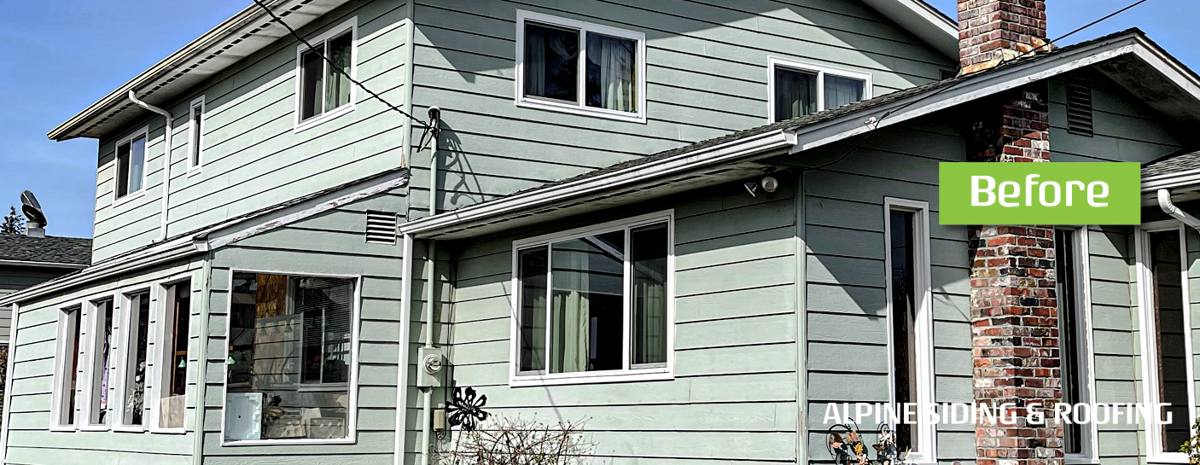
What Bellingham's Climate Demands From a Window Installation
Salt Air and Hardware Corrosion
Homes close to the bay get a steady, low-grade dose of salt-carrying air even on days without an obvious storm. Over years, that exposure accelerates corrosion on window hardware, screen frames, and any fastener that isn't rated for it. It's a slow kind of damage, hinges get stiff, screen frames pit, cheap cladding on hardware starts to show through, and it's easy to miss until a window that used to operate smoothly stops closing the way it should.
Wind-Driven Rain and Flashing
Rain here rarely falls straight down. Wind off the bay pushes it sideways into head flashing, jamb flashing, and the sill beneath the window frame, which is a much tougher test of an installation than a simple annual rainfall total suggests. A window installed with correct, lapped flashing sheds that sideways rain without issue. A window installed with flashing that's an afterthought, or with caulk asked to do a job that flashing should be doing, tends to leak eventually, sometimes not until a few winters in.
Moss, Shade, and Sill Moisture
Bellingham's hillside lots and tree-covered properties hold shade and dampness longer than open, sun-exposed ground does, and that combination is exactly what moss and mildew need to take hold. On windows, that shows up as growth in the corners of the sill, slow staining under the frame, and on wood-framed windows, softening at the sill and lower corners if drainage isn't handled correctly during installation.
Why Installation Quality Matters More Than the Window Itself
Most of the window failures we get called out to inspect in Bellingham aren't failures of the window product. They're installation shortcuts that didn't show up on day one, a sill pan that wasn't pitched to drain, flashing that wasn't tied into the house wrap, weep holes that got caulked shut by mistake. A modest, mid-range window installed correctly will consistently outperform a premium window installed carelessly in this climate, because the installation is what stands between the window and a wall assembly that's constantly under wind-driven rain and salt exposure. That's the honest starting point for any window conversation here: get the installation right first, then talk about which product fits your home and budget.
Full-Frame Replacement vs. Insert Installation
One of the first decisions on a Bellingham window project is whether it should be a full-frame replacement, which removes the old window down to the rough opening and rebuilds the flashing from scratch, or an insert installation, which fits a new window into the existing, still-sound frame.
| Approach | What It Involves | Best Fit | Trade-Offs |
|---|---|---|---|
| Insert installation | New window fits into the existing frame; less disruption to surrounding siding and trim | Homes with a sound, properly flashed existing frame and no hidden moisture damage | Faster and less invasive, but it can't fix a frame or flashing problem that's already there |
| Full-frame replacement | Old window and frame removed to the rough opening; flashing and sill pan rebuilt from scratch | Homes with existing moisture damage, an outdated or never-correct flashing job, or a full remodel | Costs more and takes longer, but it's the only honest fix when there's already damage behind the old frame |
We'll tell you which situation your home is actually in rather than defaulting to whichever option is faster or cheaper. On a bay-exposed or hillside Bellingham property, we'd rather find out during the estimate that a frame needs full replacement than have you find out two winters later when water shows up on an interior wall.
What a Correct Window Installation Actually Involves
The visible part of a window installation, the frame going into the opening, is the easy part. What determines whether it holds up in this climate is everything around it:
- A sill pan pitched to shed water outward and away from the framing, not left flat where water can pool under the window
- Head flashing integrated with the house wrap or building paper above the opening, lapped so water sheds down and out instead of behind the wall
- Jamb flashing tied into the surrounding wall assembly, not relying on a bead of caulk to do that job alone
- Weep holes and drainage paths left clear and functional after installation, not accidentally sealed shut
- Corrosion-resistant fasteners and hardware suited to a consistently damp, salt-influenced environment
- Insulation and air sealing around the frame that doesn't trap moisture against the surrounding framing
- Square, level, and properly shimmed installation so the window operates smoothly and seals evenly for its full service life
None of this adds meaningfully to the cost of a window project relative to the window itself. Skipping it is what turns a window that should last decades into one that's leaking behind the wall within a handful of wet seasons, and by the time that's visible from inside the house, the fix usually involves more than the window.
Our Process for a Bellingham Window Installation
Walkthrough and Assessment
We start by looking at the specific openings involved, which walls face the weather directly, which are shaded and slower to dry, and whether the existing frames or surrounding wall already show signs of moisture damage that needs addressing before new windows go in. Installing a new window into a rotted rough opening just buries the same problem behind new material.
Planning Before Install Day
We work out flashing details, sill pan pitch, and how each opening ties into the surrounding siding and trim before crews start pulling old windows. Deciding those details on paper first, rather than improvising on install day, is what keeps a multi-window project consistent from the first opening to the last.
Installation to Spec
Every flashing lap, fastener, and sealing detail follows manufacturer installation requirements suited to this climate, not a generic national standard written for a drier region. That's what keeps a window's warranty intact and what actually determines whether it performs the way it's supposed to for decades.
Final Walkthrough
We walk the finished job with you, operate every window, and cover what little maintenance is actually needed, checking weep holes and hardware occasionally, so you know what a well-installed window should look and feel like going forward.
Cost Factors for Window Installation in Bellingham
| Factor | Why It Matters Here |
|---|---|
| Full-frame vs. insert installation | Full-frame costs more but is the only real fix when flashing or the frame is already compromised |
| Number and size of openings | Larger or custom-sized openings take more time to flash and finish correctly |
| Existing moisture damage | Rot found at a sill or rough opening during tear-out needs repair before a new window goes in |
| Frame material and glass package | Vinyl, fiberglass, wood, and aluminum carry different upfront costs and different long-term upkeep in this climate |
| Site access and wall height | Hillside lots and upper-story openings common in parts of Bellingham can add labor and staging time |
We'll walk your specific home and give you real numbers rather than a rough per-window estimate off the phone. Two Bellingham homes with the same number of windows can land at very different costs depending on how many of these factors are actually in play.
Why Hire a Crew That Already Works Bellingham
Window installation rewards local, repeated experience with this specific climate in a way that's easy to underestimate. A crew that's installed windows across Bellingham through multiple wet seasons already knows which orientations need extra flashing attention because of bay exposure or shade, how much pitch a sill pan actually needs in a climate this wet versus what a generic install guide assumes, and which hillside and waterfront lots see enough wind-driven rain to change how an opening should be detailed. That judgment doesn't show up on a spec sheet or a product brochure. It's the difference between windows that still seal and operate correctly in fifteen years and windows that are showing sill staining or drafts within five.
If you're weighing new windows for a Bellingham home, whether that's a full-frame replacement, an insert installation, or you're just not sure which one your house actually needs, we're glad to walk the property, talk through what your specific openings and exposure call for, and give you a straightforward, no-pressure estimate. There's a form below, reach out and we'll set up a time to take a look.