 Ferndale
 Lynden's Climate Is Harder on Siding Than It Looks
Lynden sits inland from the water, but it is not sheltered from Whatcom County's weather. Marine air moves through this whole corridor of northwest Washington, carrying moisture and a fine trace of salt with it, and it settles into wood, seams, and fastener heads whether a house sits on the water or twenty minutes from it. Add driving rain that comes in sideways during winter storms and a moss season that can stretch from early fall through late spring, and you have conditions that punish any siding product with a weak point.
That combination is why we do not treat "siding" as a generic category on Lynden homes. Wood-based products absorb that moisture and eventually swell, delaminate, or rot at the edges. Vinyl flexes and gaps in temperature swings and never really stops the wind-driven rain, it just channels it somewhere else. Fiber cement, installed correctly, is the one exterior cladding built to shrug off this specific mix of wet and cold without becoming a maintenance project every few years.
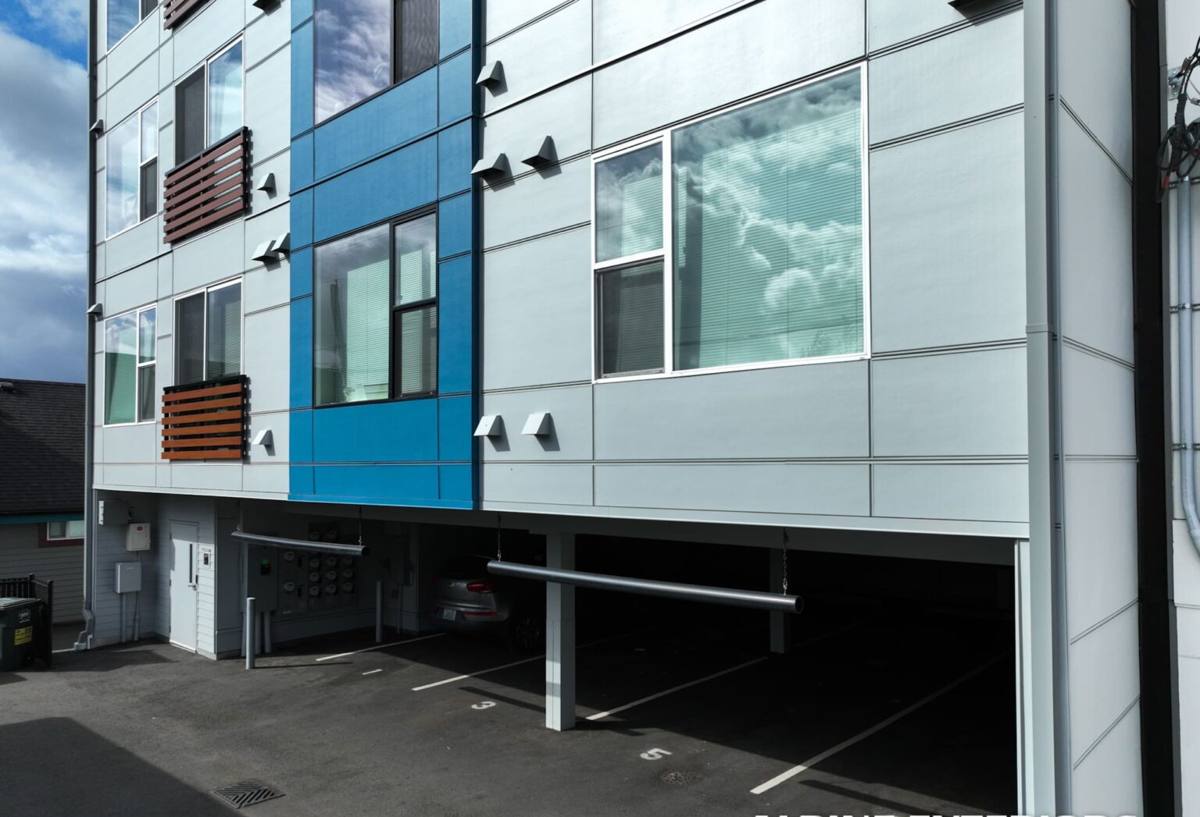
Why We Only Install James Hardie Fiber Cement
We install James Hardie products exclusively on Lynden homes — not LP SmartSide, not vinyl, not primed spruce or cedar, not other fiber cement brands. This isn't a sales preference; it's a standard we hold because of what we've seen hold up under repeated wet-dry cycling in this climate and what hasn't.
- Non-combustible core — fiber cement doesn't feed a fire the way wood-based siding can, which matters more every year as wildfire smoke and drought stress spread further into western Washington's fire seasons.
- ColorPlus factory finish — baked-on color that resists the fading and chalking that field-painted siding shows first, especially on south and west elevations that take direct sun between rain systems.
- HZ5 engineering — Hardie's cold- and wet-climate formulation is built for freeze-thaw cycling and sustained moisture exposure, which is exactly what a Lynden winter delivers.
- A warranty that's actually transferable — useful if the home sells, since a documented Hardie installation carries value in a resale inspection.
We'll talk plainly about the trade-offs of other products if you ask — cost, appearance, or installation speed can make them tempting — but we don't put our crew's name on installs we don't believe will hold up here.
What a Correct Fiber Cement Installation Actually Involves
Fiber cement siding fails early almost exclusively because of installation mistakes, not the material itself. The board is only as good as the water management system built behind it. On every Lynden project we control for the details that get skipped on rushed jobs:
Water management comes first
Correct weather-resistive barrier layering, properly lapped and taped seams, and flashing at every horizontal transition — window heads, doors, decks, roof-to-wall intersections — are what actually keep driving rain out. The siding itself is the last line of defense, not the only one.
Fastening and clearances
Hardie specifies exact fastener placement, embedment depth, and butt-joint treatment. Board bottoms need proper clearance off decks, patios, and grade — a detail that's easy to shortcut and expensive to fix once trim and landscaping go back in. We hold factory clearances even when it means adjusting grading or hardscape lines.
Caulking and gapping
Fiber cement needs to be gapped at trim and inside corners per manufacturer spec, then sealed with a caulk rated for real movement — not just cosmetically filled. Skipping this is one of the most common causes of moisture intrusion behind otherwise well-installed siding.
Cut-edge sealing
Every field cut exposes raw fiber cement that needs sealing before it goes on the wall. This step gets skipped constantly on production crews trying to move fast. It takes minutes and it's the difference between a cut edge that lasts and one that starts absorbing water in year one.
James Hardie Product Lines That Make Sense for Lynden
| Product | Best Use | Why It Fits Lynden |
|---|---|---|
| HardiePlank lap siding | Primary wall cladding | Most common choice locally; wide profile and color range, proven wet-climate track record |
| HardiePanel vertical siding | Accent walls, gables, modern facades | Clean lines for contemporary Lynden builds; fewer horizontal laps means fewer water-entry points on steep gable faces |
| HardieTrim boards | Corners, window and door casing, fascia | Matches the plank system so trim doesn't become the weak point in an otherwise correct install |
| HardieShingle siding | Accent sections, dormers | Traditional look without the moisture uptake of cedar shingle in a damp climate |
Our Process for a Lynden Fiber Cement Project
- On-site assessment — we walk the exterior, check existing water damage or rot at grade and trim, and confirm what's actually behind the current siding before quoting.
- Detailed written estimate — scope, product line, color, and a fixed price, not a vague range.
- Tear-off and substrate check — old siding comes off, sheathing is inspected, and any rot or damage is repaired before anything new goes up. This step gets skipped by crews trying to hit a low bid; we won't cover over a problem.
- Weather barrier and flashing — the water management layer goes in first and gets inspected before a single board is hung.
- Installation to Hardie spec — correct fastening, gapping, clearances, and cut-edge sealing throughout.
- Trim, caulking, and final detail — the finishing work that determines how the job looks and performs in five years, not just on install day.
- Walkthrough — we go over the finished exterior with you before we consider the job done.
What Fiber Cement Siding Costs in Lynden
Every home is different, but the main cost drivers are consistent. We'll give you a firm number after seeing the house — these are the factors that move it:
| Factor | Effect on Cost |
|---|---|
| Tear-off and substrate repair | Rot or damaged sheathing found during removal adds cost but prevents new siding from failing early |
| Home size and wall complexity | More corners, gables, and dormers mean more cutting, flashing, and labor time |
| Product line and profile | Plank width, panel style, and shingle accents each price differently |
| Color and finish | ColorPlus factory finishes vs. field painting affect both cost and long-term maintenance |
| Trim scope | Full HardieTrim replacement at corners and openings vs. reusing sound existing trim |
| Access and site conditions | Multi-story sections, tight lot lines, or landscaping that limits staging can add labor time |
Maintaining Fiber Cement Siding Through a Whatcom County Winter
Fiber cement is low-maintenance, not no-maintenance. In this climate, a short annual routine keeps it performing the way it's supposed to:
- Rinse siding once or twice a year, especially north-facing and shaded walls where moss and algae take hold first
- Keep gutters clear so overflow isn't running down the face of the siding during heavy rain events
- Trim back landscaping and tree limbs that hold moisture against the wall or shade a section long enough for moss to establish
- Check caulking at trim joints and penetrations every couple of years and re-seal if it's cracked or pulling away
- Watch for moss creeping up from grade at the base of walls — it's a sign moisture is sitting there longer than it should
None of this is heavy work, but it's the kind of thing that gets skipped until a small issue becomes a bigger repair. A five-minute walk around the house each fall catches most problems early.
Why It Matters That We Already Work in Lynden
A crew that regularly works Whatcom County homes already knows the moisture patterns, the elevation and drainage quirks of local lots, and how a house here actually weathers over a few winters — not just how it looks on install day. That local pattern recognition shows up in small decisions: where to add extra flashing attention, which elevations need tighter caulking review, how much clearance to hold at grade on a lot with slower drainage. It also means straightforward logistics — permitting, scheduling, and being reachable if a question comes up after the job is done, not routed through a call center for a crew that installed the siding and left the area.
Questions Worth Asking Any Siding Contractor in Lynden
- Do you install to the manufacturer's written installation guide, or your own shortcuts?
- Will you inspect and repair sheathing before installing new siding, not just cover it?
- What's your process for flashing at windows, doors, and roof intersections?
- Is your estimate a fixed price in writing, or a rough verbal range?
- Who is doing the actual installation — your crew, or a subcontractor you don't directly manage?
- What warranty coverage applies to both the product and your labor?
If a contractor can't answer these clearly before you sign anything, that's worth noticing before the tear-off starts, not after.
If you're planning a siding project in Lynden, we're happy to take a look at your home and walk you through what it actually needs. Reach out for a free, no-pressure estimate — there's a form right below this page to get started.