 Ferndale
 Decks in Lynden Take a Different Kind of Beating
Lynden sits inland from the coast, out in Whatcom County's farm country, but that doesn't mean local decks get off easy. The marine air that rolls in off the Salish Sea still carries plenty of moisture this far inland, and Lynden adds its own complications: mature shade trees, low winter sun angles, and long stretches of overcast, drizzly weather that keep wood surfaces damp far longer than a homeowner might expect. Add in the driving rain that blows through in fall and winter storms, and a deck here is working hard every single month of the year, not just during a rainy season.
That combination — persistent dampness, limited direct sun on shaded decks, and a moss season that can stretch from October well into April — is exactly what breaks decks down from the inside. The damage is rarely dramatic. It's slow: a soft spot near a ledger board, a post base that's been sitting in standing water, fasteners bleeding rust into the boards around them. By the time it's visible, the underlying structure has usually been compromised for a while.
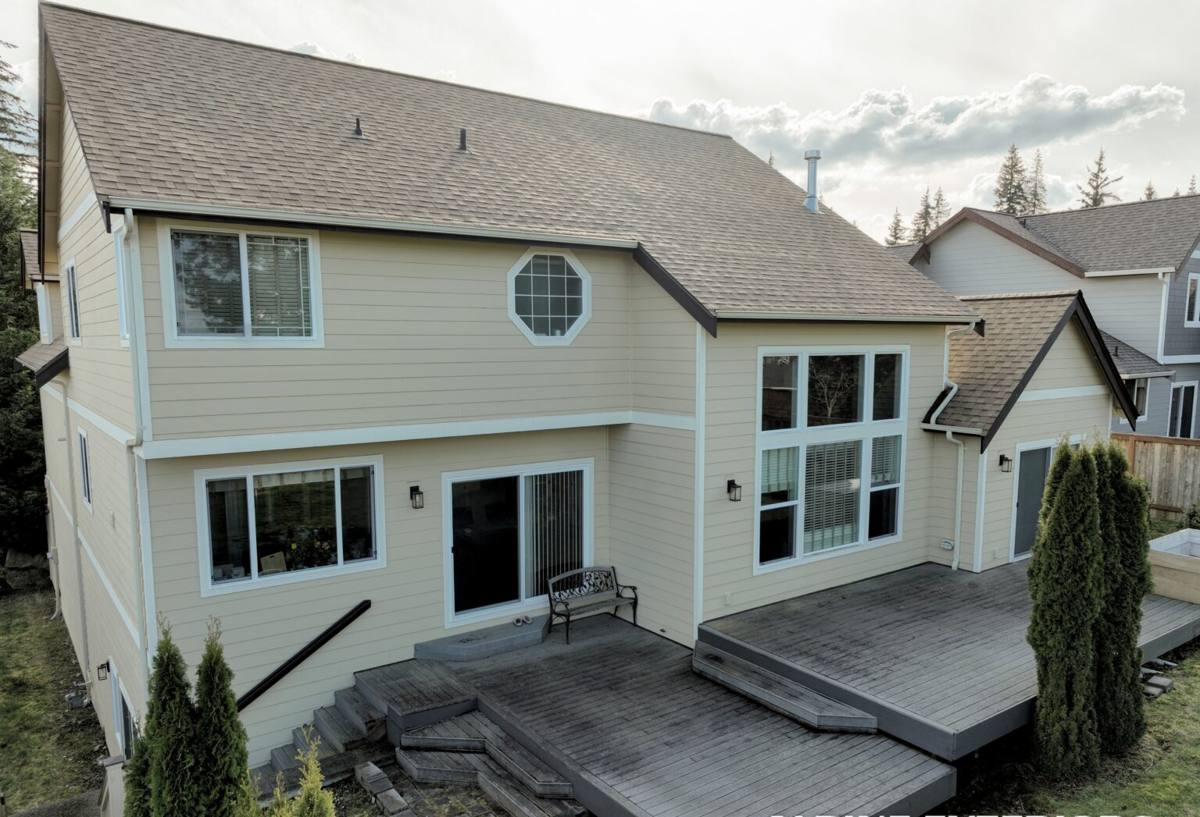
Common Deck Problems We Find on Lynden Homes
Ledger Board and Rim Joist Rot
The ledger board — where the deck attaches to the house — is the single most important structural connection on most decks, and it's also the most common failure point we find locally. Poor or missing flashing lets water get trapped between the ledger and the house siding. Because Lynden gets so much sustained damp weather rather than short, hard downpours, water has more time to sit and soak in rather than run off. Once that framing softens, the deck's connection to the house is compromised even if everything else looks fine.
Moss and Algae on Decking Surfaces
Shaded decks under trees or on the north side of a house can stay green with moss for months. Beyond making the surface slippery and unsafe, moss holds moisture directly against the wood or composite decking, which accelerates surface decay on wood boards and can void warranties on some composite products if left untreated.
Fastener and Hardware Corrosion
Older decks, especially ones built before corrosion-resistant hardware became standard, often show rust streaking down from nails, screws, and joist hangers. In a climate with this much sustained humidity, standard hardware corrodes faster than most homeowners expect, and corroded fasteners lose holding power long before they look obviously bad.
Loose Railings and Stair Connections
Railings and stair stringers take a lot of repeated stress — leaning, gripping, foot traffic — and they're often attached with fewer, smaller fasteners than the deck frame itself. Combined with wood movement from repeated wet-dry cycles, these connections tend to loosen years before the rest of the structure needs attention.
What a Correct Deck Repair Actually Involves
A proper repair starts below the decking, not on top of it. Anyone can swap a few gray, splintering boards and make a deck look better for a season. A repair that actually holds up starts with checking the framing, connections, and moisture pathways that caused the visible damage in the first place.
- Probing the ledger board, rim joists, and beam for soft or spongy wood, not just visual inspection
- Checking flashing at the house connection and correcting or adding it where it's missing
- Inspecting post bases and footings for standing water, rot, or movement
- Evaluating joist hangers and structural hardware for rust or loosened fasteners
- Testing railings and stair connections under load, not just by eye
- Only then addressing surface issues — board replacement, sanding, moss treatment, or refinishing
Skipping the structural check and going straight to cosmetic fixes is the single most common shortcut we see undoing other people's repair work. A deck can look brand new on top and still have a rotted ledger connection underneath.
Repair or Replace? Weighing the Real Cost Factors
Not every deck problem calls for full replacement, and not every deck is worth repairing indefinitely. The honest answer depends on how much of the structure is still sound versus how much has been compromised by long-term moisture exposure.
| Factor | What It Affects | What to Consider |
|---|---|---|
| Age and framing condition | Whether repair is structurally sound long-term | Decks over 20 years old often have framing nearing the end of its service life, even if boards look fine |
| Extent of rot | Repair scope and cost | Isolated rot at one post or ledger section is a repair; widespread soft framing points toward replacement |
| Decking material | Remaining lifespan of the surface | Wood decking has a shorter realistic life than composite in this climate; matching new boards to old wood can also be tricky |
| Code and attachment changes | Whether the existing ledger connection meets current standards | Older decks were often built before current flashing and fastening requirements |
| Budget timing | Whether to repair now and replace later | A targeted repair can safely buy several more years if the rest of the structure is sound |
Costs for deck repair generally run from a few hundred dollars for a contained fix — a handful of boards, a rail section, a post base — up into the low thousands for structural work involving the ledger board or multiple framing members. A full deck rebuild is a separate conversation entirely, and it's usually not the right first step until we know how much of the existing structure is actually salvageable.
Our Deck Repair Process
We keep this straightforward, because homeowners deserve to know what they're paying for before any work starts.
- Inspection. We walk the deck, check the framing from underneath where accessible, probe suspect areas, and check the ledger connection and post bases.
- Honest diagnosis. We tell you what's actually wrong — not just what's visible — and explain which issues are urgent versus which can wait.
- A clear plan. You get a straightforward scope of work and price before anything is touched. No surprise change orders for things we should have caught during inspection.
- The repair itself. Framing and structural fixes come first, then hardware, then surface work, so the deck is sound before it's pretty.
- Cleanup and walkthrough. We go over what was done and what to watch for going forward.
Homeowner Maintenance Checklist
Between repairs, a little seasonal attention goes a long way in this climate. A few minutes a couple times a year can catch problems while they're still cheap to fix.
- Sweep leaves and debris off the deck surface regularly, especially in fall — trapped organic matter holds moisture against boards
- Treat moss and algae growth before it builds up, particularly on shaded or north-facing sections
- Check that gaps between boards aren't clogged with debris, which blocks drainage
- Look for rust streaks around fasteners and hardware once or twice a year
- Press on decking near the house and around post bases — softness is an early warning sign
- Make sure gutters and downspouts near the deck aren't dumping extra water onto or under it
- Re-seal or re-stain wood decking on the manufacturer's recommended schedule, not just when it looks faded
Why It Matters to Hire a Crew That Works Lynden
Deck problems here don't look identical to deck problems in a drier climate, and a repair approach that works fine somewhere with less rainfall can fall short in Whatcom County. Ledger flashing details, fastener selection, and how aggressively to address moss and shade-related moisture all come down to on-the-ground experience with how local weather actually behaves over a full year — not a generic checklist.
Working regularly in and around Lynden and Ferndale also means we're familiar with the range of deck construction we typically see here — from older wood-frame decks built before current flashing standards to newer composite installations — and what tends to go wrong with each as they age in this specific climate.
Timing a Repair Around the Weather
Because Lynden's wettest, dampest stretch runs long, timing matters more here than in drier regions. Structural repairs — anything touching the ledger, framing, or post bases — go best during drier windows when framing can dry out properly before it's closed back up or covered. Surface work and moss treatment can generally happen across a wider window, but waiting until a soft spot has been rained on for another six months only adds cost. If something feels off with your deck, it's worth having it looked at before the next wet season sets in rather than after.
If you're noticing soft spots, moss buildup, loose railings, or just want a second opinion on a deck's condition, we're happy to take a look. Reach out for a free, no-pressure estimate using the form below.