 Ferndale
 New-Construction Windows in Sumas: A Different Job Than Replacement
New-construction window installation is not the same trade as replacement window work, even though both involve setting glass in a wall. On a new build, the windows go in before the siding, before most of the interior finish, and often before the home has been fully weathered in. That means the window installer isn't just fitting a unit into an existing opening — they're building one of the most important waterproofing details in the entire house, in coordination with the framer, the siding crew, and whoever is running the weather-resistive barrier (WRB). Get that sequence wrong and the mistake gets buried behind siding for the next thirty years.
In Sumas, that sequencing matters more than in a lot of places. This part of Whatcom County sits close enough to the water and the lowland river valleys that homes deal with long stretches of driving rain, heavy fog, and a moss season that can run most of the year on shaded elevations. A window opening that's flashed correctly on day one will shed that moisture for decades. One that isn't will start showing staining, soft trim, or interior moisture problems well before the siding itself wears out.
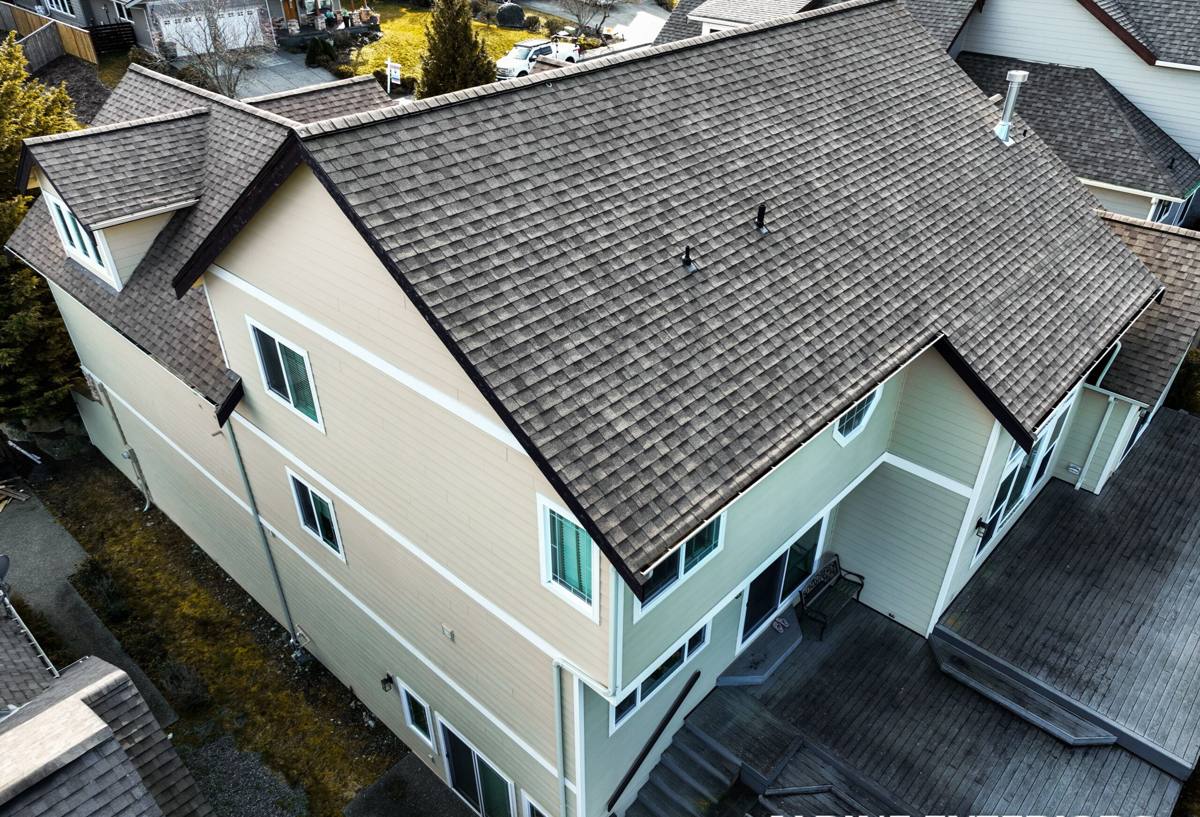
What the Local Climate Asks of a New Window Install
Whatcom County's weather pattern isn't dramatic, but it's persistent — and persistent moisture exposure is exactly what exposes a shortcut in window flashing. A few things we build into every new-construction install here:
- Wind-driven rain resistance: rain in this area rarely falls straight down, so flashing has to handle water pushed sideways and upward at the sill, not just water running off the head.
- Salt-influenced air: proximity to Puget Sound and the Strait means airborne salt reaches fasteners, flashing tape adhesives, and metal components further inland than most homeowners expect. We choose hardware and sealants rated for it.
- Extended damp season: long stretches of gray, wet weather mean any gap in the water-resistive barrier around a window stays wet longer before it has a chance to dry, which is what turns a small installation flaw into rot.
- Moss and algae growth on shaded walls: north- and west-facing elevations in tree-shaded lots hold moisture longer, so drainage planes and sill pans matter even more on those sides of the house.
None of this changes what a window is made of. It changes how it's installed — the flashing order, the sealant choice, and the drainage path behind the siding.
Getting the Installation Right the First Time
Flashing sequence and the drainage plane
On new construction, the window sits inside a system: WRB, flashing tape or peel-and-stick membrane, the window unit itself, and then the siding over the top. Every layer has to overlap the one below it like shingles, so water always drains outward and down, never behind the barrier. We install a sloped sill pan under every unit — not just a bead of sealant — so that any water that does get past the exterior finish has somewhere to go besides the framing.
Nail-fin vs. block-frame framing
Most new residential construction in this area uses nail-fin (flange) windows set against the WRB and taped in place, which works well with vinyl or fiber cement siding. Masonry or heavier stucco-style applications sometimes call for block-frame windows set into the rough opening differently. We confirm which approach the framing and siding plan calls for before the windows ever arrive on site, because retrofitting the wrong flashing detail after framing is done costs real time and money.
Air sealing and insulation at the rough opening
A window that's perfectly flashed but poorly air-sealed around the frame still lets in drafts and moisture-laden air that can condense inside the wall cavity. We seal the gap between the window frame and rough opening with a proper low-expansion foam or sealant rated for that gap — not packed with fiberglass alone, which does nothing to stop air movement.
Window Types and Performance Factors for a New Build
Builders and homeowners choosing windows for new construction are usually weighing frame material, performance rating, and budget together. Here's how the common options compare for a Whatcom County climate:
| Frame Type | Moisture Tolerance | Typical Maintenance | Where It Fits Best |
|---|---|---|---|
| Vinyl | Good — won't rot, but seals age over time | Low | Most new residential builds; budget-friendly and reliable in this climate |
| Fiberglass | Very good — dimensionally stable in wet/dry cycles | Low | Larger openings, higher-performance builds |
| Wood-clad | Depends heavily on cladding and installation quality | Higher — cladding and joints need periodic inspection | Homeowners prioritizing a specific interior wood look |
| Aluminum | Poor thermal performance unless thermally broken | Moderate | Limited residential use; more common commercially |
We install what's specified for the project, but when a homeowner asks for our honest opinion on a damp-climate new build, vinyl and fiberglass units with a solid installation behind them tend to outperform higher-maintenance options over the long run — not because the other materials are bad products, but because Whatcom County's weather punishes anything that depends on a homeowner staying on top of maintenance.
Energy Code and Performance Considerations
New construction in Washington has to meet the Washington State Energy Code, and window performance — U-factor and solar heat gain coefficient — is part of that calculation for the whole building envelope. We work from the plans and energy compliance documents the builder or designer provides, and we confirm the units that arrive on site actually match the specified ratings before installation, not after. A mismatch caught after the windows are in the wall is a much more expensive problem to fix.
Our Process for a New-Construction Install in Sumas
- Plan review: we go over the window schedule, rough opening sizes, and flashing details called for on the plans before ordering or scheduling.
- Coordination with the builder's timeline: new-construction windows go in on a schedule set by the framer and siding crew, so we work around that sequence rather than around our own.
- Rough opening check: we verify openings are square, level, and correctly sized before a single window is set — small framing errors are far cheaper to fix now than after siding is on.
- Sill pan and flashing installation: sloped drainage at the sill, then proper WRB and flashing tape sequencing at the jambs and head.
- Window setting and fastening: units are shimmed, squared, and fastened per manufacturer spec — over-driving or under-driving fasteners is a common source of long-term seal failure.
- Air seal and interior trim prep: the rough opening gap is sealed properly before interior finish work covers it.
- Final walkthrough: every unit is checked for operation, seal, and squareness before we sign off.
Working Alongside Your Builder or General Contractor
Most of our new-construction window work in Sumas happens as a subcontracted piece of a larger build, coordinating directly with the general contractor rather than the homeowner day to day. That's a different working relationship than a standalone replacement job — it means sticking to the GC's schedule, using the products specified on the plans (or flagging concerns early if something looks like it won't perform well in this climate), and documenting the flashing work so it's available if there's ever a warranty question down the road. If you're a homeowner building a custom home and choosing your own window subcontractor, we're happy to work directly with your GC or architect from the plan review stage forward.
A Pre-Install Checklist Worth Reviewing
- Confirm window schedule matches what's actually on order — sizes, swing direction, and grille patterns get mixed up more often than people expect.
- Confirm U-factor and SHGC ratings meet the energy code compliance path used for the project.
- Confirm rough openings are framed square and to spec before windows arrive on site.
- Confirm which flashing system (nail-fin vs. block-frame) matches the siding plan.
- Confirm sill pan flashing is part of the install — not just sealant at the sill.
- Confirm fastener and sealant materials are rated for coastal/salt-air exposure.
- Schedule installation with enough of a weather window to keep the opening protected during the process.
Why It Matters to Hire a Crew That Already Works in Sumas
Flashing details that hold up fine in a drier climate can fail here simply because the wall stays wet longer after every storm. A crew that installs windows across Whatcom County regularly has already seen how local moisture, salt air, and shaded, moss-prone elevations affect a new build over its first few winters — and builds the install accordingly, rather than defaulting to a generic detail that works "most places." That local track record is part of what you're paying for when you hire a crew for new-construction window work here, not just the labor to set the units.
If you're building in Sumas or elsewhere in the Ferndale area and want a straight answer on window selection, flashing details, or scheduling around your build, we're glad to walk the plans with you and provide a free, no-pressure estimate — no obligation, just a clear look at what the job actually involves.