 Ferndale
 Storm Damage Roof Repair Built for Blaine's Coastal Weather
Blaine sits about as exposed as any town in Whatcom County gets — out on the water at the northern edge of the county, close enough to Semiahmoo Bay and Drayton Harbor that storms coming off the water hit with real force before they ever reach more sheltered ground further inland. When wind and rain do damage to a roof out here, it's rarely a one-time event. It's usually the latest round in an ongoing fight between the roof and a combination of salt air, driving rain, and a moss season that barely lets up. We're based just down the road in Ferndale, and Blaine is regular territory for our crew, which means we've seen how these storms actually behave on real roofs in this town, not just what a general repair checklist says should happen.
This page is specifically about storm damage roof repair for Blaine homes — not a general roofing overview, and not a page written for some other town further inland. What follows is what local homes actually need after a storm, what a repair done correctly involves, and how we run the work from the first phone call to the final cleanup.
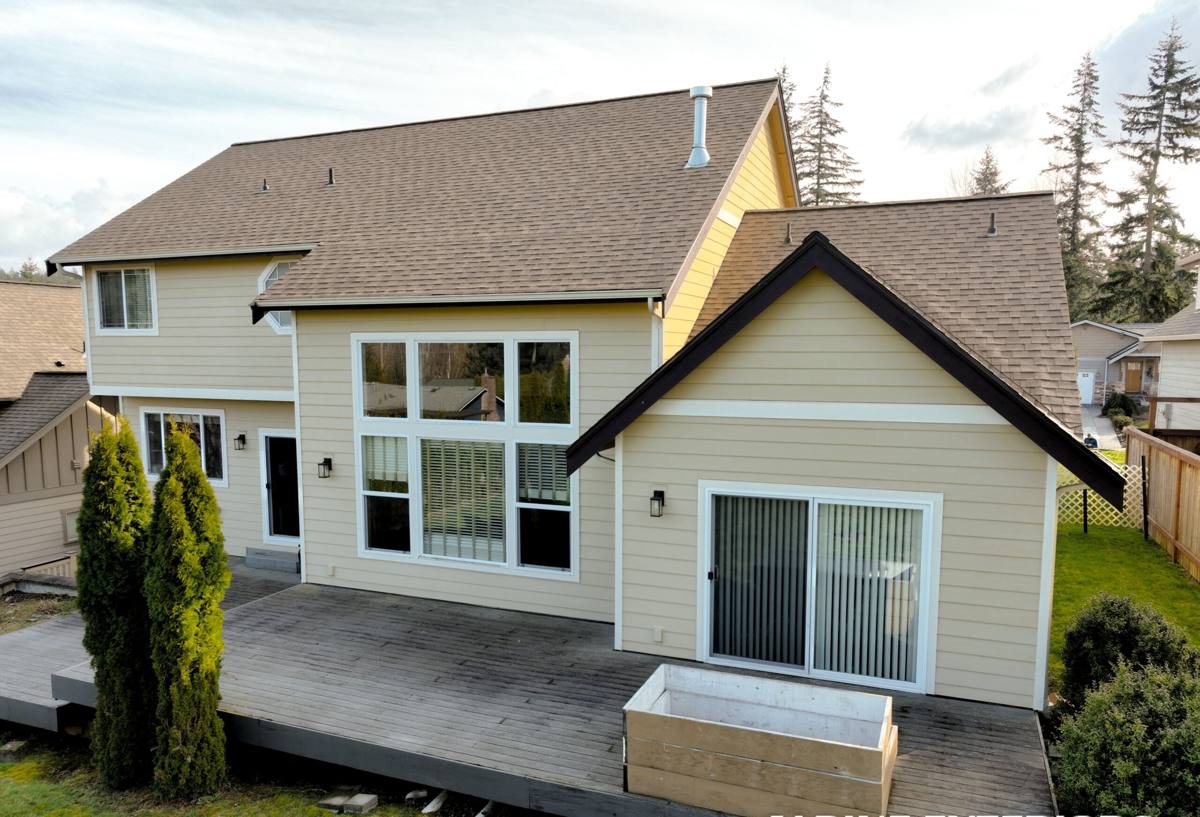
Signs of Storm Damage on a Blaine Roof
Storm damage doesn't always announce itself with an obvious hole or a stripped-off section of roofing. Some of the most costly damage starts small and quiet, and it's worth knowing what to look for after a windstorm or a stretch of heavy, wind-driven rain.
- Shingles that are lifted, cracked, creased, or missing outright, especially on the side of the roof that faced the wind
- Granules collecting in gutters or at the base of downspouts after a storm, beyond normal wear
- Bent, loosened, or torn-away flashing around chimneys, vents, or roof-to-wall transitions
- Water stains on ceilings or in the attic that showed up during or right after a storm
- Debris — branches, needles, or larger material — that punched through or gouged the roofing surface
- Soft spots underfoot on a walk-across inspection, which usually means moisture has already reached the decking
- Sudden moss or algae growth concentrated in one area, which can point to a spot where the roof surface was compromised
Any one of these on its own might be minor. Several of them together, or any sign of active water intrusion, are worth having looked at before the next storm system comes through and makes the problem bigger.
Salt Air, Driving Rain, and a Long Moss Season — What Each One Does
Salt Air
Blaine's position on the bay means most homes in town take a steady dose of salt-laden air, not just the ones with a water view. Once a storm has already compromised a shingle, flashing seam, or exposed fastener, salt air speeds up the corrosion and deterioration that follows. A repair that goes back in with undersized or lower-grade metal is setting up a second failure a few years down the line, right at the same spot.
Driving Rain
Storms coming off the water rarely drop rain straight down. Wind pushes it sideways and forces it upward under shingle tabs, into valleys, and against flashing that was never built to handle water moving in that direction. That's exactly the kind of moisture that finds its way through a damaged or improperly repaired section of roof, which is why storm repair work in Blaine has to account for wind-driven rain, not just rain in general.
A Long Moss Season
Whatcom County's mild, damp climate keeps moss and algae active on shaded or north-facing roof planes for most of the year. Once a storm opens up a gap in the roofing surface, that gap stays wet longer than it would in a drier climate, and moss takes hold in the damaged area faster than most homeowners expect. A repair that doesn't account for drainage and drying at the site of the damage is inviting moss right back into the same spot within a season or two.
What a Correct Storm Damage Repair Involves
Storm damage repair looks simple from the ground — patch what's broken, move on. Done correctly, it's a more careful process than that, especially on a coastal roof that's already been stressed by wind and water before the repair crew ever shows up.
Inspecting Beyond the Obvious Damage
We start by walking the full roof, not just the section that looks damaged from the driveway. Wind and driving rain rarely limit their effects to one tidy spot — a storm strong enough to lift shingles on one slope has often loosened fasteners or stressed flashing elsewhere on the roof that hasn't failed yet. Skipping this step is how a homeowner ends up calling back a few months later for damage that was actually there the whole time, just not visible yet.
Temporary Protection Comes First
When a roof has active exposure — a torn-off section, missing shingles, or compromised flashing — getting a proper tarp or temporary covering in place is the first priority, often before a full repair plan is even finalized. A rushed or poorly secured tarp job can do almost as much harm as no tarp at all if wind gets underneath it, so this step gets done right, not just fast.
Matching Materials and Doing the Flashing Right
Repair shingles need to match the existing roof closely enough in profile and color that the repair doesn't stand out as a visibly different patch, and more importantly, that they perform as part of the same system rather than as a mismatched add-on. Flashing at the repair site gets rebuilt and properly integrated with the surrounding underlayment, not caulked over the top of the old metal as a shortcut. This is where most of the difference between a repair that lasts and one that fails again shows up.
Checking the Decking Underneath
Any spot where water has been getting in for a while needs the decking checked once the damaged roofing is pulled back. Soft, delaminated, or rotted plywood underneath a storm-damaged section has to be replaced before new roofing goes down over it — patching shingles over compromised decking just hides the problem until the next storm finds it again.
Repair or Replace? How We Make the Call
| Situation | Repair Usually Makes Sense | Replacement Is Usually the Better Call |
|---|---|---|
| Extent of damage | Isolated to one section or slope | Spread across multiple slopes or a large portion of the roof |
| Age of the roof | Roof is well within its expected service life | Roof was already near the end of its service life before the storm |
| Decking condition | Decking is sound once damaged roofing is pulled back | Widespread rot or soft decking found beneath the damaged area |
| Shingle matching | Exact or close match still readily available | Discontinued or badly weathered shingles that won't blend or seal properly with new material |
We'll always tell a homeowner plainly which side of that line their roof falls on. A repair that's cheaper up front but likely to need another repair in a year or two isn't actually the more economical choice, and we'd rather say that up front than let a roof cycle through repeated patch jobs.
Our Process, Step by Step
- Prompt inspection: We come out and walk the roof in person, especially urgent after an active storm, and document what we find before recommending a scope of work.
- Temporary protection if needed: If the roof has active exposure, we get it properly covered right away so the damage doesn't spread while a full repair is scheduled.
- Written scope and estimate: You get a clear breakdown of what's being repaired, what materials are being used, and why — not a vague single-line estimate.
- Repair work: Damaged shingles, decking, and flashing are addressed as a system, matched and integrated with the existing roof rather than patched over it.
- Final walkthrough: We review the completed repair with you and do a full cleanup, including a magnetic sweep for stray nails and fasteners.
Cost Factors in a Storm Damage Repair
| Factor | What It Affects |
|---|---|
| Extent and location of damage | Labor time, staging, and whether multiple roof planes are involved |
| Decking condition underneath | Whether plywood or OSB replacement is needed in addition to roofing material |
| Flashing scope | How much of the surrounding flashing needs to be rebuilt versus patched |
| Shingle matching and availability | Whether an exact match exists or a close alternative has to be sourced |
| Roof pitch and access | Safety equipment and staging time, particularly on steeper Blaine roofs |
| Urgency | Emergency tarping and expedited scheduling versus a standard repair timeline |
Every storm damage job is a little different, which is why we walk the roof in person before giving a real number rather than quoting off a phone description. Two roofs with what sounds like similar damage from the ground can turn out very differently once we're actually up there.
Storm Damage and Insurance Claims
Many storm damage repairs in Blaine get filed as insurance claims, and we're glad to document the damage with clear photos and a written scope that a homeowner can hand to their adjuster. We're not a public adjuster and we don't handle the claim itself, but a thorough, honest damage report from the contractor doing the actual repair tends to make that process go more smoothly than it would with vague or incomplete documentation. If you're not sure whether a repair is worth filing on your policy, that's a conversation worth having with your insurance company directly — deductibles and claim history factor into that decision differently for every homeowner.
Why Hiring a Crew That Already Works Blaine Matters
A crew that regularly repairs storm damage in Blaine has already seen how salt air corrodes an underspecified flashing repair, how wind-driven rain finds the one seam that wasn't sealed all the way, and which roof slopes hold onto moss longest after a storm opens up a gap in the surface. That's the kind of practical knowledge that shows up in the small decisions on a repair — decisions a crew unfamiliar with this specific stretch of coastline might not think to make. It also matters after the job is done. A workmanship warranty only means something if the company behind it is still reachable a few years later, not a name that moved on after one storm season.
A Practical Checklist Before You Hire a Storm Repair Contractor
- Do they inspect the full roof in person, not just the visibly damaged section?
- Will they get proper temporary protection in place if the roof has active exposure?
- Does the estimate specify decking, flashing, and shingle work separately, not just "roof repair"?
- Do they carry current WA contractor licensing, liability insurance, and workers' compensation?
- Can they provide documentation useful for an insurance claim, if you're filing one?
- Can they point to recent, real storm repair work in or near Blaine?
If a recent storm has left your Blaine roof with missing shingles, damaged flashing, or any sign of water getting in, we're glad to come take a look and give you an honest, no-pressure assessment. Use the form below to request a free estimate.