 Ferndale
 Why Blaine Homes Are Hard on Windows
Blaine sits right on the water, with Semiahmoo Bay and Drayton Harbor on one side and the Strait of Georgia funneling weather in from the north. That location is part of why people live there, but it's also why windows in Blaine take more punishment than windows a few miles inland in Whatcom County. Salt-laden air corrodes hardware and finishes faster than dry inland air does. Wind-driven rain doesn't just fall on a window, it gets pushed sideways into every gap, seam, and joint. And the long, damp moss season that hangs over most of Western Washington from fall through spring keeps everything around a window — siding, trim, sills — wet for weeks at a time.
None of that is a reason to panic about your windows. It's a reason to be specific about what "energy efficient" needs to mean for a coastal Whatcom County home, and to make sure whoever installs them understands the difference between a window that looks fine going in and one that actually holds up.
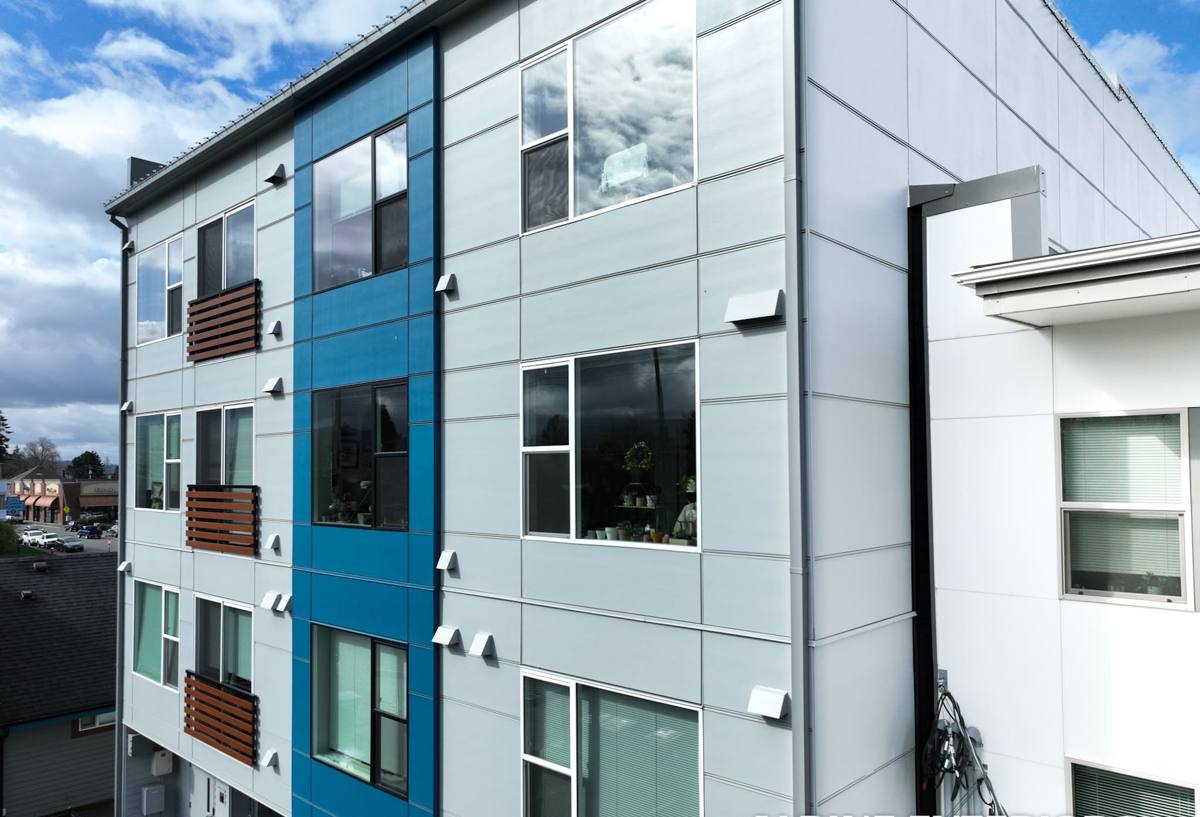
What "Energy Efficient" Actually Means Here
Energy-efficient windows get marketed around glass ratings — U-factor, solar heat gain coefficient, that sort of thing — and those numbers matter. But in a marine climate like Blaine's, efficiency is only half glass performance and half installation quality. A window with excellent ratings that's installed with a poor moisture seal will leak air and water within a few years, and once water gets behind the trim, the insulation value of the glass stops mattering.
The two things we're actually solving for
- Heat loss and drafts — lower utility bills, fewer cold spots near windows in winter, less heat gain in the rare stretch of summer sun.
- Water and air intrusion — keeping wind-driven rain and salt-moist air out of the wall cavity, which is the bigger long-term risk on the coast.
A correct install addresses both at once. Get the glass package right but skip the flashing and sealing details, and you've bought an expensive window that will still rot the wall around it.
Signs Your Current Windows Are Costing You Money
Most homeowners don't replace windows because they woke up wanting new windows — they replace them because something started bothering them. In Blaine, the usual triggers are:
- Condensation building up between panes, which means the seal on a double- or triple-pane unit has failed.
- A cold draft you can feel standing near the window on a windy day, even with it closed and locked.
- Wood trim or sills that feel soft, discolored, or show soft rot where the frame meets the siding.
- Hardware — locks, cranks, hinges — that's corroded, stiff, or pitted from years of salt air.
- Visible daylight or a whistling sound around the frame during a storm.
- A noticeable jump in heating costs without any other explanation.
Any one of these is worth a look. A few of them together usually means the window and its surrounding flashing are both due for replacement, not just the glass.
What a Correct Window Job Involves
Swapping a window sounds simple — old one out, new one in — but the parts that determine whether it lasts happen where you can't see them once the trim goes back on.
Before the new window goes in
We check the rough opening for rot or moisture damage from the old window. On a coastal property this step matters more than usual, since a slow leak behind old trim can go unnoticed for years in a damp climate. Any compromised framing gets addressed before anything new is installed — sealing a window into a wet or rotten opening just locks the problem in.
Flashing and moisture management
This is the step that separates a window that survives twenty years of Whatcom County storms from one that starts leaking in three. Proper flashing tape and a correctly lapped weather-resistive barrier direct any water that does get past the window down and out, not into the wall. Sill pans, drip caps, and correctly sequenced sealant beads all matter here — skipping or rushing them is the single most common reason coastal window installs fail early.
Setting, shimming, and sealing
The window has to be plumb, level, and square, shimmed correctly so it isn't stressed in the frame, then sealed with the right products at the right points — not everywhere, and not nowhere. Over-sealing a window so it can't drain properly causes its own problems; under-sealing lets wind-driven rain in. Both mistakes are common with crews who don't regularly work this specific coastline.
Trim and finish
Exterior trim gets refinished or replaced to match, with attention to end grain and joints — the spots where moisture gets in first. Interior trim is finished to match the rest of the room.
Choosing the Right Window for a Blaine Home
There's no single "best" window — the right choice depends on the wall it's going into, sun exposure, and how much upkeep you want to take on. Here's how the common options stack up for a coastal Whatcom County property:
| Frame Material | How It Handles Salt Air & Moisture | Maintenance | Typical Trade-Off |
|---|---|---|---|
| Vinyl | Doesn't corrode or rot; handles salt air well | Low — occasional cleaning | Fewer color/finish options, can't be painted long-term |
| Fiberglass | Excellent — stable in wide temperature and moisture swings | Low | Higher upfront cost than vinyl |
| Aluminum | Corrodes over time in salt air unless well-coated; conducts cold | Moderate — coatings need monitoring | Thinner sightlines, but weaker thermal performance |
| Wood / wood-clad | Vulnerable to moisture and rot unless finish is maintained | High — regular refinishing needed | Best traditional look, most upkeep in a wet climate |
For most Blaine homes we talk to, vinyl or fiberglass frames make the most sense given the salt exposure and rain, with wood-clad reserved for homeowners who want a specific look and are committed to the maintenance. There's no wrong answer as long as you go in knowing the trade-off you're accepting.
Glass packages
Double-pane, low-E, argon-filled glass is the standard baseline for this climate and covers most homes well. Triple-pane adds cost and weight for a modest efficiency gain — worth considering on a north-facing wall that takes the brunt of the wind, less necessary on a sheltered side of the house. We'll walk through what makes sense room by room rather than selling one package for the whole house by default.
Our Process for a Blaine Window Project
- Walkthrough and assessment — we look at each window's current condition, the framing around it, and note anything showing moisture damage.
- Straight recommendation — which windows need full replacement, which could be repaired, and why, with no upsell on windows that don't need it.
- Product selection — frame and glass options matched to each wall's exposure, not a one-size answer for the whole house.
- Installation — proper flashing, sealing, and finish work as described above, done to hold up against wind-driven rain and salt air, not just look good on install day.
- Walkthrough and cleanup — we check operation on every window and leave the site clean.
Questions Worth Asking Any Window Contractor
Whoever you hire, a few questions will tell you quickly whether they understand coastal installation, not just window installation in general:
- Do you check the rough opening and framing for rot before installing, or just swap the window itself?
- What flashing and sealing method do you use, and why?
- How do you handle a window opening with existing water damage?
- What's the warranty on the product versus the warranty on your installation labor?
- Have you worked on other homes in Blaine or similar Whatcom County coastal areas?
- Will trim and finish work be matched to the rest of the exterior, or left as a separate line item?
A contractor who can answer these clearly and specifically, without hedging, is a good sign. Vague answers about "standard installation" usually mean standard installation — which isn't built for salt air and driving rain.
Why a Local Crew Matters Here
Window installation isn't identical everywhere, and a crew that mostly works drier, inland projects doesn't necessarily bring the same habits to a job on Semiahmoo Bay. Working in and around Blaine regularly means knowing which walls take the worst of the wind, how fast salt air degrades certain hardware finishes, and what moss season does to trim and sealant over a full year, not just on install day. It also means being reachable afterward — if a seal needs a look two winters later after a hard storm, you're calling a crew that's still local and still around, not chasing down a name from an out-of-town install.
We work throughout Ferndale and the surrounding Whatcom County coastline, including Blaine, and we bring the same flashing and moisture standards to every window we install, because the coastal climate doesn't give you a second chance on shortcuts.
Get a Straight Answer on Your Windows
If your windows are drafty, fogging between panes, or just old enough that you're wondering, we're happy to take a look and give you a clear, no-pressure assessment of what's actually needed — repair, partial replacement, or a full swap — along with a free estimate. Fill out the form below and we'll get in touch.