 Ferndale
 Why Semiahmoo Siding Wears Differently Than Siding Inland
Homes on the Semiahmoo side of Whatcom County live with a combination of stressors that most inland Ferndale properties never see at the same intensity: salt-laden air off the water, wind-driven rain that hits walls sideways instead of falling straight down, and a moss and algae season that can stretch for the better part of the year under tree cover and on north-facing walls. Any one of those factors will age exterior siding. Together, they compound. Salt air accelerates corrosion on fasteners and trim metal. Driving rain finds every gap in flashing and caulk that vertical rain would simply run past. And moss holds moisture against a wall surface for weeks at a time, which is exactly the condition that rots wood-based siding and lifts paint film.
We bring this up first because it changes what "siding replacement" should mean for a Semiahmoo property. This isn't a cosmetic refresh. It's a chance to correct whatever combination of material choice, water management, and past workmanship let the old siding fail early — and to put something on the wall that's actually built for a saltwater-adjacent, high-moss climate.
What We Typically Find on Older Semiahmoo Homes
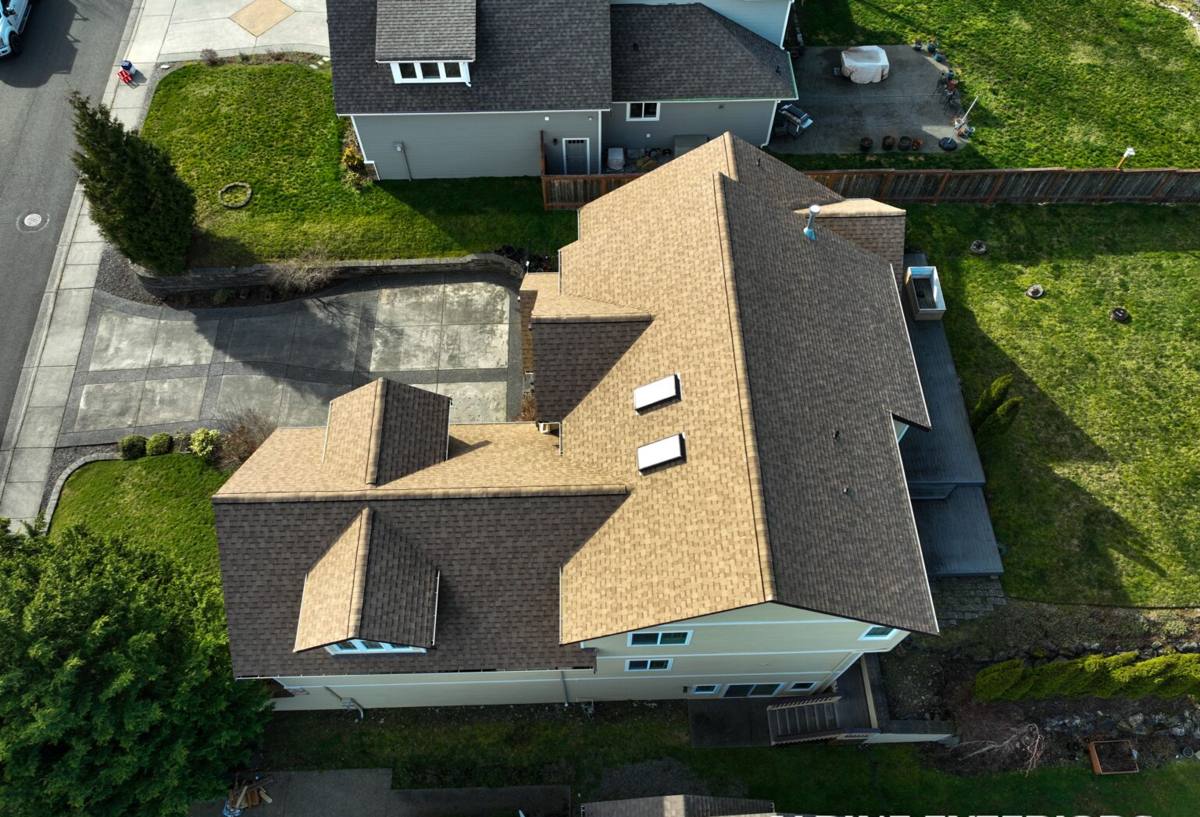
Every house is different, but after years of siding work in this stretch of Whatcom County, certain patterns show up again and again on homes near the water:
- Wood or wood-composite siding with soft, delaminating panel edges — usually starting at the bottom courses and around window sills where water sits longest
- Caulk joints that have shrunk, cracked, or pulled away, letting wind-driven rain track behind the siding instead of shedding off it
- Moss and algae staining concentrated on north- and west-facing walls, and on any wall shaded by mature trees
- Rusted or corroding nail heads and trim fasteners, sometimes bleeding through paint as rust streaks
- Paint film that's chalking, peeling, or failing faster than its rated service life, often a sign moisture is moving through the panel from behind
- Soft or spongy sheathing discovered only once old siding comes off, usually at corners, penetrations, and low wall sections
None of this means a house was built badly. It usually means the siding material wasn't matched to the exposure it was given, or water management details (flashing, kickout diverters, ventilation gaps) were treated as optional rather than essential. Replacement is the opportunity to fix both at once.
Our Position: James Hardie Fiber Cement, and Nothing Else
We install James Hardie fiber cement siding exclusively. We don't install vinyl, LP SmartSide, primed spruce, cedar, or other fiber cement brands like Cemplank or Allura. That's a deliberate standard, not a sales preference, and on a property like Semiahmoo it matters more than it would somewhere sheltered and dry.
Fiber cement is non-combustible and dimensionally stable — it doesn't expand and contract with moisture the way wood does, and it doesn't soften, warp, or become food for rot the way wood-based composites can once water gets behind them. James Hardie's ColorPlus factory finish is baked on and warranted against fading and peeling, which matters directly in a salt-air, high-UV coastal exposure where field-applied paint tends to fail sooner. Hardie also engineers regional HZ5 product formulations specifically for wetter, harsher climates like the Pacific Northwest — the material is built with this weather in mind, not adapted to it after the fact.
We won't pretend other products don't have selling points — vinyl is inexpensive, engineered wood siding installs quickly, cedar looks the way a lot of homeowners want it to look. But on a Semiahmoo lot exposed to salt air and sustained damp, those trade-offs (seams that open, edges that swell, finishes that need repainting on a short cycle) show up faster than they would inland. We'd rather tell a homeowner that up front than install something we know won't hold up and have the callback conversation two winters later.
What Correct Siding Replacement Involves
Tear-Off and Sheathing Inspection
Old siding comes off in full, not patched around. This is the only point in the project where the sheathing, framing, and existing flashing are actually visible. Any soft sheathing, rotted framing, or failed flashing gets identified and repaired before anything new goes up — covering that kind of damage with new siding just hides a problem that keeps getting worse behind the wall.
Water Management Details
In a driving-rain, salt-air climate, the water-resistive barrier and flashing details do more work than the siding material itself. That means a correctly lapped weather-resistive barrier, properly flashed windows and doors, kickout flashing at roof-to-wall intersections (a detail that's frequently missing or wrong on older homes and is one of the most common sources of hidden wall rot), and a rainscreen gap where the assembly calls for one so water and vapor have somewhere to go besides trapped against the sheathing.
Fastening and Trim
Fasteners and trim take a beating from salt air specifically — this is where corrosion shows up first. Corrosion-resistant fasteners and properly sealed trim penetrations aren't an upgrade option here; they're what keeps the assembly performing for decades instead of years.
Installation to Manufacturer Spec
James Hardie's warranty depends on installation matching their published specifications — proper clearances, fastening patterns, joint treatment, and caulking. Installed off-spec, even genuine Hardie product won't perform or hold its warranty the way it's designed to. This is a large part of why we treat installation training and process consistency as seriously as the material choice itself.
Our Process on a Semiahmoo Project
- On-site assessment — we walk the exterior, note exposure direction, moss/algae patterns, and any visible signs of moisture intrusion before quoting anything
- Scope and product selection — we discuss Hardie plank, panel, or shingle profiles and color options suited to the home and its exposure
- Tear-off and hidden-damage inspection — old siding removed, sheathing and framing checked, findings reviewed with the homeowner before covering anything
- Water management correction — barrier, flashing, and rainscreen details repaired or upgraded as needed
- Hardie installation to spec — fastening, clearances, and joint treatment done to manufacturer requirements so the warranty stays intact
- Final walkthrough — trim, caulking, and paint lines reviewed with the homeowner before we call the job finished
Cost Factors Specific to a Semiahmoo Replacement
Every quote is specific to the house, but the variables that move price on a coastal-exposure job here are fairly consistent:
| Factor | Why It Matters Here |
|---|---|
| Extent of hidden sheathing/framing damage | Salt air and driving rain accelerate hidden rot; more repair means more cost before new siding goes up |
| Wall exposure and orientation | Water-side and north-facing walls often need more flashing and rainscreen work than sheltered elevations |
| Siding profile chosen | Lap, shingle, and panel profiles differ in material and labor |
| Trim and detail complexity | Corners, window returns, and roof-wall intersections all add flashing and labor time |
| Access and site conditions | Waterfront lots and sloped sites can affect staging and scaffolding needs |
We'd rather walk a homeowner through these factors in person than throw out a number that doesn't reflect the actual house — an accurate quote only comes after we've seen the exposure and condition firsthand.
Maintenance Once the New Siding Is Up
Fiber cement significantly reduces maintenance compared to wood-based siding, but a coastal Whatcom County property still benefits from a basic seasonal routine:
- Rinse salt residue and grime off the siding periodically, especially on walls facing the water
- Keep gutters clear so overflow doesn't run down the wall face during heavy rain
- Trim back vegetation and tree cover that keeps walls shaded and damp, which slows moss growth
- Check caulk joints at trim and penetrations every year or two and touch up before gaps open
- Address any moss or algae growth promptly rather than letting it establish and hold moisture
None of this is heavy lifting, but skipping it is how even good siding underperforms its potential lifespan.
Why Hire a Crew That Already Works This Area
Semiahmoo's exposure isn't generic Pacific Northwest weather — it's a specific combination of salt air, wind-driven rain, and prolonged damp shade that rewards experience with this exact coastline. A crew that's replaced siding on homes with this exposure knows where kickout flashing tends to be missing, which wall orientations need the closest inspection for hidden rot, and how a rainscreen detail needs to be handled differently on a waterfront lot than on a sheltered inland one. That's knowledge that comes from doing the work here repeatedly, not from a general siding background applied to any climate.
If your Semiahmoo home's siding is showing moss staining, failing paint, soft spots, or open joints, we're glad to take a look and give you a straightforward assessment of what's actually going on and what it would take to fix it right. Reach out for a free, no-pressure estimate — there's no obligation, and you'll walk away knowing exactly where your home stands.