 Ferndale
 Roofing on the Lummi Peninsula Is Its Own Challenge
Homes on and around Lummi Nation sit close to the water — Bellingham Bay on one side, Lummi Bay and Hale Passage on the other. That location is beautiful, but it's hard on a roof. Salt-laden air corrodes exposed metal faster than it would ten miles inland. Wind off the water drives rain sideways into places a roof designed for a dry climate was never built to handle. And the tree cover common through this part of Whatcom County means long stretches of shade that keep roof surfaces damp well after a storm has passed — which is exactly what moss needs to take hold.
None of that means a roof here is doomed to fail early. It means the roof needs to be built for these specific conditions, with the right materials, the right ventilation, and installation details that account for wind-driven rain rather than just gravity-fed runoff. That's the difference between a roof that lasts its full service life on the peninsula and one that starts showing problems after a handful of wet winters.
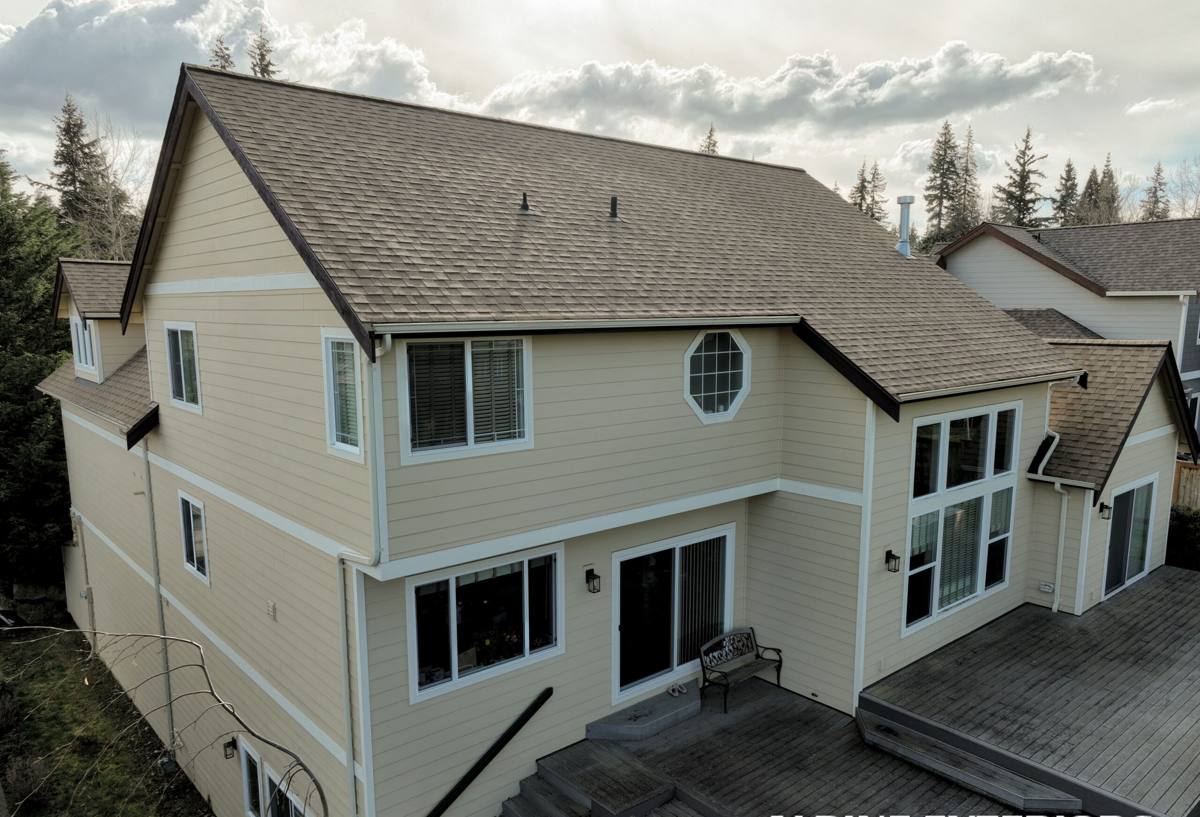
What Salt Air, Rain, and Moss Actually Do to a Roof
Salt air
Airborne salt accelerates corrosion on anything metal — flashing, fasteners, vents, gutter hardware. Lower-grade or improperly coated metal components can start rusting years before they would in a drier, inland location. This is one of the biggest reasons material and fastener selection matters more here than it would on a roof twenty miles east.
Driving rain
Storms coming off the water don't just drop rain straight down — they push it sideways under shingle tabs, around vents, and into any flashing detail that's slightly undersized or under-lapped. A roof that would perform fine in a calm rain event can leak here if the underlayment and flashing weren't installed with wind-driven moisture in mind.
Moss and prolonged dampness
Shaded, moisture-retaining roof surfaces are moss's favorite environment. Moss holds water against the roofing material, works its way under shingle edges, and lifts them over time — turning a cosmetic issue into a moisture entry point. Once moss gets established, it's a maintenance cycle, not a one-time fix, unless the roof was built with materials and ventilation that discourage it in the first place.
Signs a Roof Needs Replacing, Not Just Repairing
- Granule loss heavy enough that you're finding bare or shiny patches on shingles, especially on south- and west-facing slopes exposed to weather
- Shingles that are curling, cupping, or have lost their tab edges — a sign the material has reached the end of its flexibility
- Moss or algae staining that comes back within a season or two of cleaning, even after treatment
- Soft spots or sagging in the roof deck, which usually means moisture has already gotten past the roofing surface
- Daylight visible through the attic roof boards, or water stains on the underside of the sheathing
- Multiple isolated repairs over the last few years without the leaks actually stopping
- A roof that's simply reached the end of its rated service life, even if it looks okay from the ground
A repair makes sense when the damage is localized and the rest of the roof still has useful life left. Replacement makes sense when the underlying material is failing broadly, or when repeated repairs haven't solved the actual water problem.
Materials That Hold Up in This Environment
There's no single "best" roofing material for every home — it depends on the roof's exposure, the home's structure, and what the homeowner wants to maintain long-term. Here's how the common options compare for a coastal Whatcom County property:
| Material | Salt Air Performance | Moss Resistance | Maintenance |
|---|---|---|---|
| Architectural asphalt shingle | Good, with corrosion-resistant fasteners and flashing | Moderate — benefits from zinc/copper strips and good airflow | Low to moderate |
| Standing seam metal | Very good with marine-grade coatings; poor with the wrong coating | Very good — moss struggles to hold on smooth metal | Low |
| Synthetic (composite) shake | Good | Good | Low |
| Cedar shake | Fair — needs regular treatment near salt air | Poor without ongoing maintenance | High |
We install asphalt and metal roofing as our standard approach for this area because both can be detailed correctly for wind-driven rain and both accept corrosion-resistant fastening systems that stand up to salt air. Cedar shake can look great, but it demands a maintenance commitment — regular treatment and cleaning — that most homeowners underestimate until the upkeep becomes a recurring cost. We'll walk through the honest trade-offs for your specific roof rather than push one material across the board.
What a Correct Installation Actually Involves
The roofing material homeowners see is only part of the system. What's underneath it determines whether the roof actually keeps water out in a driving coastal storm.
- Deck inspection and repair — any soft, rotted, or delaminated sheathing gets replaced before anything new goes down. Roofing over a bad deck just hides the problem.
- Ice-and-water shield at vulnerable points — eaves, valleys, and around every penetration, not just where code requires the minimum.
- Synthetic underlayment rated for wind-driven rain, covering the full deck as a secondary water barrier.
- Corrosion-resistant flashing and fasteners at every chimney, vent, skylight, and wall intersection — this is where salt air does the most damage over time if the wrong hardware is used.
- Proper nailing pattern matched to the manufacturer's high-wind specification, not just the minimum for warranty compliance.
- Balanced ventilation — intake at the eaves, exhaust at the ridge — sized correctly for the attic volume.
Skipping or shortcutting any one of these is usually invisible on installation day and becomes obvious two or three winters later, when it's a much more expensive fix than doing it right the first time.
Ventilation: The Detail That Fights Moss Before It Starts
A poorly ventilated attic traps heat and moisture underneath the roof deck. That warm, damp air migrates up through the roof and keeps the underside of the roofing material warmer and wetter than the outside air — which extends the window every day that conditions favor moss and algae growth on top. Balanced intake-and-exhaust ventilation lets that heat and moisture escape instead of lingering, so the roof surface dries out closer to how it would on a well-ventilated, sun-exposed roof.
This matters more on shaded lots, which are common on tree-lined properties around Lummi Nation. A roof with correct ventilation and the right shingle or metal choice can go years longer between moss treatments than one where ventilation was an afterthought.
Our Installation Process
- On-site assessment — we inspect the existing roof, deck condition, ventilation, and flashing details, and take real measurements rather than estimating from the ground.
- Material and system selection — we walk through the honest trade-offs between options for your roof's exposure and budget.
- Written estimate — a clear scope covering tear-off, deck repair allowances, underlayment, flashing, ventilation, and material.
- Scheduling around weather — coastal Whatcom County gets narrow dry windows in the wetter months, so we plan tear-off and dry-in carefully rather than leaving a roof exposed.
- Tear-off and deck inspection — old roofing comes off, the deck gets inspected board by board, and any needed repairs are made before anything new goes down.
- Underlayment, flashing, and roofing installation — installed to manufacturer high-wind specifications, with corrosion-resistant hardware throughout.
- Final walkthrough — we review the completed roof, ventilation, and cleanup with you before calling the job done.
Cost Factors for a New Roof Here
Every roof is different, but the same handful of factors drive most of the price difference between jobs in this area:
| Factor | Why It Matters |
|---|---|
| Roof size and pitch | Steeper roofs take longer to work safely and use more material per square |
| Deck condition | Rot or soft sheathing found during tear-off adds repair cost that can't be fully known until the old roof is off |
| Material choice | Standing seam metal generally costs more upfront than architectural asphalt, with a longer service life |
| Number of penetrations | Chimneys, skylights, and multiple vents each need individual flashing work |
| Access and site conditions | Tree cover, steep driveways, or limited staging area can add labor time |
| Existing moss or moisture damage | Established moss growth sometimes points to hidden deck damage that isn't visible until tear-off |
We give a written, itemized estimate before any work starts, so you know what's covered and what would trigger a change order — like discovering rotted decking once the old roofing is off.
Working on Tribal Land: What to Know
Roofing work on and around Lummi Nation can involve different permitting and jurisdictional steps than a typical Whatcom County address. We've done the legwork on what's required here, so we can tell you upfront what applies to your property and handle the coordination rather than leaving you to figure it out mid-project. If you're unsure what applies to your specific home, that's exactly what the initial assessment is for — we'll flag it before we give you a scope, not after.
Why Hiring a Crew That Already Works This Area Matters
A roofing crew that hasn't worked coastal Whatcom County properties before will often default to standard practices built for drier, inland conditions — standard fastener grades, standard ventilation sizing, standard flashing details. On a roof exposed to salt air and wind-driven rain off the water, "standard" isn't always enough. A crew that already works in and around Lummi Nation knows to spec corrosion-resistant hardware as a default, knows which roof details tend to leak first in a coastal storm, and knows what local moss growth patterns actually look like versus a one-time seasonal buildup.
That familiarity shows up less in what gets advertised and more in the small decisions made on the roof — which fasteners get used, how flashing gets lapped, where extra underlayment goes even when code doesn't strictly require it.
A Few Questions Worth Asking Any Roofing Contractor
- What fastener and flashing grade do you use, and is it rated for coastal salt exposure?
- How do you handle deck repairs discovered during tear-off — is that a change order or a surprise?
- What's your plan for weather windows during the wetter months?
- How is the attic ventilation sized for my specific roof?
- Can I see your license and insurance, and do you carry workers' comp for your crew?
If a homeowner in Lummi Nation is weighing a new roof, the smartest first step is an honest, no-pressure look at the current roof's actual condition — not a sales pitch. We're glad to come take a look, explain what we find in plain terms, and put together a written estimate you can think over. There's no obligation to move forward, and no pressure either way. The form below gets you started.