 Ferndale
 Marietta Sits Right Where Whatcom County's Weather Gets Hardest on Siding
Marietta is one of those Whatcom County spots where the weather isn't abstract — it's on your house every day. Sitting close to the water north of Bellingham and just south of Ferndale proper, homes here catch salt-laden air off the bay, get pounded by driving rain that comes in sideways off Puget Sound storms, and spend a good chunk of the year under the kind of damp, low-light conditions that grow moss on anything that holds moisture. That combination is tougher on exterior siding than what a lot of manufacturers design and test for, and it shows up fastest on whatever product was cheapest or fastest to install rather than the one actually built for this climate.
We've worked on homes throughout the Marietta area long enough to know which siding failures are common here and which ones are preventable with the right material and the right install. This page is about one thing specifically: fiber cement siding, done right, for a Marietta home.
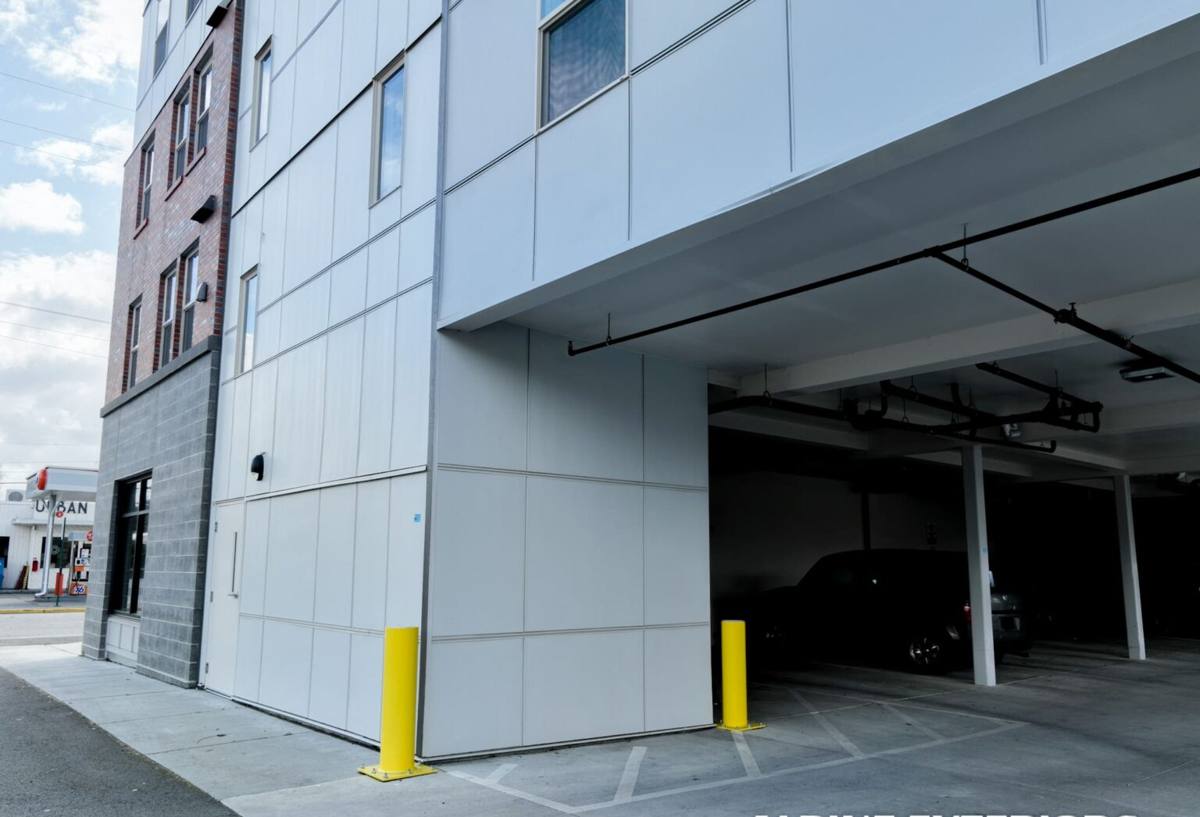
What Salt Air, Driving Rain, and Moss Season Actually Do to Siding
Salt Air
Airborne salt doesn't just sit on a wall — it's hygroscopic, meaning it actively pulls moisture out of the air and holds it against whatever surface it lands on. On metal fasteners and trim, that accelerates corrosion. On paint and coatings, it breaks down the film faster than inland weathering would. Materials that aren't dimensionally stable or that rely on a field-applied finish tend to show chalking, fading, and edge deterioration years ahead of schedule near the water.
Driving Rain
Whatcom County storms don't always come straight down. Wind-driven rain gets pushed sideways into laps, seams, and butt joints — the exact places where a siding system either sheds water or lets it in. Products with tight tolerances for lap coverage, poor water-shedding detail at joints, or seams that rely on caulk alone to stay sealed are the ones that eventually let moisture behind the cladding.
Moss Season
Whatcom County's long wet, mild stretch from fall through spring is close to ideal moss-growing weather. Moss and algae need a surface that stays damp and organic material (wood fiber, dust, pollen) to feed on. Siding that stays wet longer because it absorbs moisture, or that has a rough surface texture that traps grime, gets green a lot faster than a dense, factory-sealed surface does.
Why We Only Install James Hardie Fiber Cement
We don't install vinyl, LP SmartSide, primed spruce, cedar, or other fiber cement brands like Cemplank or Allura. That's not a marketing position — it's a standard we set after years of seeing what actually holds up on homes in this climate versus what looks fine on a brochure.
- Vinyl expands, contracts, and can warp or crack in temperature swings and impact, and it isn't a moisture-managed system in the way fiber cement is.
- LP SmartSide and primed spruce are wood-based products; even with engineered treatments, wood-based siding is more vulnerable to moisture intrusion at cut edges and fastener penetrations, which matters a lot in a driving-rain climate.
- Cedar is a beautiful, traditional material, but it requires ongoing refinishing and is genuinely high-maintenance in a wet, moss-prone environment — most homeowners underestimate that upkeep until year three or four.
- Other fiber cement brands use the same base material category as James Hardie but don't all offer the same factory-cured ColorPlus finish, the same climate-specific engineering, or the same warranty backing. We've standardized on the manufacturer whose system and support we trust enough to put our name behind.
James Hardie fiber cement is non-combustible, dimensionally stable, and factory-finished with ColorPlus technology — a baked-on finish that resists fading and chipping far better than field-applied paint. For a location like Marietta, that combination of stability and finish durability is exactly what holds up against salt air and repeated wet-dry cycling.
The Right Hardie System for This Location
James Hardie makes climate-engineered product lines, and the HZ5 line is engineered for wetter, more marine-influenced climates like ours in the Pacific Northwest — as opposed to the HZ10 line built for hot, arid regions. Using the correct HZ designation for Whatcom County isn't a minor spec detail; it affects how the product is formulated to handle moisture cycling over decades.
For a Marietta home we typically look at:
| Product | Best Use | Why It Fits This Climate |
|---|---|---|
| HardiePlank lap siding | Primary wall cladding | Traditional profile, factory ColorPlus finish resists salt-air fading and moisture staining |
| HardiePanel vertical siding | Accent walls, gables, modern facades | Clean lines with the same moisture-resistant fiber cement core |
| HardieTrim boards | Corners, window and door trim, fascia | Dense, engineered trim resists the rot that wood trim suffers near the water |
| HardieSoffit panels | Eaves and overhangs | Vented or non-vented options that hold up under constant damp shade — a common moss trigger point |
What a Correct Installation Involves
Fiber cement siding is only as good as the install behind it. A misfastened or poorly flashed Hardie job can still let water in, no matter how good the material is. On Marietta homes specifically, we pay close attention to the details that matter most in a wind-driven-rain, salt-air environment:
- Correct water-resistive barrier and flashing installed and lapped shingle-style before any siding goes up, so water is directed out, not trapped in
- Proper lap coverage and fastener placement per Hardie's published installation specs — not shortcuts that void the warranty
- Rain-screen gap or drainage plane detailing where conditions call for it, giving moisture a path to escape instead of sitting against the wall
- Stainless or coated fasteners appropriate for a salt-air environment, to avoid premature corrosion and streaking
- Sealed and properly caulked joints at trim, windows, and penetrations — done with quality sealant rated for exterior exposure, not the cheapest tube on the shelf
- Factory-cut and factory-primed edges used wherever possible, since factory edges are more moisture-resistant than field cuts
- Field-cut edges back-primed with touch-up product before installation to protect exposed fiber cement
Skipping any one of these is how a fiber cement job in a coastal-influenced climate ends up with the same moisture problems people install Hardie specifically to avoid.
Our Process for a Marietta Project
- On-site assessment — we look at your current siding, existing moisture damage, trim condition, and how your home's exposure to wind and rain affects the install plan.
- Product and color selection — choosing the right Hardie line, profile, and ColorPlus color for your home and this climate.
- Written estimate — a clear scope of work and cost, no vague allowances.
- Prep and moisture-barrier work — addressing any rot or barrier issues found before new siding goes up, not covering them over.
- Installation to Hardie spec — fastening, flashing, and sealing done to manufacturer and code requirements so the warranty stays intact.
- Final walkthrough — checking every seam, corner, and penetration with you before we call it done.
Cost Factors for Marietta Homes
Every home is different, but a few things reliably move the cost of a fiber cement project in this area:
| Factor | How It Affects the Job |
|---|---|
| Existing siding removal and disposal | Tear-off adds labor and disposal cost versus a bare or already-stripped wall |
| Sheathing or moisture damage found underneath | Rot repair before siding goes up is common on older coastal-influenced homes and should be priced separately from the siding itself |
| Home shape and trim detail | Multiple gables, dormers, and trim-heavy facades take more time than a simple rectangular wall |
| Product line and profile | Panel systems, wider lap reveals, and specialty trim cost more than standard lap siding |
| Site access | Tight lots, fencing, or limited staging area can add labor time |
We give straightforward written estimates and won't push you toward the most expensive option if a simpler one meets the home's needs.
Maintenance: What Marietta Homeowners Should Actually Expect
Properly installed James Hardie siding is low-maintenance, not zero-maintenance. In a moss-prone, salt-influenced climate, we recommend homeowners:
- Rinse the exterior with a garden hose once or twice a year to clear off salt residue and organic buildup before it takes hold
- Trim back vegetation and tree cover that keeps a wall shaded and damp, since that's where moss gets a foothold first
- Check caulked joints at trim and penetrations periodically and re-seal if you see cracking or gaps
- Avoid pressure washing directly into laps and joints — a gentle rinse is enough and won't force water where it doesn't belong
That's a fraction of the upkeep cedar or repainted wood siding demands, and it's a big part of why we steer homeowners toward fiber cement in this climate in the first place.
Why Hiring a Crew That Already Works Marietta Matters
A siding crew that mostly works inland doesn't always think about salt air, wind-driven rain angles, or moss cycles as first-order design problems — because where they usually work, those things aren't a daily factor. We're based in Ferndale and do ongoing work throughout Whatcom County, including Marietta, so decisions about flashing details, fastener choice, and drainage planning are made with this specific exposure in mind, not adapted after the fact from a drier climate's playbook.
If you're planning a siding project for a Marietta home, we're glad to come take a look, walk the exterior with you, and put together a straightforward, no-pressure estimate for a James Hardie fiber cement system built for what this location actually deals with. Use the form below to get started.