 Ferndale
 Why Blaine Roofs Wear Differently Than Roofs Inland
Blaine sits right up against the marine environment of northwest Whatcom County, and that location changes what a roof has to survive year after year. Salt-laden air moves in off the water, driving rain comes through sideways during winter storms, and a long, damp moss season settles in for months at a time. None of these things destroy a roof overnight. What they do is quietly shorten its working life if the roof isn't built, sealed, and maintained with that exposure in mind.
A roof repair in Blaine isn't the same job as a roof repair in a drier, inland part of the state. The materials, the flashing details, and the timing all need to account for salt exposure and moisture that lingers instead of drying out quickly. That's the lens we bring to every repair call in this area.
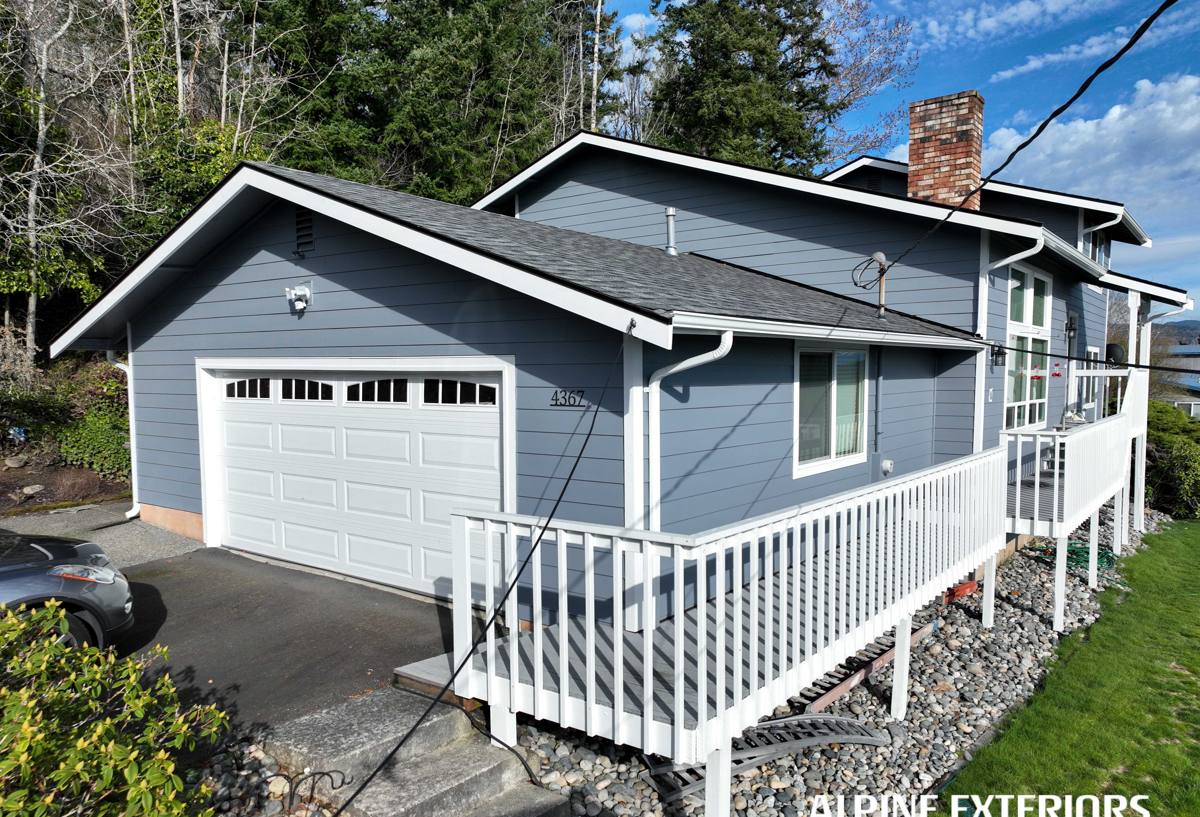
What Salt Air and Marine Exposure Actually Do to a Roof
Metal Fasteners and Flashing
Salt in the air accelerates corrosion on any exposed metal — nail heads, drip edge, step flashing, valley metal, and vent boots with metal collars. Once corrosion starts, fasteners lose their grip and flashing seams that were once watertight start to weep. This tends to show up first at roof edges and valleys, the places already doing the most work to shed water.
Granule Loss on Asphalt Shingles
Wind-driven salt spray combined with constant damp cycling can wear down the protective granule layer on asphalt shingles faster than in a typical inland climate. Once granules are gone in a spot, the asphalt underneath is exposed to UV and moisture directly, and that section of roof ages much faster than the rest.
Moss, Moisture, and the Damage Nobody Notices Right Away
Whatcom County's long stretch of cool, wet months gives moss everything it needs: shade, moisture, and time. On a roof, moss isn't just a cosmetic problem. It holds water against the shingle or shake surface long after the rest of the roof has dried, and it works its way under shingle tabs and along butt joints, prying them up slightly as it grows.
That trapped moisture is what actually causes the damage — wood rot in the decking below, premature granule loss, and small leak paths that don't announce themselves until water finds a gap in the underlayment. By the time a stain shows up on a ceiling, the moss has usually been doing quiet damage for one or more full seasons.
Why Moss Returns Even After Cleaning
Zinc or copper strips and periodic cleaning slow moss regrowth, but they don't eliminate the conditions that cause it — shade, slope, and moisture retention are structural factors, not just surface ones. A repair that addresses moss damage without also addressing airflow and drainage tends to need a repeat visit within a few years.
Signs Your Blaine Roof Needs Repair, Not Just a Wash
Some problems look minor from the ground but point to something more serious underneath. A few worth taking seriously:
- Shingles that are cupping, curling, or missing granules in patches, especially on sections facing prevailing wind and rain
- Rust streaks or green-black staining running down from flashing, vents, or valleys
- Moss or thick moisture-holding lichen concentrated in one area rather than spread evenly
- Soft or spongy spots when walking the roof, or sagging visible from the ground
- Daylight visible through the attic roof deck, or damp insulation near the eaves
- Water stains on interior ceilings or exterior fascia boards that appear after heavy rain events
- Granules collecting in gutters or at downspout outlets in noticeably larger amounts than in past years
Any one of these on its own might just need a targeted repair. Several together usually mean the roof has more going on than a single patch will solve.
What a Correct Roof Repair Actually Involves
Flashing First, Shingles Second
Most roof leaks in this climate trace back to flashing, not the field shingles themselves — valleys, chimney flashing, sidewall step flashing, and vent boots are the usual failure points. A repair that replaces shingles but leaves corroded or poorly lapped flashing in place is treating a symptom, not the cause.
Underlayment Condition
When we open up a repair area, we check the underlayment beneath the removed shingles. If it's brittle, torn, or soaked through, it gets replaced as part of the repair rather than reused. Skipping this step is one of the most common ways a repair fails within a year or two.
Matching Materials, Not Just Covering the Spot
A patch that doesn't match the surrounding shingle profile, exposure, or fastening pattern can actually create a new water path instead of closing one. We match shingle type, exposure, and fastening to the existing roof so the repaired section sheds water the same way the rest of the roof does.
Ventilation Check
Poor attic ventilation traps moisture against the underside of the roof deck, which speeds up rot and can cause moss and mildew to take hold from below as well as above. A repair is a natural point to check that intake and exhaust venting are actually balanced.
Common Roof Repair Types We Handle in Blaine
| Repair Type | Typical Cause Locally | What's Involved |
|---|---|---|
| Flashing repair/replacement | Salt-accelerated corrosion at valleys, chimneys, walls | Remove affected shingles, replace flashing, reseal and reinstall |
| Moss and moisture damage repair | Long damp season, shaded roof sections | Remove damaged decking/shingles, address drainage and airflow, treat for regrowth |
| Wind and storm damage repair | Driving winter rain and gusts off the water | Replace lifted or torn shingles, check fastening pattern, reseal edges |
| Vent boot and penetration repair | Cracked rubber collars, corroded metal boots | Replace boot, integrate new flashing with surrounding shingles |
| Localized deck repair | Rot from prolonged moss/moisture exposure | Cut out and replace affected decking, restore proper slope and fastening |
Our Process for Roof Repairs in Blaine
- On-site inspection. We walk the roof (weather permitting) and check the attic from inside, looking for the actual source of the problem rather than just the visible symptom.
- Honest assessment. We tell you plainly whether this is a contained repair or a sign of broader roof age, and explain what we found and why it matters.
- Written scope and estimate. You get a clear description of what will be repaired, with which materials, before any work starts.
- Repair work. We remove and replace only what's damaged, matching flashing and shingle details to the rest of the roof.
- Final check. We confirm the repair area sheds water correctly and that surrounding sections weren't disturbed in the process.
Repair vs. Replacement: Making the Right Call
Not every problem calls for a full reroof, and not every roof is a good candidate for another round of patching. A few honest factors we weigh with you:
| Factor | Favors Repair | Favors Replacement |
|---|---|---|
| Age of roof | Under roughly two-thirds of expected shingle life | Near or past expected shingle life for the material |
| Extent of damage | Localized to one section or penetration | Spread across multiple slopes or the whole roof |
| Decking condition | Solid, dry decking under the damaged area | Widespread soft spots or rot found in multiple areas |
| Repair history | First or second repair on this roof | Repeated repairs to the same areas over recent years |
We'd rather tell you a repair will hold for several more years than sell a replacement you don't need yet — and we'll also tell you plainly when a repair is just delaying an inevitable reroof.
Why a Crew That Already Works in Blaine Matters
Roofing crews unfamiliar with this stretch of Whatcom County sometimes underestimate how much salt exposure and moss accumulation matter to a repair's long-term success. A contractor who works here regularly already knows which flashing details tend to fail first in this environment, how aggressively moss needs to be addressed versus just cleaned off, and how to schedule repair work around the wetter months so materials seal properly instead of being installed on a damp deck.
Local familiarity also means we're not guessing at wind exposure, roof pitch trends, or how a given neighborhood's tree cover affects moss growth — we've seen the pattern before on roofs nearby, and we bring that to your inspection rather than starting from scratch.
Get a Straightforward Roof Repair Estimate
If you're seeing moss buildup, rusty streaking, curling shingles, or a leak that's shown up after a storm, it's worth having someone look at it before it becomes a bigger repair. Fill out the form below for a free, no-pressure estimate — we'll give you a clear read on what's actually going on with your roof and what it would take to fix it right.