 Ferndale
 Why Blaine Roofs Wear Out Differently Than Roofs Inland
Blaine sits close to Semiahmoo Bay and the Strait of Georgia, which means homes here deal with a combination most inland Whatcom County properties don't face: salt-laden air, wind-driven rain, and long stretches of damp, shaded weather that never quite dries out. That combination is hard on roofing in ways that aren't always obvious until a roof is fifteen or twenty years old and starting to show it.
Salt air accelerates corrosion on exposed metal — fasteners, flashing, vent caps, and gutter hardware all age faster near the water than they do a few miles inland. Driving rain, especially in winter storms that come in sideways off the water, finds every weak seam, nail pop, and undersized flashing detail. And the long moss season common to this part of Western Washington means organic growth gets a head start on roofs that don't have good airflow or sun exposure, holding moisture against the roofing material for months at a time.
None of this means a roof in Blaine can't last as long as one anywhere else. It means the installation details — flashing choice, fastener type, underlayment, and ventilation — matter more here than they would in a drier, more sheltered part of the county.
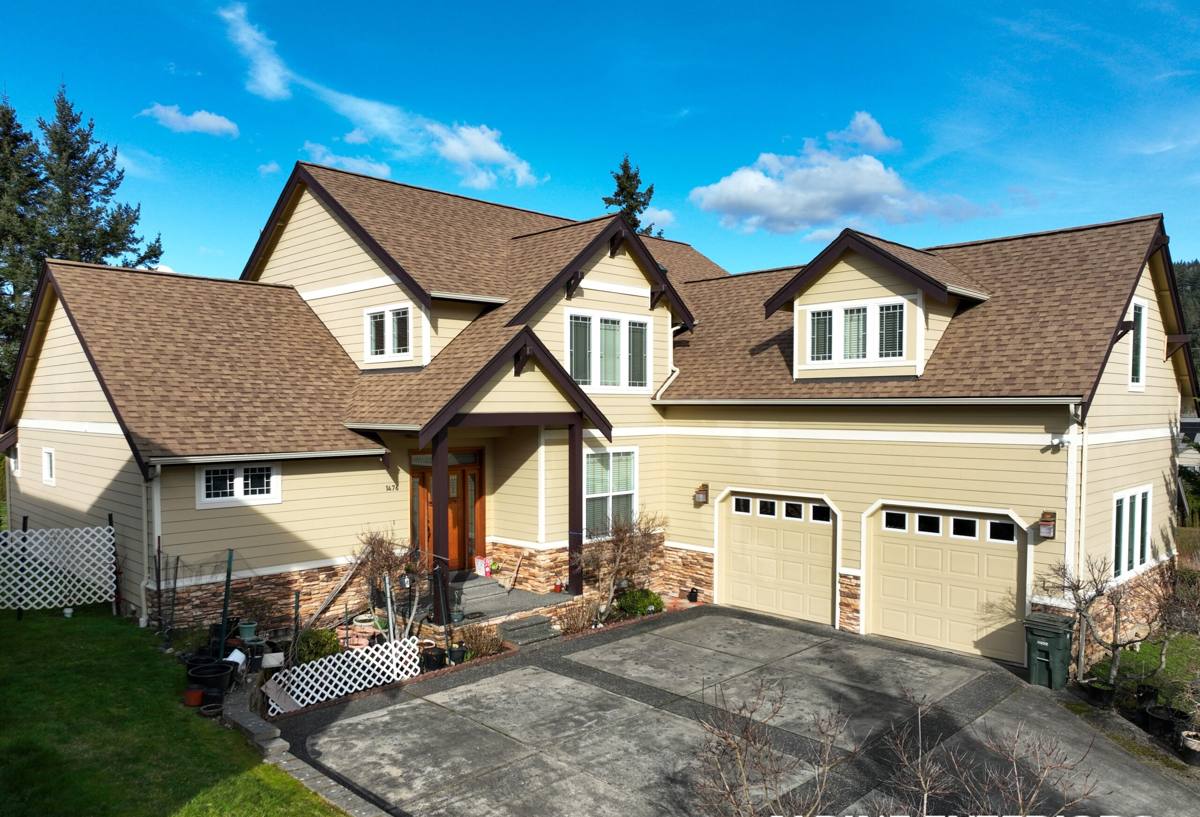
Signs a Blaine Home Needs a New Roof, Not Another Repair
Roof repairs make sense when the damage is isolated — a single cracked pipe boot, a section of lifted shingles after a windstorm, a small leak around a chimney. A full new roof installation becomes the right call when the problems are spread across the roof, or when the roof is old enough that fixing one area just means the next failure is a matter of time.
- Granule loss heavy enough that you can see bare asphalt on multiple slopes, not just one worn spot
- Shingles that are cupping, curling, or cracking across large sections rather than in isolated patches
- Moss or algae staining that keeps coming back within a year or two of cleaning
- Soft or spongy decking felt underfoot in the attic, or daylight visible through the roof deck
- Multiple past repairs in different areas within the last few years
- A roof approaching or past the manufacturer's expected service life for its material and exposure
If your roof is showing two or more of these, it's usually more cost-effective over time to plan for a full replacement than to keep chasing individual repairs.
What a Correct New Roof Installation Actually Involves
A new roof is more than laying shingles over the old ones or stripping and reshingling without looking at what's underneath. On a coastal Whatcom County property, the details below are where a roof either performs for its full expected life or starts failing early.
Tear-Off and Deck Inspection
A full tear-off removes the old roofing down to the decking, which is the only way to actually see what's there. Water finds its way into decking over years even on roofs that look fine from the ground — soft, delaminated, or rotted plywood or sheathing needs to be replaced before anything new goes on top, not covered up.
Underlayment and Ice-and-Water Protection
A synthetic underlayment goes down first as the roof's secondary water barrier. In areas that see driving, wind-blown rain — which describes most of Blaine's exposure — self-adhering ice-and-water membrane belongs at eaves, valleys, and around every penetration, not just in the narrow spots code requires as a minimum.
Flashing
Flashing around chimneys, skylights, walls, and roof-to-roof transitions is where the majority of roof leaks actually start, not in the field of the shingles. Near salt air, flashing material and fastener choice matter — corrosion-resistant metal and fasteners hold up far longer than standard-grade hardware.
Ventilation
Balanced intake and exhaust ventilation keeps the attic dry and temperature-regulated, which does two things: it protects the decking and framing from trapped moisture, and it keeps roof surface temperatures more even, which slows the growth of moss and algae. Ventilation is one of the most under-addressed parts of a re-roof and one of the most important for long-term performance in this climate.
Field Material Installation
Whatever roofing material is chosen — asphalt composition shingle, metal, or another system — correct nailing pattern, exposure, and manufacturer-specified installation method are what the warranty is actually built on. Shortcuts here don't show up as problems for years, which is exactly why they're common with lower-bid crews.
Choosing a Roofing Material for Blaine's Exposure
There's no single "best" roofing material — the right choice depends on budget, the home's structure, and how much long-term maintenance the homeowner wants to take on. Here's how the common options compare for a coastal Whatcom County property.
| Material | Typical Lifespan | Coastal/Moss Considerations | Relative Upfront Cost |
|---|---|---|---|
| Asphalt composition shingle (standard) | 20-25 years | Algae-resistant (AR) shingles recommended near the coast; needs periodic moss treatment | Lower |
| Asphalt composition shingle (architectural/upgraded) | 25-30+ years | Heavier profile sheds moss buildup better; still benefits from AR granules | Moderate |
| Standing seam metal | 40-50+ years | Smooth surface resists moss well; needs corrosion-rated fasteners and flashing near salt air | Higher |
| Metal shingle/panel systems | 30-50 years | Similar moss resistance to standing seam; check fastener and coating spec for coastal use | Higher |
For most Blaine homes, algae-resistant architectural asphalt shingles hit the balance of cost and coastal durability that makes sense. Metal is worth the added upfront cost for homeowners planning to stay long-term or who want to minimize moss maintenance as much as possible.
A Note on Material Selection
We install what performs well for the specific home and budget in front of us, and we're upfront when a product isn't a good fit for this climate rather than selling whatever has the best margin. Lower-grade shingles without algae-resistant granules, for example, will technically work — they just need more frequent moss treatment and tend to show staining sooner near the water. That's a maintenance trade-off worth knowing about before you choose, not after.
What Affects the Cost of a New Roof in Blaine
Every roof is priced individually after an on-site look, but the same handful of factors drive most of the variation between quotes.
| Factor | Why It Matters |
|---|---|
| Roof size and number of slopes | More square footage and complex geometry (dormers, hips, valleys) mean more material and labor |
| Current layers and tear-off scope | Removing multiple old layers costs more than a single-layer tear-off |
| Decking condition | Rotted or soft sheathing found during tear-off requires replacement before install |
| Material choice | Standard asphalt, upgraded architectural shingle, and metal carry different material and labor costs |
| Roof pitch and access | Steep or hard-to-access roofs take longer and require more safety setup |
| Ventilation and flashing upgrades | Adding or correcting ventilation and flashing details adds material and labor but pays off in longevity |
We give a written, itemized quote after inspecting the actual roof — not a generic per-square estimate — so you know exactly what you're paying for and why.
How Our Process Works
- On-site inspection. We walk the roof and attic, check decking condition where accessible, and note flashing, ventilation, and drainage issues before quoting anything.
- Written estimate. A clear, itemized quote covering material, tear-off, deck repair allowance, flashing, and ventilation — no vague lump-sum pricing.
- Scheduling around Whatcom County weather. We plan installs with realistic weather windows in mind rather than rushing a job into a forecasted storm.
- Tear-off and deck repair. Old roofing comes off, decking is inspected, and any compromised sheathing is replaced and documented.
- Underlayment, flashing, and ventilation installed to spec. This is where coastal-specific details — ice-and-water coverage, corrosion-resistant flashing, balanced ventilation — get built in correctly.
- Final walkthrough. We review the completed roof with you, including how to spot early signs of moss or wear so small issues get caught early.
Why a Crew That Already Works Blaine Matters
Roofing crews that work Whatcom County's coastal areas regularly develop a feel for what actually holds up here versus what looks fine on paper. That shows up in small but real ways: knowing which flashing details tend to fail first near the water, sizing ventilation for homes that sit in near-constant shade or wind exposure, and understanding local permitting and wind-load requirements without it slowing the project down.
It also matters for accountability. A crew based out of Ferndale that regularly works Blaine isn't disappearing after the invoice clears — if a question comes up during the first heavy storm season after installation, we're a short drive away, not a company that only shows up for the sale.
Protecting Your New Roof After Installation
A correctly installed roof still benefits from basic upkeep, especially in a climate that grows moss as readily as this one does.
- Keep gutters and downspouts clear so water isn't backing up under the roof edge
- Trim back overhanging branches to reduce shade and debris buildup on the roof surface
- Have moss and algae growth treated early rather than letting it establish and spread
- Check attic ventilation isn't blocked by insulation or stored items
- Schedule a visual roof check after major windstorms, especially loose flashing or lifted shingle edges
- Address any small leak signs — ceiling staining, musty attic smell — promptly rather than waiting
These habits won't prevent a roof from eventually needing replacement, but they go a long way toward getting the full service life out of it in a climate that doesn't make that easy.
Get a Straightforward Estimate
If your Blaine-area roof is showing its age or you're planning ahead for a replacement, we're happy to take a look and give you an honest read on where things stand. There's no pressure and no obligation — just a clear picture of your roof's condition and what a correct installation would involve. Use the form below to request your free estimate.