 Ferndale
 Blaine Roofs Work Harder Than Most
Blaine sits right on the water near the Canadian border, and that location comes with a roofing climate that's tougher than what you'll find just a few miles inland. Salt-laden air off the coast, wind-driven rain that comes in sideways during winter storms, and a moss season that can run eight or nine months a year all add up to roofs that age faster than the manufacturer's brochure suggests. We've replaced enough roofs in this corner of Whatcom County to know that a roofing system built for a drier, calmer climate simply doesn't hold up the same way out here.
This page covers what roof replacement actually looks like for a Blaine home — what the coastal environment does to roofing materials, what a correct tear-off and install involves, and why it matters to hire a crew that already understands the conditions instead of one learning on your dime.
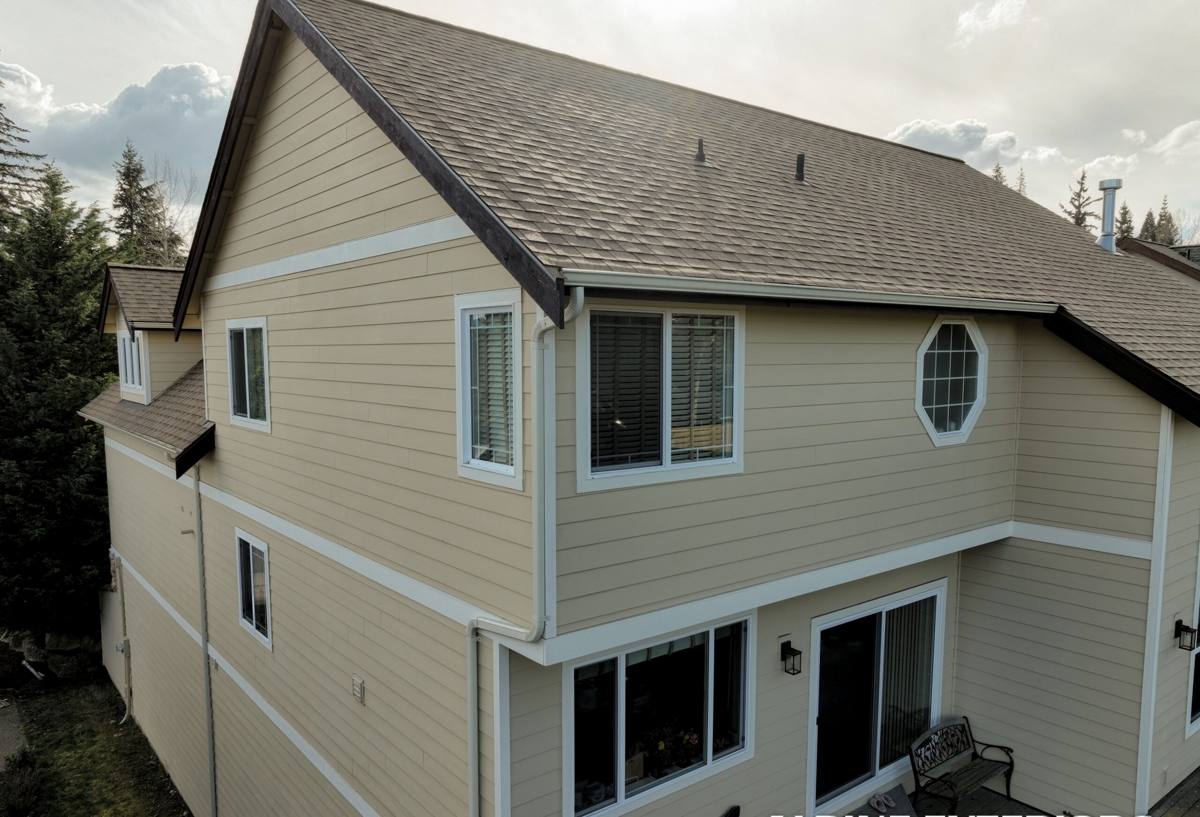
What Salt Air and Coastal Wind Actually Do
Salt air isn't just a nuisance — it's chemically corrosive. Airborne salt settles on exposed metal (flashing, fasteners, vent caps, gutter hardware) and speeds up oxidation and rust well beyond what you'd see in an inland neighborhood. Cheap or under-coated fasteners can start showing rust streaks in just a few years near the water, and once flashing metal starts to degrade, water finds its way underneath shingles or panels long before the roofing material itself is worn out.
Wind-Driven Rain
Straight-down rain is easy for any roof to shed. Driving rain that hits at an angle is a different problem — it can work its way under shingle tabs, around poorly sealed penetrations (vent pipes, chimneys, skylights), and into any seam that wasn't detailed correctly the first time. In a coastal wind pattern like Blaine's, roof edges, valleys, and any wall-to-roof transition take the brunt of this and need extra attention during installation, not just at the field of the roof.
Fastener and Flashing Choice Matters More Here
Standard electro-galvanized fasteners and thin flashing stock are more likely to corrode prematurely in a salt-air environment. We favor corrosion-resistant fastener coatings and properly gauged flashing metal for coastal jobs — it costs a little more up front and saves a full re-flash a few years down the road.
Moss, Algae, and Whatcom County's Long Wet Season
Western Washington's wet season is long, and Blaine's marine layer keeps roofs damp even between storms. That moisture, combined with shade from mature trees on many older lots, creates ideal conditions for moss and algae growth. Moss isn't just cosmetic — its root structure lifts shingle edges as it grows, which breaks the shingle's seal and lets water underneath. Algae staining (the dark streaking you see on older asphalt roofs) doesn't usually cause structural damage, but it's a sign that a roof is holding moisture longer than it should.
- Moss growth concentrated on north-facing or shaded slopes usually means poor drying between rain events
- Lifted or curled shingle tabs near moss patches often indicate the seal is already compromised
- Granule loss in gutters and downspouts is a sign the shingle surface is breaking down
- Soft or spongy decking under a shaded slope can mean moisture has been getting through for a while
Regular moss removal and gutter clearing extend a roof's life, but once moss has been established for multiple seasons on an older roof, it's usually a sign the roofing system is past the point where cleaning alone solves the problem.
Repair or Full Replacement — How to Tell
Not every roof issue in Blaine means a full replacement. A localized leak, a few damaged shingles from a storm, or a single failed flashing detail can often be repaired. Replacement becomes the right call when the damage is spread across the roof, when the underlying materials (decking, underlayment) have been compromised by long-term moisture, or when the roof is old enough that further repairs are just delaying the inevitable while risking interior damage.
| Sign | Usually Points To |
|---|---|
| Isolated leak, one location | Repair — flashing or localized shingle failure |
| Multiple leaks in different rooms | Replacement — widespread underlayment or decking failure |
| Granule loss, curling shingles across most slopes | Replacement — material is past its service life |
| Moss returning within a season of cleaning | Replacement or shingle upgrade — surface is retaining moisture |
| Soft decking found during inspection | Replacement — structural repair needed under new roofing |
| Roof is 20+ years old with coastal exposure | Replacement — age plus salt air accelerates wear |
What a Correct Roof Replacement Involves
A roof replacement is more than swapping old shingles for new ones. Done correctly, it's a system, and skipping any part of that system is where premature failures come from — especially in a climate like Blaine's that doesn't forgive shortcuts.
Tear-Off and Deck Inspection
We remove the old roofing down to the deck rather than layering over it. This lets us actually see the plywood or plank decking underneath and replace any sections that have soft spots or rot before they're covered up and forgotten for another 20 years.
Underlayment
Underlayment is the roof's backup layer if wind or ice ever gets past the shingles. In a wind-driven rain climate, we pay close attention to synthetic underlayment overlap and self-adhered membrane at eaves, valleys, and any low-slope transition, since these are the areas most exposed to water intrusion.
Flashing at Every Penetration
Every chimney, vent pipe, skylight, and wall intersection is a place where two different materials meet — and that's where roofs actually fail. Properly formed and sealed flashing at each of these points matters more than shingle brand.
Ventilation
Balanced intake and exhaust ventilation keeps the attic space dry and temperature-stable, which reduces condensation buildup on the underside of the decking — a real issue in a humid coastal climate — and helps the new roofing material last as long as it's rated to.
Roofing Material Options for Coastal Homes
There's no single "best" roofing material for every home — the right choice depends on your budget, roof pitch, and how much maintenance you want to take on. Here's how the common options stack up specifically for a salt-air, high-moisture environment like Blaine's.
| Material | Coastal Considerations |
|---|---|
| Architectural asphalt shingles | Good value, wide color range; choose algae-resistant granules to slow staining in our wet climate |
| Standing seam metal | Excellent wind and water performance; use a coastal-rated finish and stainless or coated fasteners to manage corrosion risk |
| Metal-flashing details on any roof | Flashing quality matters as much as field material — this is where salt air does the most damage |
| Synthetic/composite shingles | Resist moisture absorption well; a reasonable option for shaded, moss-prone slopes |
We'll walk through these trade-offs honestly during your estimate rather than steering you toward whatever's easiest to install. If a product isn't a good fit for your roof's slope, shading, or exposure, we'll say so.
Our Process, Start to Finish
Homeowners generally want two things from a roof replacement: a job done right, and a crew that doesn't make the process a headache. Here's what to expect working with us.
- On-site inspection and honest assessment of repair vs. replacement — no pressure either direction
- Written estimate with material options and clear scope, no vague line items
- Scheduling that accounts for Whatcom County's wet-season windows, so tear-off isn't left exposed longer than necessary
- Full tear-off with deck inspection, not a layer-over
- Proper underlayment, flashing, and ventilation detailing at every penetration
- Daily site cleanup and magnetic sweep for nails and debris
- Final walkthrough before we consider the job done
Why a Crew That Already Works Blaine Matters
A roofing crew that mostly works drier, inland areas can still do competent work, but they're not necessarily thinking about salt-air fastener corrosion, coastal wind uplift at the eaves, or which slopes on a shaded lot will hold moss longer. A crew that regularly works Blaine and the rest of Whatcom County's coastal communities already knows which details need the extra attention — and isn't guessing at how the local climate will treat the materials over the next 20 years.
There's also the practical side: permitting familiarity with local jurisdictions, realistic scheduling around this region's weather windows, and being reachable if a question comes up after the job is done. Hiring locally isn't just a feel-good preference — it affects how the roof actually performs.
Cost Factors to Understand
Roof replacement cost depends on roof size, pitch, current layer count, decking condition, and material choice, so any number given without an inspection is a guess. What we can tell you honestly: steeper roofs and multiple penetrations (skylights, multiple vents, chimneys) add labor time; decking replacement, if needed, is an added cost that's better to know about upfront than discover as a surprise; and higher-tier materials like standing seam metal cost more initially but typically mean less coastal maintenance over the life of the roof. We'll break all of this down clearly in a written estimate rather than a ballpark guess over the phone.
If your Blaine home's roof is showing moss, staining, curling shingles, or you just want an honest opinion on repair versus replacement, we're glad to take a look. Use the form below to request a free, no-pressure estimate from a crew that already works this coastline.