 Ferndale
 Window Installation in Blaine: Built for Water, Wind, and Salt
Blaine sits right on the water at the top of Whatcom County, which means homes here take a different kind of weather beating than houses further inland. Wind comes off the water with real force, rain arrives sideways more often than straight down, and salt air works on metal, wood, and sealants year after year. A window that would hold up fine in a sheltered inland neighborhood can fail early on a Blaine home if it wasn't installed with that exposure in mind.
This page is about one job, done right, in this one area: replacing or installing windows on homes in and around Blaine. Not a general overview of window brands — the specific things that matter when the house is exposed to salt air, driving rain, and a long stretch of gray, damp months every year.
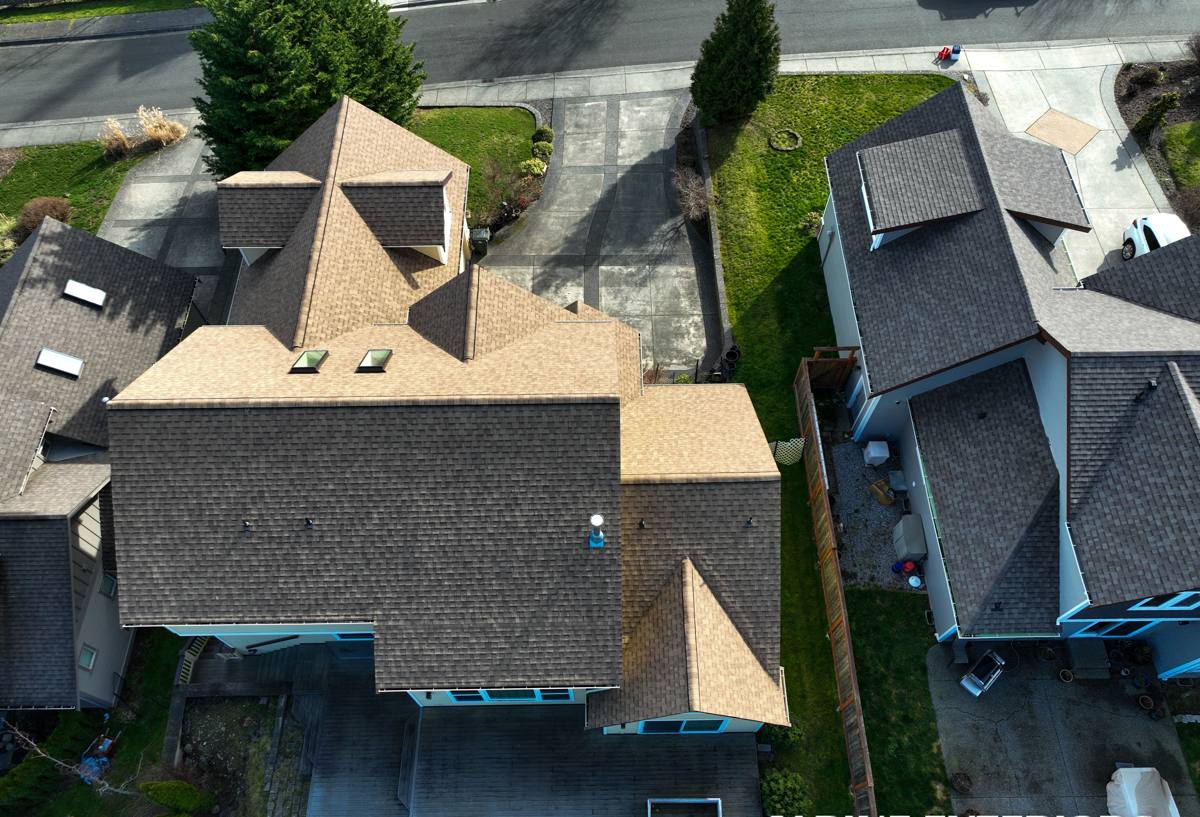
What Coastal Exposure Actually Does to a Window
It's worth being specific about the failure modes, because they shape how the work should be done.
Salt Air
Salt-laden air accelerates corrosion on window hardware, screen frames, and any exposed fasteners. Cheaper hardware finishes pit and discolor faster near the water than they would a few miles inland. It's not dramatic — it's slow, and it shows up as stiff locks, corroded screens, and streaking a handful of years sooner than you'd expect.
Driving Rain
Wind-driven rain doesn't just fall on a window — it gets pushed sideways and upward into any gap in the flashing or sealant. This is the single biggest cause of hidden rot around window openings on this coastline. By the time you see a stain on the interior sill or drywall, water has usually been getting behind the siding for a while.
Moss and Persistent Moisture
Whatcom County's long wet season keeps north-facing and shaded walls damp for months at a stretch. Moss and algae take hold on anything that stays wet, including window trim, and trap moisture against wood surfaces that should be drying out between storms.
Signs a Blaine Home's Windows Need Attention
- Fogging or a permanent haze between the panes — the seal on the insulated glass unit has failed
- Soft or discolored trim and sill wood, especially on the sides that face prevailing weather
- Windows that are hard to open, close, or lock — often hardware corrosion, sometimes a frame that's racked out of square
- Drafts or a noticeable temperature difference near the window on windy days
- Moss or dark streaking building up on the trim or the wall just below the window
- Paint that's bubbling, peeling, or chalking faster around windows than on the rest of the wall
Any one of these on its own isn't necessarily an emergency. Several of them together, especially on a wall that takes the brunt of the weather, usually means water has found a way past the flashing and it's worth having someone look before it turns into a bigger repair.
What a Correct Installation Actually Involves
The window unit itself gets most of the attention when people shop for a replacement, but on an exposed coastal wall, the installation detail matters more than the brand on the sticker. Most window failures we see aren't the glass or the vinyl — they're a flashing or sealant detail that let water in behind the finished surface.
Flashing and Water Management
Every opening needs a drainage path that assumes water will get past the primary seal eventually — because on a windy waterfront lot, it will. That means proper sill pan flashing, correctly lapped house wrap integration above and around the opening, and head flashing that sheds water out and away rather than trapping it against the framing.
Sealant Selection and Placement
Not every exterior sealant is rated for the same amount of joint movement or UV and salt exposure. We use sealants suited to the specific joint and material, not just whatever's fastest to apply, and we don't rely on caulk alone to do a flashing detail's job — caulk is a backup layer, not the primary defense.
Fit, Shim, and Fastening
A window that's shimmed out of square will bind, leak at the corners, and wear its weatherstripping unevenly. Getting the unit plumb, level, and square before it's fastened is what keeps it operating smoothly and sealing properly for the long haul.
Comparing Frame Materials for This Climate
There's no single "best" window material — the right choice depends on budget, the home's style, and how much maintenance you want to take on. Here's how the common options hold up specifically against salt air, wind-driven rain, and a long wet season.
| Material | Coastal Durability | Maintenance | Typical Trade-Off |
|---|---|---|---|
| Vinyl | Good — won't rust or rot, handles salt air well | Low — occasional cleaning | Frame color and size options are more limited than wood or fiberglass |
| Fiberglass | Very good — dimensionally stable, resists warping in temperature swings | Low | Higher upfront cost than vinyl |
| Wood-clad | Depends heavily on cladding quality and installation detail; the wood core is vulnerable if moisture gets behind the cladding | Higher — cladding and interior wood need periodic attention | Best interior look, but the most installation-sensitive option in wet, salty exposure |
| Aluminum | Poor to fair without a quality finish — conducts cold and is prone to corrosion near salt water unless properly treated | Moderate | Generally not our first recommendation for waterfront exposure |
We'll walk through these trade-offs against your home's actual exposure and budget rather than pushing one product line — a window on a sheltered east wall doesn't need to be built to the same standard as one taking direct wind off the water.
How We Approach the Job
- On-site assessment of the existing openings, framing condition, and any signs of hidden water damage
- Honest recommendation on materials sized to the wall's actual exposure, not a one-size-fits-all pitch
- Careful removal that lets us inspect the sheathing and framing behind the old unit before anything new goes in
- Repair of any rot or damage found — we don't install a new window over a compromised opening
- Proper sill pan flashing, house wrap integration, and head flashing on every opening
- Correct shimming, leveling, and fastening per manufacturer specification
- Sealant and trim finish appropriate to the exposure
- Final walkthrough so you know how the new windows operate and what little maintenance they'll need
What Drives the Cost
| Factor | Why It Matters |
|---|---|
| Number and size of openings | More or larger windows means more material and labor |
| Frame material | Vinyl, fiberglass, and wood-clad carry different unit costs |
| Condition behind the old window | Rot or framing damage found during removal adds repair work before the new unit goes in |
| Wall exposure | Openings taking direct wind and rain often warrant a more robust flashing detail than sheltered walls |
| Trim and finish work | Matching existing trim profiles or repainting adds time |
We give a written estimate after seeing the actual openings — window pricing varies enough by size, material, and condition that a number given sight-unseen isn't a real number.
Why a Crew That Already Works Blaine Matters
Wind-driven rain off the water, salt exposure, and moss season aren't abstractions when you work this coastline regularly — they're the reason a job gets done a certain way instead of the cheapest way. A crew that mostly works drier, sheltered inland areas can still do a technically fine installation and still see it leak in three years, because the flashing detail that's optional inland isn't optional here.
Working across Whatcom County, including Blaine and Ferndale, means we see how installations from a few years back actually held up — which details paid off and which ones didn't. That's not a marketing point, it's just what comes from doing the same work in the same conditions repeatedly.
Living With New Windows in a Wet, Salty Climate
Good windows still need a little attention here. A few habits go a long way:
- Rinse hardware and tracks periodically to clear salt buildup, especially on homes closer to the water
- Keep gutters and downspouts clear so water isn't sheeting down the wall past window openings
- Check exterior caulk lines once a year — sealant is a wear item, even good sealant
- Knock back moss or algae on trim and siding before it holds moisture against the wood
- Operate locks and hardware periodically through the winter so they don't seize up from disuse and corrosion
Get a Straight Answer on Your Windows
If you're dealing with drafts, fogged glass, stuck sashes, or you just want an honest opinion on whether your current windows are holding up the way they should, we're glad to take a look. The estimate is free, there's no pressure, and we'll tell you plainly what we see — including if replacement isn't actually necessary yet. Fill out the form below to get started.