 Ferndale
 Blaine's Coastal Climate Is Hard on Decks
Blaine sits right on Semiahmoo Bay, which means homes here deal with a combination of stresses that inland Whatcom County properties don't see nearly as much. Salt-laden air off the water accelerates corrosion on fasteners, hardware, and any exposed metal connectors. Add in the long stretch of driving rain that defines a Pacific Northwest fall and winter, plus a moss and algae season that can run eight months or more in shaded yards, and you have a recipe for decks that fail well before their time if they aren't built and maintained correctly.
We work on decks throughout Ferndale and the surrounding Whatcom County communities, and Blaine's waterfront exposure consistently shows up as one of the toughest environments for outdoor structures in our service area. A deck repair here isn't just about swapping a few boards — it's about understanding how salt, moisture, and organic growth work together to attack wood, fasteners, and framing over time.
Why "It Still Looks Fine" Isn't the Same as "It's Still Safe"
Surface graying or a little moss on the boards is cosmetic. The real damage in a coastal climate like Blaine's usually happens underneath — in the ledger board connection, the joists, the post bases, and the fasteners you can't see without getting down and actually inspecting the structure. A deck can look presentable from the yard and still have soft framing or corroded hardware underneath. That's the gap we're hired to close.
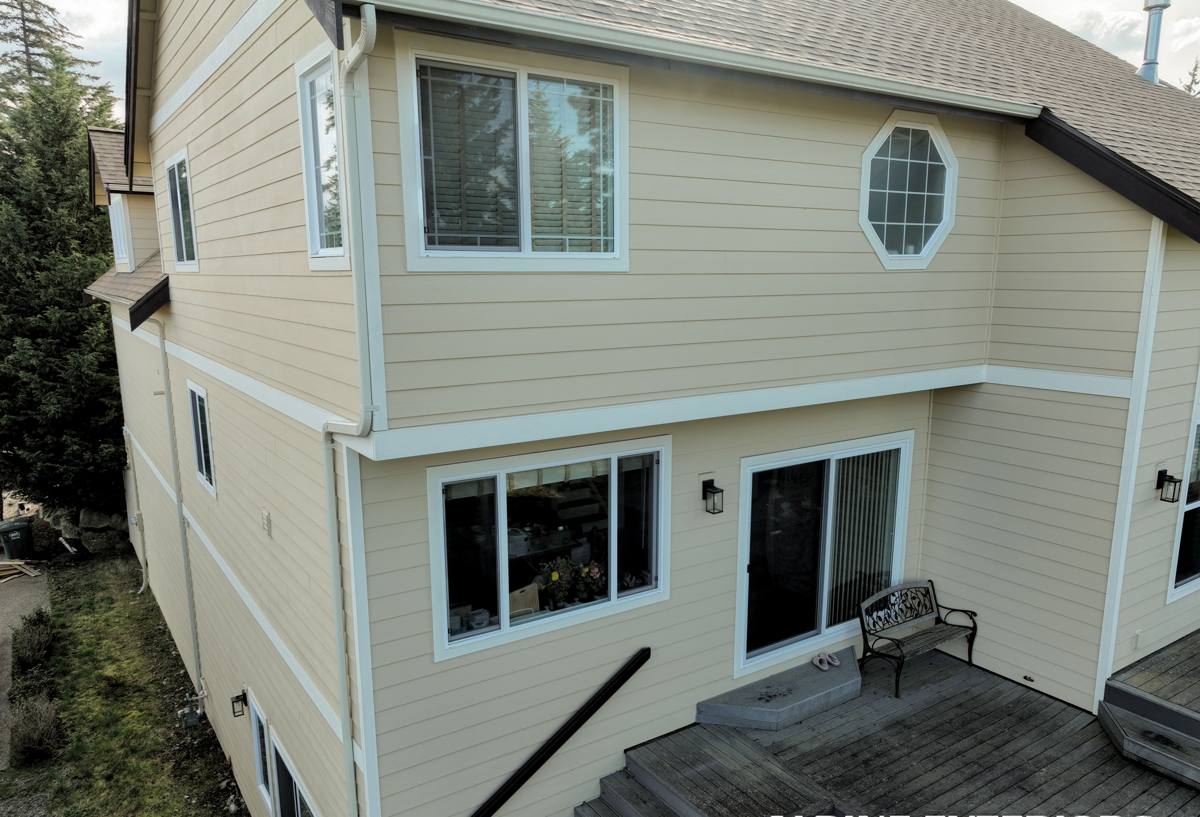
Signs Your Blaine Deck Needs Repair
Most homeowners call us after noticing one or two of these. If you're seeing any of the following, it's worth having someone look before winter rains make the problem worse:
- Boards that feel spongy, bounce, or flex more than they used to
- Visible gaps, cupping, or splitting in the decking
- Rust streaks running down from screws, nails, or metal brackets
- A railing or post that wiggles when you push on it
- Green or black staining that keeps returning within weeks of cleaning
- Soft or discolored wood where the deck meets the house (the ledger board area)
- Gaps opening up between the deck and the house siding or foundation
- Standing water that doesn't drain within a few hours of rain stopping
Any one of these on its own might be minor. Several together usually point to a structural issue that's been building for a while, not something that started last week.
What a Correct Deck Repair Actually Involves
A lot of "deck repair" in this region amounts to pressure washing, re-staining, and replacing whatever board looks worst. That approach treats the symptom, not the cause, and in a salt-air, high-rain environment like Blaine's, it tends to mean you're back to square one within a couple of seasons. Here's what we actually check and address.
Structural Framing
Joists, beams, and posts take on moisture from below and behind, often long before it shows on the surface. We check for soft spots, rot, and insect damage, and we look closely at how the framing was originally built — undersized joists, missing blocking, or improper spacing are common on older decks and make repairs less durable if they aren't corrected at the same time.
Ledger Board and House Connection
The ledger board — where the deck attaches to the house — is the single most important structural connection on most decks, and it's also the most common failure point we find in this climate. Driving rain pushes water behind poorly flashed ledger boards, and once moisture gets trapped there, rot spreads quietly for years. Any deck repair worth doing includes a real inspection of this connection, not just a glance.
Fasteners and Hardware
Standard galvanized fasteners corrode faster in salt air than most homeowners expect. We use stainless steel or heavy hot-dip galvanized fasteners and connectors rated for coastal exposure, and we replace corroded hardware rather than leaving it in place under new boards. Reusing compromised fasteners is one of the most common shortcuts that leads to repeat repairs.
Decking Boards and Railings
Individual board replacement, re-securing loose railings, and addressing cupped or split decking round out the visible portion of the work — but we do this after the structure underneath is confirmed sound, not instead of checking it.
Repair or Replace? A Practical Comparison
Not every deck needs full replacement, and not every deck can be reasonably saved with repairs. Here's how we generally think through it:
| Factor | Favors Repair | Favors Replacement |
|---|---|---|
| Framing condition | Solid, dry joists and posts | Widespread rot or soft framing |
| Ledger board | Properly flashed, no moisture damage | Rotted or improperly attached to the house |
| Age of structure | Under 15-20 years, built to code | Older, undersized framing, outdated hardware |
| Extent of damage | Isolated to a few boards or areas | Spread across most of the deck surface |
| Design | Layout and size still work for the home | Homeowner wants a different footprint or use |
A deck with sound framing and a healthy ledger connection is usually a strong repair candidate, even if the surface looks rough. A deck with rotted framing or a compromised house connection is often more cost-effective to rebuild than to keep patching, since new decking on failing structure just hides the real problem.
Material Choices That Hold Up in Blaine's Environment
When we're replacing boards, railings, or framing as part of a repair, material choice matters more here than it does further inland. Standard untreated lumber and lower-grade fasteners simply don't hold up as well against salt air and constant moisture cycling. We typically recommend:
- Pressure-treated or naturally rot-resistant framing lumber for structural members
- Composite or well-sealed wood decking for surfaces, depending on the homeowner's maintenance preference and budget
- Stainless steel or marine-grade coated fasteners and structural connectors
- Proper flashing and drainage detailing at the ledger board, regardless of decking material
Composite decking costs more upfront but generally needs less ongoing maintenance in a moss-prone, high-moisture climate. Wood decking costs less initially but requires more consistent cleaning, sealing, and inspection to get a comparable service life in Blaine's conditions. Neither is automatically the "right" answer — it depends on how much upkeep a homeowner wants to commit to.
Our Deck Repair Process
- On-site inspection. We check the full structure — framing, ledger connection, posts, fasteners, and surface decking — not just the areas you flagged as concerning.
- Written scope and honest recommendation. You get a clear picture of what's actually needed, including whether repair or replacement makes more sense for your specific deck.
- Structural repairs first. Any rotted framing, compromised ledger connections, or corroded hardware gets addressed before cosmetic work begins.
- Decking, railing, and fastener work. Boards and railings are replaced or resecured using fasteners and connectors suited to coastal exposure.
- Final check and cleanup. We confirm the deck is solid, level, and properly drained before we consider the job done.
Why Hiring a Crew That Already Works Blaine Matters
Deck repair looks similar on paper anywhere in Washington, but a crew that regularly works Blaine and the rest of the Whatcom County coastline knows which failure points show up first in this specific environment — the ledger board moisture issues, the fastener corrosion, the moss buildup in shaded, low-airflow areas near the water. That familiarity means less time spent diagnosing and more time spent fixing the actual problem, and it means the materials and fastener choices are already matched to what holds up here rather than what works in a drier or less exposed part of the state.
It also means we're not guessing at permitting or code requirements for structural deck work in this jurisdiction — we handle that as part of the job when the scope requires it.
Keeping a Repaired Deck in Good Shape
A proper repair buys you years of service, but a little seasonal upkeep extends that significantly in a climate like Blaine's. A simple annual routine:
- Clear leaves, needles, and debris from between boards before fall rains set in
- Rinse off salt residue and organic buildup a few times a year, especially in shaded spots
- Check fasteners and railings for movement or rust once a year
- Reseal or refinish wood decking on the schedule recommended for your specific product
- Watch the area where the deck meets the house for any new gaps or soft spots
If you're seeing any of the warning signs above, or you just want an honest opinion on whether your deck needs repair, reinforcement, or replacement, we're happy to take a look. Reach out for a free, no-pressure estimate using the form below.