 Ferndale
 Why Bellingham Roofs Take More Punishment Than Most
A roof in Bellingham works harder than a roof almost anywhere inland. The city sits close enough to Bellingham Bay and the Salish Sea that salt-laden air reaches homes well beyond the waterfront, and that air is quietly corrosive to exposed metal fasteners, flashing, and vent hoods over time. Add the wind-driven rain that rolls in off the water during fall and winter storms, and you get water that doesn't just fall straight down — it gets pushed sideways into laps, valleys, and penetrations that a roof built for a drier climate was never designed to handle.
Then there's moss. Whatcom County's combination of moisture, mild temperatures, and heavy tree cover means moss season here isn't a few weeks — it's most of the year on shaded, north-facing slopes. Moss holds water against the roof surface long after the rain has stopped, which accelerates granule loss on asphalt shingles and can lift edges enough for wind and rain to get underneath. None of this means Bellingham roofs fail faster by default — it means the installation details that get glossed over in a drier climate can't be skipped here.
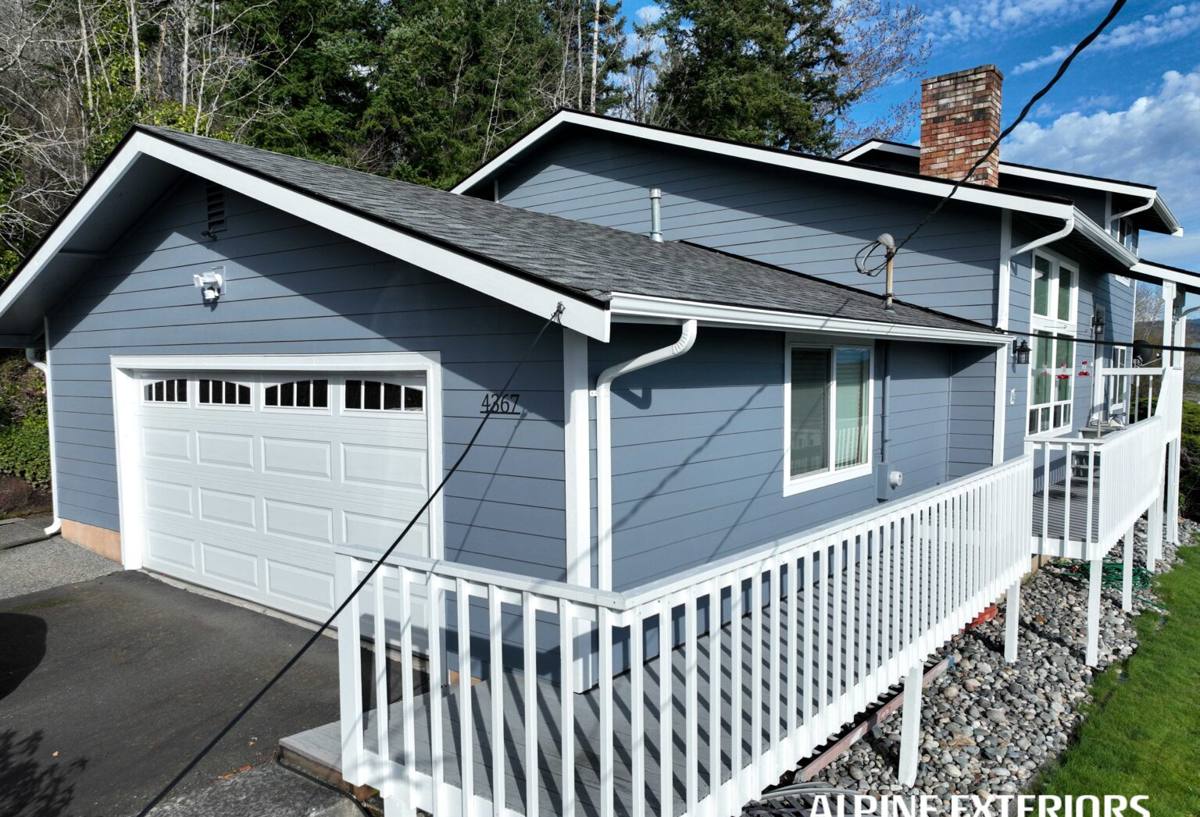
What a Correctly Installed Roof Needs to Include Here
A new roof is only as good as the parts nobody sees once the shingles or panels go down. In this climate, a handful of details matter more than they would in a place with less rain and less shade.
Underlayment and Water Protection
Every new roof needs a water-resistant underlayment as a backup layer beneath the primary roofing material, but the type and coverage matter. We use synthetic underlayment for its tear resistance and consistent performance in wet weather, with self-adhered ice-and-water membrane at eaves, valleys, and any low-slope section where wind-driven rain is most likely to find a way in. On a home with mature tree cover — common throughout Ferndale and Bellingham both — that membrane at the valleys is not optional; it's where moss and needle debris collect and hold moisture longest.
Ventilation That Matches the Attic
Balanced intake and exhaust ventilation keeps the attic deck dry and close to outdoor temperature, which does two things: it protects the roof deck from the underside, and it prevents the freeze-thaw and condensation cycles that can warp sheathing over the years. A roof installed with too little ventilation, or with intake and exhaust that don't actually balance, tends to show moisture problems from the inside before the shingles themselves ever show wear.
Flashing and Penetration Details
Chimneys, skylights, plumbing vents, and wall-to-roof transitions are where the large majority of leaks originate — not in the open field of shingles. Correctly stepped and counter-flashed details, sealed with materials rated for long-term UV and moisture exposure, are what actually keep driving rain out during a real Pacific Northwest storm.
Choosing a Roofing Material That Makes Sense for This Climate
There's no single "best" roofing material — the right choice depends on your home's exposure, roof pitch, budget, and how much long-term maintenance you're willing to keep up with. Here's how the common options compare for a moss-prone, salt-air, high-rainfall area like Bellingham and Ferndale.
| Material | Typical Lifespan | Moss & Moisture Resistance | Maintenance | Best Fit For |
|---|---|---|---|---|
| Architectural asphalt shingle | 25–30 years | Good with algae-resistant granules; needs periodic moss treatment | Low to moderate | Most homes — balance of cost, appearance, and durability |
| Standing seam metal | 40–50+ years | Excellent — sheds moss and water fast, minimal surface for buildup | Low | Homes with heavy shade or owners who want to minimize upkeep |
| Synthetic/composite shake or slate | 40–50 years | Very good — engineered to resist moisture absorption | Low | Homes wanting a traditional look without wood's moisture issues |
| Cedar shake | 20–30 years with upkeep | Poor without diligent upkeep — absorbs moisture, feeds moss growth | High — regular treatment and inspection required | Owners committed to the look and the maintenance schedule it requires |
We're upfront with Bellingham homeowners about cedar in particular: it's a beautiful, traditional material, but untreated wood shake in a climate this wet and shaded needs consistent attention to avoid moss colonization and moisture retention. If you love the look but not the maintenance, a synthetic shake product gets you closer to that appearance with far less long-term work.
Managing Moss and Algae for the Long Haul
Moss prevention starts at installation, not after the fact. We install zinc or copper strips near the ridge on shaded sections where moss is likely to return — rain washing over these metals releases trace amounts that inhibit moss and algae growth down-slope. On asphalt roofs, we also recommend shingles with algae-resistant granules, which matters more here than in most parts of the state given how long the roof surface stays damp between dry spells.
After installation, the two biggest mistakes we see homeowners make are letting overhanging branches shade a roof section year-round, and pressure-washing moss off shingles. High-pressure washing strips the protective granules right along with the moss, which shortens the shingle's life more than the moss itself would have. A soft wash or manual removal with proper technique, done on a reasonable schedule, protects the investment instead of undermining it.
How Our Installation Process Works
Every roof replacement follows the same sequence, whether it's a straightforward re-roof or a more involved job with deck repair.
- Inspection and estimate — we assess the existing roof, attic ventilation, and any visible moisture damage before quoting anything.
- Tear-off — full removal of old roofing material down to the deck, so we're never installing new roofing over hidden problems.
- Deck inspection and repair — any soft, rotted, or delaminated sheathing is replaced before anything new goes down.
- Underlayment and ice-and-water membrane — installed per the details above, with extra attention at valleys and eaves.
- Flashing installation — new flashing at all penetrations, chimneys, and wall transitions rather than reusing old, corroded pieces.
- Roofing material installation — shingles, metal panels, or composite material installed to manufacturer spec, including proper nailing pattern and exposure.
- Ventilation components — ridge vents, intake vents, or other components installed or upgraded as needed to balance the attic system.
- Cleanup and magnetic sweep — full site cleanup, including a magnetic sweep for stray nails and staples.
- Final walk-through — we go over the finished roof with you before calling the job complete.
Signs Your Bellingham Home May Need a New Roof
Roofs rarely fail all at once — they show warning signs first. Worth checking for, especially before the next round of fall storms:
- Granules collecting in gutters or at downspout discharge points
- Shingles that are curling, cupping, or visibly cracked
- Persistent moss or dark streaking on north-facing or heavily shaded slopes
- Daylight visible through the roof deck from inside the attic
- Water stains or discoloration on interior ceilings, especially after a windy rainstorm
- Soft or spongy spots underfoot when walking the roof
- Flashing that's visibly rusted, lifted, or separated from the surface it seals
- A roof approaching or past 20–25 years old with no major work done
Why Hiring a Crew That Already Works in Bellingham Matters
A roofing crew that works Ferndale and Bellingham regularly already understands things that don't show up in a generic estimate: which neighborhoods sit in enough tree shade to need extra moss protection, how exposed a given lot is to wind off the bay, and what the local permitting process through the city or Whatcom County actually requires before work starts. That familiarity shortens the time between estimate and installed roof, and it means fewer surprises once tear-off exposes the deck.
It also matters for material availability. Roofing suppliers in this region stock certain shingle and metal lines more reliably than others, and a local crew knows which products can actually be delivered on schedule versus which ones mean a multi-week wait — information that affects your project timeline more than most homeowners expect.
What Affects the Cost of a Roof Replacement
We don't quote roofing jobs off square footage alone — several factors move the price up or down, and it's worth understanding them before you compare estimates.
| Factor | Why It Matters |
|---|---|
| Roof size and pitch | Steeper roofs take longer to work safely and require more fall-protection setup |
| Number of existing layers | Tear-off of multiple old layers takes more labor and disposal cost than a single layer |
| Deck condition | Rotted or delaminated sheathing found during tear-off adds material and labor to replace |
| Material choice | Asphalt, metal, and composite materials carry different material and labor costs per square |
| Roof complexity | Valleys, dormers, chimneys, and skylights all add flashing work and time |
| Ventilation upgrades | Adding or correcting intake/exhaust balance may require new vent components or minor carpentry |
Because deck condition often isn't known until tear-off begins, we build that possibility into the conversation upfront rather than surprising you with it mid-project.
Caring for Your Roof After Installation
A well-installed roof still needs some basic upkeep in this climate to reach its full lifespan. Keep gutters clear so water isn't backing up under the roof edge, especially during heavy fall leaf-drop. Have shaded or moss-prone slopes checked and treated on a regular schedule rather than waiting until moss is visibly thick. And after any major windstorm off the water, a quick visual check — or a call to have it looked at — catches lifted shingles or displaced flashing before they turn into an interior leak.
If you're weighing a roof replacement for a Bellingham or Ferndale home, we're happy to take a look and walk you through what your specific roof actually needs — no pressure, no upsell, just a straight assessment. Use the form below to request a free estimate.