 Ferndale
 Why Bellingham Roofs Age Differently Than Roofs Inland
A roof in Bellingham doesn't fail the same way a roof in Spokane or even Seattle does. Sitting near Bellingham Bay and the Salish Sea, homes here deal with a specific combination: salt-laden air moving in off the water, long stretches of driving rain that comes in sideways during winter storms, and a moss season that can run eight or nine months out of the year under the tree cover common to Whatcom County neighborhoods. None of these factors is dramatic on its own. Together, over years, they change how a roof should be built and when it actually needs to be replaced rather than patched again.
We work on roofs throughout the Bellingham area regularly, and the failure patterns we see are consistent enough to plan around. That's the point of this page — not a generic replacement pitch, but a straight explanation of what this climate does to a roof and what a correct replacement looks like in response.
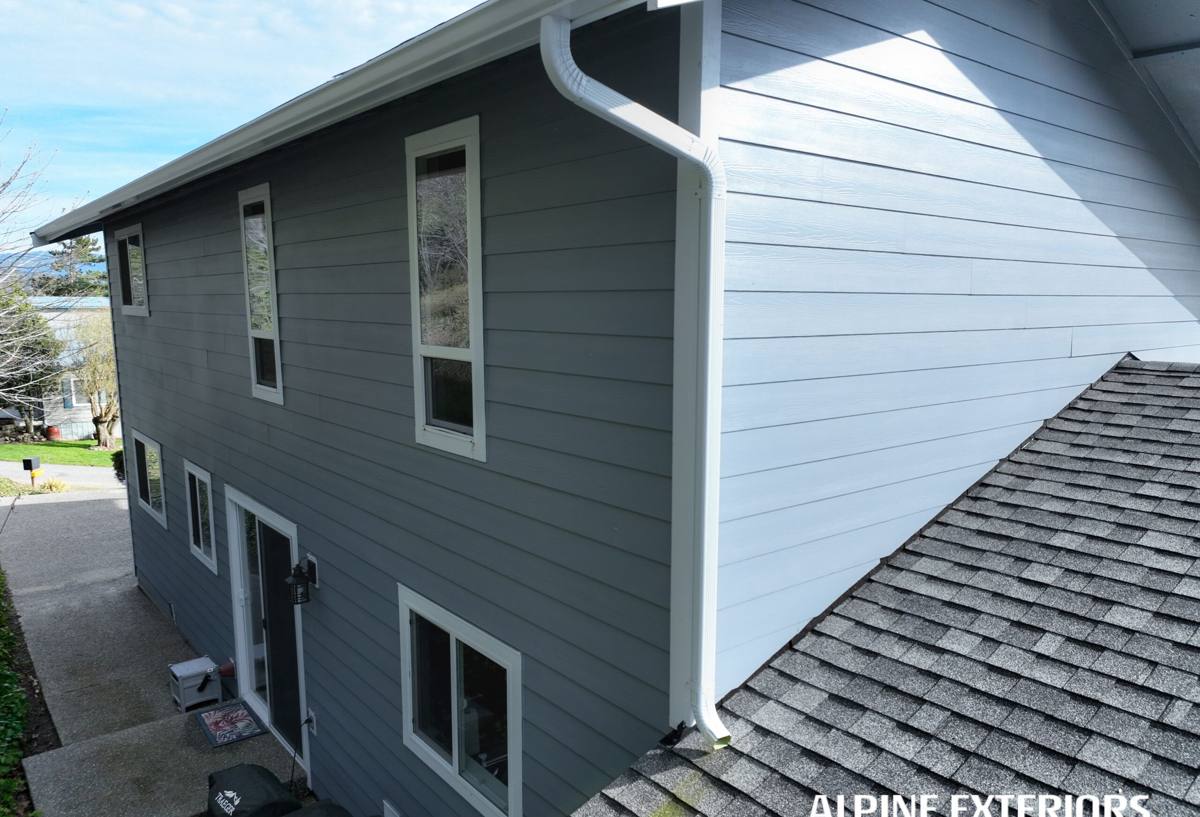
What Salt Air, Rain, and Moss Actually Do
Salt Air and Metal Components
Salt-laden air accelerates corrosion on any exposed metal — flashing, fasteners, vents, and gutter hardware. Standard fasteners and lower-grade flashing corrode faster this close to the water, which is why material selection and fastener grade matter more here than in a drier, inland location. A roof that looks fine from the ground can have flashing that's already thinning at the edges.
Driving Rain and Wind-Driven Water
Bellingham's winter storms don't just drop rain straight down — wind pushes it sideways and up under shingle edges, around vent boots, and into any gap in flashing. A roof built for calmer weather, with minimal underlayment or loosely sealed penetrations, will leak here even if the shingles themselves are in decent shape. This is one of the most common reasons we find water damage in attics with no obvious missing shingles above.
Moss and Sustained Moisture
Tree cover and a long damp season give moss a real foothold on north-facing slopes and shaded roof sections. Moss isn't just cosmetic — it holds moisture against the roofing material, lifts shingle edges as it grows, and works its way under the surface layer over time. A roof that's been fighting moss for years often has more underlying damage than the visible growth suggests.
Signs You Need Replacement, Not Another Repair
Repairs make sense when a roof has isolated damage and years of usable life left. Replacement makes sense when the roofing system as a whole has aged out or when repair costs start stacking up without solving the underlying problem. Here's what tells us which situation you're in:
- Granule loss showing bare asphalt across large sections, not just one spot
- Soft or spongy decking felt underfoot in the attic, indicating water has reached the plywood
- Repeated moss removal on the same slopes with shingles lifting or curling underneath
- Flashing around chimneys, vents, or valleys that's visibly corroded or separating
- Multiple past repairs in different areas within a short span of years
- A roof approaching or past its material's expected service life for this climate
- Daylight visible through the roof deck from inside the attic
If you're only seeing one or two of these, a repair may still be the right call. We'll tell you that honestly during an inspection — replacement is a bigger investment and we don't recommend it when it isn't needed yet.
What a Correct Replacement Involves in This Climate
Tear-Off and Deck Inspection
A proper replacement starts with full tear-off, not a layover. That's the only way to actually see the decking underneath — and in a wet climate, hidden deck damage from years of slow leaks is common enough that skipping this step means building a new roof on a compromised base. Any soft or rotted decking gets replaced before anything else goes down.
Underlayment Built for Wind-Driven Rain
Given how much of the damage here comes from wind-driven water rather than straight-down rain, underlayment quality matters more than in calmer climates. Ice-and-water shield or comparable membrane at eaves, valleys, and penetrations gives the roof a real second line of defense instead of relying on the shingle layer alone.
Flashing and Fasteners Rated for Coastal Exposure
Because of the salt air off the bay, we use flashing and fastener grades suited to coastal exposure rather than the minimum standard. This is one of the details that's easy to skip and hard to notice until corrosion shows up five or ten years later.
Ventilation That Accounts for Moisture, Not Just Heat
Roof ventilation is usually discussed in terms of heat and energy efficiency. In this climate, it's just as much about moisture — trapped humid air condensing under the deck accelerates rot and encourages the same moss and algae growth that shows up on the exterior. A replacement is a chance to correct undersized or blocked ventilation, not just match what was there before.
Choosing a Roofing Material for Bellingham's Conditions
There's no single "best" roofing material — it depends on your budget, your roof's pitch and shading, and how much upkeep you want to take on. Here's how the common options actually perform under salt air, sustained rain, and moss pressure:
| Material | Moss/Algae Resistance | Coastal Durability | Typical Upkeep |
|---|---|---|---|
| Standard 3-tab asphalt | Low — susceptible without treatment | Moderate | Regular moss/debris removal recommended |
| Architectural (laminate) asphalt | Moderate, better with algae-resistant granules | Good | Periodic moss checks on shaded slopes |
| Metal roofing | High — sheds moisture, little surface for moss to grip | Very good with proper coatings/fasteners | Low, but fastener/coating checks over time |
| Wood shake | Low — absorbs and holds moisture | Requires more maintenance in wet climates | High — regular treatment needed |
Most Bellingham homeowners land on architectural asphalt shingles with algae-resistant granules as the balance of cost and performance, with metal roofing as the upgrade option for anyone prioritizing longevity and lower long-term upkeep on a shaded or heavily treed lot.
Our Replacement Process, Start to Finish
- Inspection and honest assessment — we check decking, flashing, ventilation, and moss/moisture damage, and tell you plainly if repair is still a reasonable option.
- Material and scope walkthrough — we go over material options suited to your roof's exposure, pitch, and shading, with the trade-offs for each.
- Tear-off and deck repair — full removal of old roofing, with any damaged decking replaced before new material goes down.
- Underlayment and flashing installation — membrane and flashing selected for wind-driven rain and salt air exposure, not just minimum code.
- Roofing material installation — installed to manufacturer specification, with attention to valleys, penetrations, and edges where this climate causes the most problems.
- Ventilation check and correction — confirming intake and exhaust ventilation is adequate for moisture control, not just heat.
- Final walkthrough — reviewing the finished roof with you, including what routine maintenance will look like going forward.
Why Hiring a Crew That Already Works Bellingham Matters
Roofing crews that mostly work drier, inland areas can install a technically sound roof that still underperforms here, because the failure points in this climate — flashing corrosion, moss-driven moisture retention, wind-driven rain intrusion — aren't the ones they're used to planning around. A crew that regularly works Bellingham and the surrounding Whatcom County area has already seen how local roofs fail over time and builds accordingly, from fastener grade to underlayment placement to where extra flashing attention actually pays off.
That familiarity also shows up in smaller, practical ways — knowing which slopes on a typical Bellingham lot get the most shade and moss pressure, knowing what wind exposure near the water does to loose flashing, and knowing which ventilation mistakes show up again and again in homes built during certain eras in this area.
Cost Factors for a Bellingham Roof Replacement
Every roof is priced individually based on size, pitch, complexity, and material — we won't quote a number without seeing the roof. But these are the factors that actually move the price up or down:
- Roof size and number of layers being removed during tear-off
- Pitch and accessibility — steep or complex rooflines take more labor
- Extent of decking damage found once old material comes off
- Material choice, from standard asphalt to architectural shingles to metal
- Amount of flashing, valleys, and penetrations (chimneys, skylights, vents)
- Ventilation corrections needed beyond a like-for-like replacement
We'll break down each of these clearly during your inspection so you understand exactly what you're paying for and why, rather than a lump-sum number with no explanation behind it.
After Replacement: Keeping a New Roof Performing in This Climate
A new roof still needs some seasonal attention here. Keeping gutters and valleys clear of debris prevents water from backing up under shingle edges during heavy rain. Periodic moss checks on shaded slopes catch growth before it takes hold, especially in the first few years while the roof settles in. And a quick visual check after major windstorms — common in this area through fall and winter — can catch a lifted shingle or displaced flashing piece before it turns into a leak. None of this is intensive, but skipping it is how a well-installed roof ends up needing early attention it didn't have to.
If your roof is showing its age or you're not sure whether repair or replacement is the right call, we're happy to take a look. Request a free, no-pressure estimate using the form below and we'll give you an honest read on where your roof stands.