 Ferndale
 Bellingham's Climate Is Rougher on Siding Than It Looks
Bellingham sits right on the Salish Sea, and that proximity to saltwater shapes what happens to a home's exterior over time. Salt-laden air moves inland with the marine breeze and settles on every exposed surface, including siding. On products that aren't engineered to resist it, that salt exposure speeds up corrosion at fasteners and trim, and it accelerates the breakdown of paint and coatings that aren't built for coastal conditions.
Add to that the driving, wind-blown rain that comes through Whatcom County for much of the year, and you have a climate that tests siding from two directions at once: moisture trying to get behind the cladding, and salt air working on whatever's exposed to it. Then there's moss. Bellingham's damp, shaded conditions — especially on north-facing walls and anywhere tree cover blocks the sun — create a moss season that runs long, sometimes nearly year-round on the shadier sides of a house. Moss holds moisture against siding surfaces, and sustained moisture contact is one of the fastest ways to shorten the life of the wrong siding material.
None of this means Bellingham homes need exotic materials or unusual construction. It means the installation has to get the basics right — water management, ventilation, and material selection — because this climate doesn't forgive shortcuts the way a drier region might.
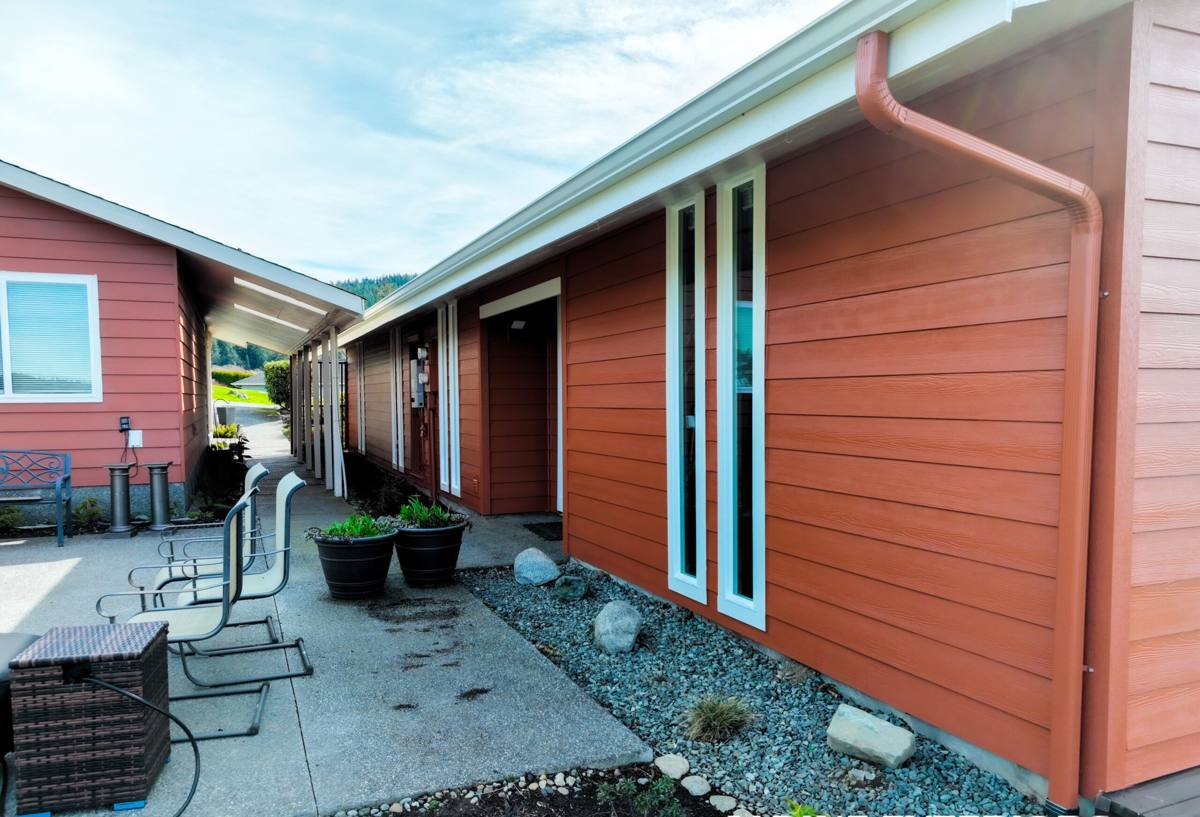
What Correct Siding Installation Actually Involves
A siding job can look finished and still be wrong underneath. The visible panels are the last five percent of the work; the first ninety-five percent is what happens behind them.
The Drainage Plane
Every wall assembly needs a way for incidental moisture to drain out rather than get trapped. That means a proper weather-resistive barrier installed with correct overlaps, and in most cases a rainscreen gap between that barrier and the siding itself so air can circulate and any moisture that does get in can dry out instead of sitting against the wall sheathing.
Flashing and Penetrations
Windows, doors, hose bibs, light fixtures, vents — every penetration through the siding is a place water can find its way in if it's not flashed correctly. This is where a lot of siding failures actually start, not in the field of the wall but at these transition points.
Fastening and Gapping
Fiber cement siding has specific fastening patterns and clearance requirements — gaps at butt joints, clearance from grade, roof lines, and decks — that exist for a reason. Skipping them doesn't show up as a problem on day one; it shows up two or three years later as swelling, staining, or failure at the edges.
Caulking and Sealants
Used correctly, sealant closes the specific gaps that are supposed to be closed and leaves the ones that need to breathe. Used as a substitute for proper flashing, it just delays a leak instead of preventing one.
Why We Install James Hardie Fiber Cement — and Nothing Else
Ferndale Siding installs James Hardie fiber cement siding exclusively. We don't install vinyl, LP SmartSide, primed spruce, cedar, or other fiber cement brands like Cemplank or Allura. That's a deliberate standard, not a limitation on what we're capable of installing.
Fiber cement is non-combustible, which matters more each year as wildfire smoke seasons stretch further into the Pacific Northwest calendar. It doesn't absorb water the way wood-based products do, which matters directly here given how much rain Bellingham sees. And James Hardie's ColorPlus finish is baked on at the factory under controlled conditions, which gives a more consistent, longer-lasting color than field-applied paint — a real advantage in a climate where UV exposure and moisture both work against painted surfaces.
The HZ5 Product Line
James Hardie engineers its siding by climate zone, and the Pacific Northwest falls into the HZ5 category — formulated for regions with significant moisture exposure. That's not marketing language; it reflects real differences in how the product is formulated to hold up in wet, marine-influenced conditions like Whatcom County's.
Warranty That Transfers
James Hardie backs its siding with a strong limited warranty, and the ColorPlus finish carries its own separate finish warranty. Both are transferable to a subsequent owner if the home sells, which matters for resale in a market where buyers increasingly ask what the exterior is made of and how it's held up.
Our Installation Process for Bellingham Homes
The steps below are consistent whether we're working on new construction or a full siding replacement, though the prep work looks different depending on which one it is.
- On-site assessment of the existing wall assembly, moisture conditions, and any rot or damage that needs to be addressed before new siding goes on.
- Removal of old siding (on replacement projects) and inspection of the sheathing underneath.
- Repair of any damaged sheathing or framing — no siding job should cover up a moisture problem instead of fixing it.
- Installation of the weather-resistive barrier and rainscreen system.
- Flashing of all windows, doors, and penetrations.
- Installation of James Hardie panels or lap siding per manufacturer fastening and clearance specifications.
- Trim, caulking, and final detail work.
- Final walkthrough so you know what was done and what to expect going forward.
We schedule around Bellingham's weather patterns where we can, since fiber cement installation and finish work go more smoothly with a dry install window. That's part of why working with a crew that already operates in this area, rather than one traveling in from elsewhere, tends to produce a smoother project timeline.
What We Commonly Find on Older Bellingham-Area Homes
A lot of the siding replacement calls we get in this part of Whatcom County share a few patterns:
- Wood or engineered wood siding that has absorbed moisture at butt joints and lower courses, leading to soft spots or visible swelling.
- Vinyl siding that has warped or faded on south- and west-facing walls, where UV exposure is heaviest.
- Heavy moss and algae buildup on north-facing and shaded walls, sometimes masking staining or early wood rot underneath.
- Caulking used to patch gaps that should have been flashed, which usually means the problem has been delayed rather than solved.
- Missing or inadequate rainscreen gaps on older installations, leaving the siding with nowhere for trapped moisture to go.
None of these are unusual for a marine climate — they're the predictable result of time, weather, and, in some cases, siding materials that weren't well matched to this environment in the first place.
Cost Factors for a Bellingham Siding Installation
Every project is different, but the factors that move the price are consistent. We don't publish flat per-square-foot numbers because they're rarely accurate once a real house is involved — the table below is meant to help you understand what drives cost, not to substitute for an on-site estimate.
| Factor | Why It Matters |
|---|---|
| Extent of existing damage | Rotted sheathing or framing found during tear-off adds repair scope beyond the siding itself |
| Home size and wall complexity | More corners, dormers, and roof lines mean more flashing, cutting, and labor time |
| Siding profile chosen | Lap siding, panel siding, and shingle-style Hardie products differ in material and installation labor |
| Trim and accent work | Additional trim boards, batten details, or accent colors add material and labor |
| Access and site conditions | Tight lots, slopes, or limited staging area can affect equipment needs and labor time |
| Existing siding removal | Tear-off and disposal of old material is a separate cost from new installation |
The only way to get an accurate number is a walk-through of the actual house, which is what a free estimate is for.
Choosing a Contractor Who Actually Works in Bellingham
A crew that regularly works Bellingham and the rest of Whatcom County has already seen how this specific climate treats siding over years, not just in a training manual. That matters for decisions like where rainscreen gaps are non-negotiable, how aggressively to flash a given roof-to-wall transition, and which walls on a house are going to take the worst of the moss and moisture load.
A few things worth asking any contractor before you hire them for a siding job in this area:
- Are they a certified or trained James Hardie installer, and can they explain their fastening and flashing approach specifically?
- Do they include a rainscreen or drainage gap as standard, or only when asked?
- Will they put the scope of work, including sheathing repair contingencies, in writing before starting?
- Are they licensed and insured to work in Washington State, and can they provide proof?
- Do they have experience with homes in this specific climate zone, not just siding installation in general?
A contractor who hesitates on any of these is worth a second look before you sign anything.
Maintaining Your Siding After Installation
Correctly installed James Hardie siding is low-maintenance, but "low" isn't "none" — especially in a climate that grows moss as readily as this one does.
- Rinse siding periodically to keep dirt, pollen, and salt residue from building up, especially on walls facing the water.
- Keep an eye on shaded, north-facing walls for early moss growth and address it before it spreads.
- Trim back vegetation and tree limbs that keep siding shaded and damp longer than necessary.
- Inspect caulking at trim and penetrations every year or two, since sealant is the one component that does wear out over time.
- Watch for any staining or discoloration at the base of walls, which can indicate a drainage or flashing issue worth checking.
If you're weighing a siding replacement or building new in the Bellingham area, we're happy to take a look at your home and walk you through what it would actually involve — no pressure, no obligation. Use the form below to request a free estimate.