 Ferndale
 Why Birch Bay Siding Takes a Different Kind of Beating
Birch Bay sits right up against the water, and that changes the math on siding in ways that homes even a few miles inland don't have to deal with. Salt-laden air moves off the bay and settles on every exterior surface, wind-driven rain comes in sideways during winter storms instead of falling straight down, and the long gray stretch of Whatcom County's wet season keeps north-facing walls and shaded corners damp for weeks at a time. That combination of salt, moisture, and shade is exactly the environment where moss takes hold and where the wrong siding choice shows its weaknesses fastest.
We install James Hardie fiber cement exclusively, and Birch Bay is one of the areas where that decision matters most. This page is about what a correct James Hardie installation looks like on a Birch Bay home, why the product holds up to this specific exposure, and what our process looks like when we're on your street.
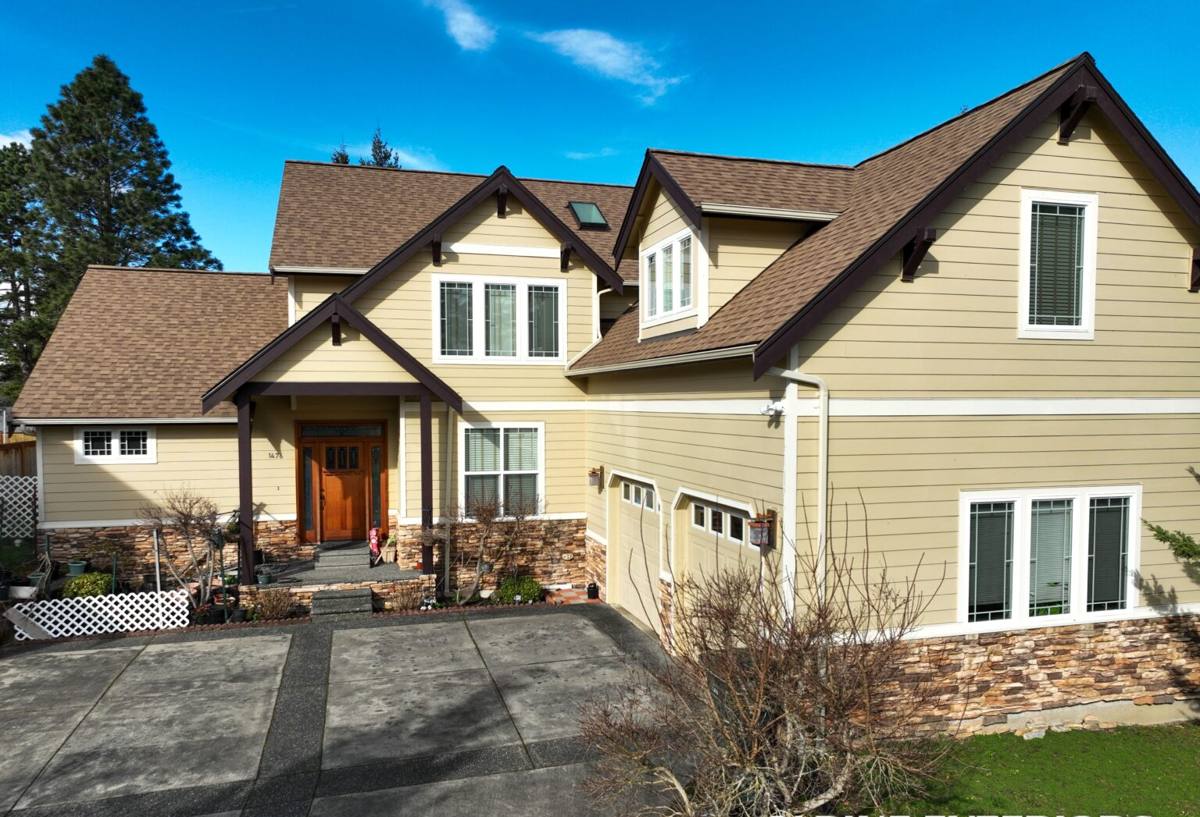
What Salt Air, Rain, and Moss Actually Do to a House
Salt Air
Airborne salt is corrosive and hygroscopic — it pulls moisture out of the air and holds it against whatever surface it lands on. Over years, that means fasteners, trim, and any exposed metal on a home's exterior face more corrosion pressure near the water than they would inland. It also means paint and coatings on lower-grade siding materials break down faster, because the salt film sitting on the surface keeps it slightly damp between rain events.
Driving Rain
Wind off the bay doesn't just add rain volume — it changes its direction. Rain that would run harmlessly down a vertical wall somewhere sheltered instead gets driven sideways into laps, seams, and penetrations. That puts real pressure on how siding is lapped, how it's flashed around windows and doors, and how gaps and joints are sealed. A siding system that's forgiving in a calm inland yard can leak in a waterfront wind event.
Moss Season
Whatcom County's wet season runs long, and shaded or north-facing walls near mature trees or close to the water can stay damp for extended stretches. Moss and algae need exactly that: moisture and shade. Once organic growth establishes itself on a wall, it holds moisture against the surface underneath it, which accelerates whatever degradation is already happening from salt and rain.
Why James Hardie Is What We Put On Birch Bay Homes
None of what follows is marketing shorthand — it's the specific reason we standardized on one product instead of offering a menu of options.
It Doesn't Rot or Support the Growth That Feeds On Wood
James Hardie siding is fiber cement — sand, cement, and cellulose fibers, engineered and cured, not wood. It doesn't rot, and it doesn't feed fungal or insect growth the way wood-based or wood-fiber products can. In a moss-prone, damp-cycle environment like Birch Bay, that's a structural advantage, not just a cosmetic one.
It's Non-Combustible
Fiber cement doesn't burn. That matters everywhere, but it's a genuine peace-of-mind factor for homeowners thinking about wildfire exposure during the region's drier summer stretches.
HZ5 Engineering for Cold, Wet Climates
James Hardie makes climate-specific product lines, and the HZ5 line is engineered for regions with more moisture and freeze-thaw cycling — which describes the Pacific Northwest better than a generic, one-climate siding product does. That engineering shows up in how the product is formulated to resist moisture intrusion and hold up under repeated wet-dry cycling.
ColorPlus Factory Finish
Most of what fails first on painted siding near saltwater is the finish, not the substrate. ColorPlus is a factory-applied, baked-on finish that's more consistent and more resistant to fading and wear than field-applied paint, and it carries its own finish warranty separate from the substrate warranty. In a salt-air environment where field-applied paint jobs tend to chalk and fade faster, that factory finish is doing real work.
A Strong, Transferable Warranty
James Hardie backs its siding with a long-term limited warranty that's transferable to a new owner if the home sells — a meaningful detail for a waterfront community where resale value and a documented exterior history matter to buyers.
What a Correct Installation Involves
The product only performs to spec if the installation respects a handful of details that matter more in Birch Bay's exposure than they would somewhere sheltered.
- Correct fastener type and spacing, driven to manufacturer torque specs — not overdriven, which cracks the board's face over time
- Proper lap and joint treatment so wind-driven rain can't work its way behind a seam
- Flashing and water management detailing around every window, door, and penetration, sized for a wind-driven rain exposure rather than a sheltered one
- A minimum clearance gap at grade and at horizontal surfaces like decks and patios, so splash-back and standing moisture don't sit against the bottom edge of the siding
- Rain screen or drainage plane detailing appropriate to the wall assembly, so any moisture that does get past the cladding has somewhere to go
- Field-cut edges sealed or primed per manufacturer spec, since a bare cut edge is the fastest point of moisture entry on any fiber cement job
Skip any one of these and you've got James Hardie material installed in a way that won't deliver a James Hardie result. The product and the installation are a package deal.
How the Job Actually Runs
1. Walkthrough and Assessment
We look at your home's specific exposure — which walls face the water and prevailing wind, where moss and staining are already showing up, where trim and flashing show wear — before we talk product or scope.
2. Removal and Sheathing Check
Old siding comes off and we check the sheathing and water-resistive barrier underneath for hidden moisture damage. This is often the point where a homeowner learns whether prior moisture intrusion has been an issue, and it gets addressed before anything new goes on.
3. Water Management First
Flashing, drainage plane, and any needed rain screen detailing gets installed and inspected before a single piece of Hardie goes up. This step is the one that actually determines whether the finished wall handles a wind-driven storm off the bay.
4. Installation to Spec
Fastening, lap spacing, gaps, and sealed cut edges are done to James Hardie's published installation requirements, not shortcuts. This is also what keeps the manufacturer's warranty intact.
5. Final Walkthrough
We walk the finished job with you, cover care and maintenance specific to your home's exposure, and make sure you know what a normal wash-down schedule looks like versus a problem worth calling about.
James Hardie Compared to the Alternatives in a Birch Bay Setting
| Factor | James Hardie Fiber Cement | Vinyl | Wood / LP-Type Products |
|---|---|---|---|
| Salt air exposure | Engineered substrate, factory finish resists fading and chalking | Can become brittle and discolor with UV and salt exposure over time | Wood fiber and coatings are more vulnerable to salt-accelerated wear |
| Wind-driven rain | Holds up when installed with correct lap and flashing detail | Panels can be prone to gaps or blow-off in high wind if not tightly fastened | Performance depends heavily on coating and joint maintenance |
| Moss / organic growth | Non-organic substrate; growth doesn't feed on the material itself | Growth sits on the surface but doesn't compromise the panel | Wood-based substrates are more susceptible to moisture-driven decay under growth |
| Fire | Non-combustible | Combustible, can soften/deform near heat | Combustible |
| Finish longevity | Factory-baked ColorPlus finish with its own warranty | Color is through-body but can fade; no repaint option | Field-applied paint typically needs recoating on a shorter cycle |
Every product on that table has a place in the industry. We simply don't install the other two, because we don't want to hand a Birch Bay homeowner a maintenance schedule or a set of trade-offs we wouldn't be comfortable living with ourselves.
What Drives Cost on a Birch Bay Job
| Factor | Why It Matters Here |
|---|---|
| Home size and wall complexity | More corners, dormers, and penetrations mean more flashing and cut-edge sealing labor |
| Existing moisture or rot damage | Waterfront exposure means sheathing repair is more common here than inland |
| Product line and profile | HZ5 boards, plank width, and texture (smooth vs. cedar-shake style) affect material cost |
| Trim and accessory scope | Corner boards, soffit, and trim detailing add labor and material |
| Access and site conditions | Waterfront lots with steep grades or limited staging area can affect labor time |
We give a firm, itemized estimate after the walkthrough rather than a rough number over the phone — Birch Bay lots vary enough in exposure and access that a phone estimate isn't a responsible one.
Maintenance: What to Actually Do
- Rinse siding with a garden hose (not a pressure washer aimed directly at seams) once or twice a year, more often on walls facing the water or shaded by trees
- Check caulked joints around windows and trim annually and re-caulk if you see cracking or gaps
- Keep gutters clean so overflow isn't running down the wall face
- Trim back vegetation that's shading a wall and keeping it damp longer than it needs to be
- Address any moss or algae staining early with a gentle wash rather than letting it build up over a season
Why It Matters That We Already Work in Birch Bay
Siding contractors who mostly work inland don't always think about wind-driven rain detailing, salt exposure at fasteners and trim, or how long a shaded wall near the water actually stays wet each winter. A crew that already works Birch Bay homes has seen what this exposure does to a wall over five, ten, fifteen years, and installs with that in mind from the first flashing detail rather than treating it as a standard install. That's the difference between siding that looks right on install day and siding that's still performing after its first few real winters off the bay.
If you're weighing a siding replacement for a Birch Bay home, we'd rather walk your property and give you a straight answer about condition and scope than guess over the phone. Reach out for a free, no-pressure estimate — the form below gets you started.