 Ferndale
 Metal Roofing Built for Birch Bay's Waterfront Conditions
Birch Bay sits right on the water, and that changes what a roof has to deal with compared to a home a few miles inland in Ferndale or Lynden. Wind off the bay carries salt and moisture onto every exterior surface, driving rain gets pushed sideways into fascia and flashing details, and the long, gray Whatcom County wet season keeps roofs damp for months at a time. Metal roofing handles all three of those conditions better than most alternatives, but only when it's specified and installed correctly for a coastal setting. A metal roof installed the same way you'd install one in a dry inland climate will corrode faster, leak sooner, and cost more to maintain than one detailed specifically for salt exposure.
This page covers what actually matters for a metal roof on a Birch Bay home: the climate factors at play, the material and installation choices that hold up near salt water, and what our process looks like from first look to final walkthrough.
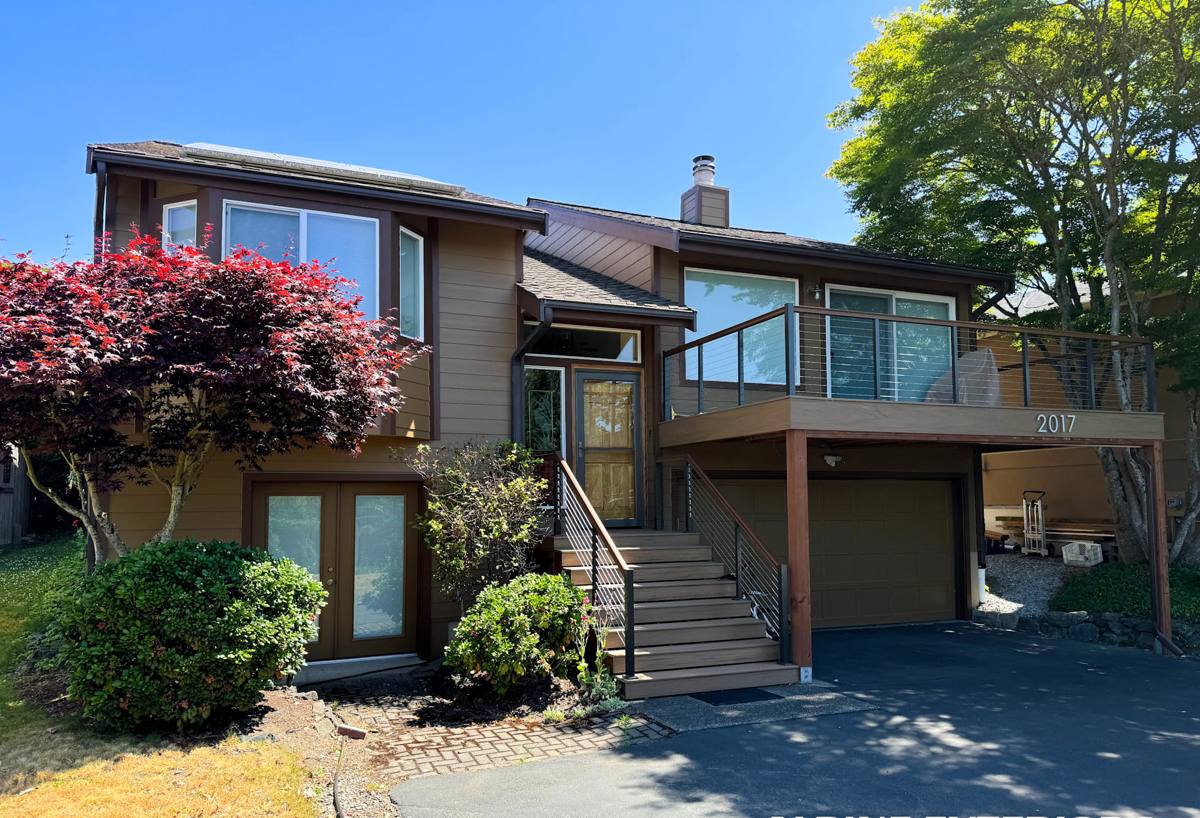
What Birch Bay's Coastal Climate Does to a Roof
Three things define roofing conditions in Birch Bay, and they compound each other:
- Salt air: Airborne salt from Birch Bay and the greater Strait of Georgia settles on roofing materials, fasteners, and flashing year-round, accelerating corrosion on anything not rated for coastal exposure.
- Driving rain and wind: Storms off the water push rain at an angle instead of straight down, which stresses seams, panel laps, and any flashing detail that was only designed to shed water vertically.
- A long moss and algae season: Western Washington's wet months give moss and algae a long runway to establish on roofing surfaces, especially in shaded areas or where debris collects.
None of these are unique to Birch Bay in isolation — most of Whatcom County deals with rain and moss. What's different close to the water is the salt load, and that's the piece that gets overlooked when a roofing crew doesn't regularly work waterfront properties.
Standing Seam vs. Exposed-Fastener Metal Roofing
Not all metal roofing is the same system, and the choice matters more near salt water than it does inland.
Standing Seam
Standing seam panels lock together with raised, concealed seams and no exposed fasteners on the field of the roof. Panels can expand and contract with temperature swings without stressing the seam, and there are no exposed screw heads for salt-laden moisture to work into over time. This is the system we recommend for most Birch Bay homes, especially anything with direct exposure to wind off the water.
Exposed-Fastener (Corrugated or Ribbed) Panels
Exposed-fastener systems cost less up front and are a legitimate option for outbuildings, shops, and some roof pitches. The tradeoff is that every screw penetration is a maintenance point — the rubber washer under each screw head degrades over years of sun and salt exposure, and once it does, that's a leak path. In a coastal environment, those washers wear out faster than they would inland. We'll install exposed-fastener systems when it's the right call for the structure and budget, but we tell every Birch Bay customer up front what the long-term maintenance looks like compared to standing seam.
| Factor | Standing Seam | Exposed-Fastener |
|---|---|---|
| Exposed fasteners | None on the field | Yes, at every panel rib |
| Salt-air maintenance | Low | Moderate — washers need periodic inspection |
| Upfront cost | Higher | Lower |
| Typical best use | Primary residence roofs, waterfront exposure | Shops, outbuildings, budget-driven projects |
| Expansion handling | Seams float, panels move freely | Fasteners can restrict movement over time |
Material and Coating Choices That Matter Near Salt Water
The base metal and its coating do most of the work in a salt-air environment. A few honest distinctions worth knowing before you choose:
- Steel with a Galvalume or galvanized coating: A solid, cost-effective base metal, but the protective coating is what stands between the steel and corrosion. Coating quality and thickness matter more here than they would inland.
- Aluminum: Naturally corrosion-resistant even without a coating, which makes it a strong choice for the most exposed sections of a waterfront roof. It costs more than coated steel but needs less babying over the life of the roof.
- Paint finish: A quality baked-on finish (the kind used by established metal roofing manufacturers) resists fading and chalking far longer than a basic coating, and it adds a second layer of protection over the base metal.
We'll walk you through which combination makes sense for your specific roof, your budget, and how exposed the home is to wind and salt off the bay — a detached shop set back from the water doesn't need the same spec as a roof facing the beach directly.
Getting the Corrosion Points Right
Most metal roof problems near salt water don't start on the panel itself — they start at the connections. This is where installation quality separates a roof that lasts decades from one that needs early repairs.
Fasteners
Fasteners have to match the panel material and carry a coating rated for coastal use. Mismatched or undersized fasteners are one of the most common causes of early corrosion staining and leaks on metal roofs near the water.
Dissimilar Metal Contact
When two different metals touch in the presence of moisture — say, an aluminum panel against a steel flashing, or the wrong fastener in the wrong panel — you get galvanic corrosion, where one metal degrades the other. Salt air speeds this reaction up considerably. Correct detailing keeps compatible metals in contact with each other and isolates anything that isn't.
Flashing and Penetrations
Every place the roof breaks plane — valleys, chimneys, vents, wall transitions — is a spot where driving rain can get pushed uphill by wind. Flashing has to be lapped, sealed, and fastened to handle wind-driven rain, not just water running straight downhill.
Moss, Algae, and a Long Wet Season
Whatcom County's wet season runs long, and moss doesn't need much encouragement once it gets a foothold. Metal roofing is inherently more moss-resistant than asphalt shingles because there's no granulated surface for spores to grip and no organic material for moss to feed on — but it isn't immune, especially in shaded valleys or where leaves and needles collect against a wall transition or low-slope section.
The best defense is design and maintenance working together: proper panel overlap and slope to shed water quickly, keeping surrounding trees trimmed back where practical, and clearing debris out of valleys and gutters before it has a chance to hold moisture against the roof surface through the winter.
Our Metal Roofing Process in Birch Bay
We keep the process straightforward and make sure you know what's happening at each stage:
- On-site assessment: We look at your existing roof, deck condition, ventilation, and how exposed the home is to wind and salt off the bay before recommending a system.
- Material and system recommendation: Based on that assessment, we recommend panel type, metal, and coating suited to your specific exposure and budget — not a one-size-fits-all package.
- Deck and underlayment prep: We check the roof deck for soft spots or moisture damage before anything goes down, and install underlayment rated to handle the wet conditions until the metal is on.
- Installation: Panels, fasteners, and flashing are installed to spec, with particular attention to the connection points that matter most near salt water.
- Final walkthrough: We go over the completed roof with you, including what maintenance to expect and what to watch for over the coming years.
What Affects Your Cost
Metal roofing costs more upfront than asphalt shingles, but the range varies a lot based on system and site factors. Here's what actually moves the number:
| Cost Factor | Why It Matters |
|---|---|
| Panel system (standing seam vs. exposed-fastener) | Standing seam runs higher due to material and labor complexity |
| Base metal (steel vs. aluminum) | Aluminum costs more but needs less long-term maintenance near salt water |
| Roof complexity | Valleys, dormers, and multiple roof planes add labor and flashing work |
| Deck condition | Any rot or soft decking found during tear-off adds repair cost before installation |
| Tear-off vs. overlay | Removing old roofing adds cost but lets us inspect and fix the deck underneath |
We'll give you a clear, itemized number after the on-site assessment rather than a ballpark over the phone — every Birch Bay roof is a little different once you account for exposure and existing conditions.
Maintenance Checklist for a Metal Roof in Birch Bay
A well-installed metal roof needs far less upkeep than shingles, but a coastal setting still calls for a periodic check:
- Clear leaves, needles, and debris from valleys and gutters, especially before the wet season sets in
- Look for early signs of moss or algae in shaded or low-slope areas and address it before it spreads
- Check exposed fasteners (if applicable) for washer wear every few years
- Inspect flashing around chimneys, vents, and wall transitions for any sign of lifting or gaps
- Trim back overhanging branches that keep sections of the roof shaded and damp
- Rinse off heavy salt buildup after major windstorms if the home faces the water directly
If you're weighing metal roofing for a home in Birch Bay, we're happy to take a look and walk you through what makes sense for your specific site and budget. Use the form below to request a free, no-pressure estimate.