 Ferndale
 Why Birch Bay Roofs Wear Differently Than Inland Homes
Birch Bay sits right on the water, and that changes what a roof has to deal with year after year. Homes just a few miles inland in Ferndale get some of the same Whatcom County weather, but Birch Bay adds a layer of salt air, near-constant wind off the water, and shade pockets that never fully dry out. Put those together over a decade or two and you get roofs that age faster than their paperwork suggests.
Salt-laden air is corrosive to metal. It works on exposed fasteners, flashing seams, and vent stacks long before most homeowners notice anything from the ground. Add driving rain that comes in sideways during winter storms, and any weak point in flashing or underlayment becomes a leak path instead of a minor nuisance. Then there's moss — Birch Bay's tree cover, marine humidity, and long damp season give it a longer growing window than drier parts of the county, and moss holds moisture against shingles and decking in a way that shortens their life.
None of this means a Birch Bay roof is doomed to fail early. It means the replacement has to account for these conditions from the start, not treat the job the same way you would a roof in a drier, more sheltered part of Ferndale.
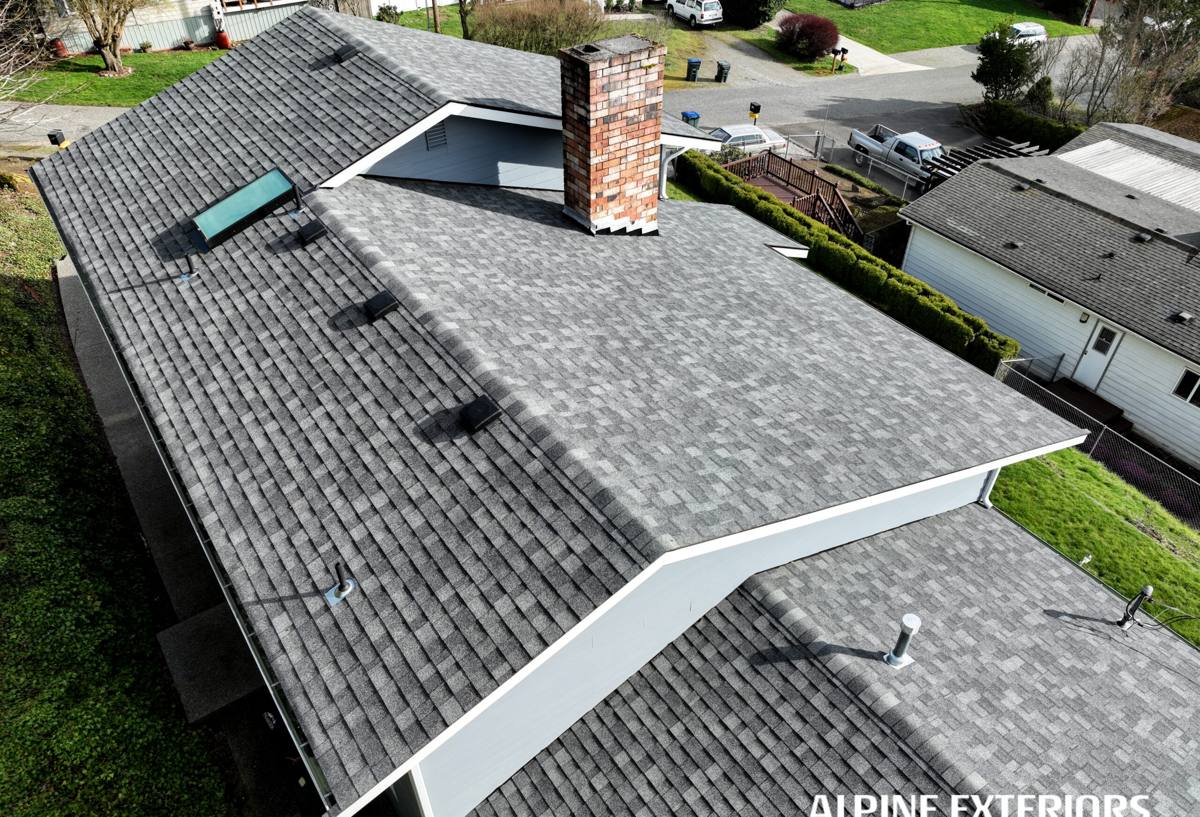
Signs a Birch Bay Roof Needs Replacement, Not Just Repair
Repair makes sense when a roof has isolated damage and the rest of the system is sound. Replacement makes sense when the underlying materials have aged out or the damage is spread across the roof rather than confined to one spot. In a coastal setting like Birch Bay, a few signs tend to show up earlier than homeowners expect:
- Granule loss that's heavy and uniform across multiple slopes, not just one wind-exposed section
- Moss coverage that keeps coming back within a season or two of cleaning, especially on north-facing or shaded slopes
- Corroded or pitted flashing around chimneys, vents, and valleys — a common sign of long-term salt exposure
- Soft spots or sagging in the decking, usually found during a tear-off but sometimes visible from the attic side
- Leaks that show up in new spots each winter rather than the same recurring one
- A roof that's simply reached the end of its material's realistic service life for this climate, even if it "looks fine" from the street
A roof that only needs a patch shouldn't be sold as a full tear-off. But if several of these signs are present at once, a repair is usually just delaying a bigger, more expensive failure.
Choosing Materials That Actually Hold Up on the Water
Every roofing material has trade-offs, and those trade-offs matter more in a salt-air, high-wind setting than they do a few miles inland. Our approach is to be upfront about what each option asks of a homeowner in Birch Bay's conditions, rather than pushing whatever has the best margin.
| Material | Coastal Performance | Maintenance Expectation |
|---|---|---|
| Architectural asphalt shingle | Good wind ratings available; algae-resistant granule options help with moss/algae staining | Periodic moss removal on shaded slopes; standard 25-30 year expectation, sometimes less under heavy salt exposure |
| Standing seam metal | Strong wind uplift resistance and sheds water well; needs coastal-rated fasteners and coatings | Low maintenance if installed correctly; fastener and coating quality matters more here than inland |
| Synthetic/composite shingle | Resists moisture absorption better than wood-look alternatives; consistent performance in wet climates | Low to moderate; check manufacturer coastal warranty terms before buying |
| Cedar shake | Traditional look, but wood in constant salt-laden moisture needs more upkeep to avoid rot and moss buildup | Higher maintenance burden in this specific climate; we'll say so plainly if a homeowner is considering it |
We don't rule any of these out categorically — the right choice depends on budget, the home's style, and how much upkeep a homeowner wants to take on. What we won't do is install a product in a way that ignores the coastal exposure it's actually going to face, like using standard-grade fasteners where hot-dip galvanized or stainless makes a real difference in service life.
What a Correct Roof Replacement Actually Involves
Tear-Off and Deck Inspection
A full tear-off gives us a look at the roof deck itself, which is where hidden problems usually live. Soft or delaminated sheathing, especially near valleys and eaves, gets replaced rather than covered over. Skipping this step is one of the more common shortcuts in the trade, and it's the one that causes the most expensive surprises down the road.
Underlayment and Water Protection
Given how much wind-driven rain Birch Bay sees, a quality synthetic underlayment matters more here than in drier parts of the county. Ice-and-water shield along eaves, valleys, and around penetrations adds a second line of defense in the spots most likely to take on water.
Flashing Built for Salt Exposure
Flashing around chimneys, skylights, and vent stacks is where a lot of coastal roofs fail first, simply because standard flashing corrodes faster in salt air. We use materials and fasteners chosen for that exposure, not just whatever meets minimum code inland.
Ventilation That Discourages Moss and Trapped Moisture
Balanced intake and exhaust ventilation keeps the underside of the roof deck drier and more temperature-stable, which slows moss growth and reduces the freeze-thaw stress that can crack shingles during cold snaps. On homes with mature tree cover or shaded north slopes — common around Birch Bay — this step gets extra attention.
How We Approach the Job, Start to Finish
- An on-roof inspection, not just a drive-by estimate — we want to see the deck condition, flashing state, and ventilation setup before quoting
- A written estimate that spells out material choice, scope of work, and what happens if we find deck damage once tear-off starts
- Scheduling around Birch Bay's weather windows — we don't start a tear-off with a storm front on the way
- Tear-off, deck repair as needed, underlayment, flashing, and material installation in sequence, with the roof never left exposed longer than necessary
- Job-site cleanup, including magnetic sweeps for stray fasteners and full debris haul-away
- A final walk-through so the homeowner sees the finished work before we consider the job done
Timelines vary with roof size and weather, but most single-family roof replacements in this area run a few days of active work, weather permitting. We'd rather push a start date by a day or two than rush a tear-off into a storm.
Why a Crew That Already Works Birch Bay Makes a Difference
Birch Bay isn't a generic Whatcom County job site. A contractor who works this stretch of coastline regularly already understands which fastener grade holds up, which flashing details fail first in salt air, and how to schedule around the area's wind and rain patterns instead of learning it on your roof. That local familiarity also extends to permitting through Whatcom County and coordinating access on narrower or waterfront lots, which can otherwise slow a project down.
It also matters for accountability. A crew that's planning to keep working in this community has a real incentive to get flashing, ventilation, and material choice right the first time — not just to pass a final inspection, but because a callback on a coastal roof is a bigger, wetter problem than one inland.
Homeowner Checklist Before You Sign a Contract
- Ask whether the estimate includes deck inspection and what happens if rot is found
- Confirm fastener and flashing materials are rated for coastal/salt-air exposure, not just standard grade
- Get the ventilation plan in writing, especially if your roof has shaded or north-facing slopes
- Check that the underlayment and ice-and-water shield coverage are specified, not left vague
- Ask how weather delays are handled and whether the roof will ever be left open overnight
- Verify licensing, insurance, and manufacturer certification for whatever product you're choosing
- Get the warranty terms in writing — both the manufacturer's material warranty and the contractor's workmanship warranty
What Drives Cost on a Birch Bay Roof Replacement
| Factor | Why It Matters Here |
|---|---|
| Roof size and pitch | Steeper, larger roofs take more labor and material regardless of location |
| Deck condition | Salt air and moisture can hide rot that isn't visible until tear-off |
| Material choice | Coastal-rated fasteners, flashing, and higher-grade shingles or metal cost more upfront but reduce early failure |
| Access and site conditions | Waterfront lots, mature trees, and tighter access can add time |
| Ventilation upgrades | Adding or correcting ventilation during replacement is far cheaper than doing it as a separate project later |
We give homeowners a broad, honest range once we've actually seen the roof — not a number pulled from a phone call, and not one padded to leave room for "surprise" add-ons later.
If your roof is showing its age, or you just want an honest read on how many years it has left, we're happy to come take a look. The estimate is free, there's no pressure, and you'll get a straight answer either way — just fill out the form below to get started.