 Ferndale
 Board & Batten Siding Built for Custer's Coastal Climate
Custer sits close enough to the water that homes here deal with a specific mix of weather stress: salt-laden air moving in off the Strait of Georgia and Puget Sound, long stretches of driving rain, and a moss season that seems to start earlier and end later every year. Board and batten siding has a strong, clean vertical look that a lot of Custer homeowners want, especially on farmhouse-style and modern builds. But that look only holds up if the siding underneath it is installed with this exact climate in mind. We install board and batten using James Hardie fiber cement products exclusively, and we treat the installation details — not just the panel selection — as the difference between siding that lasts decades and siding that causes problems in five years.
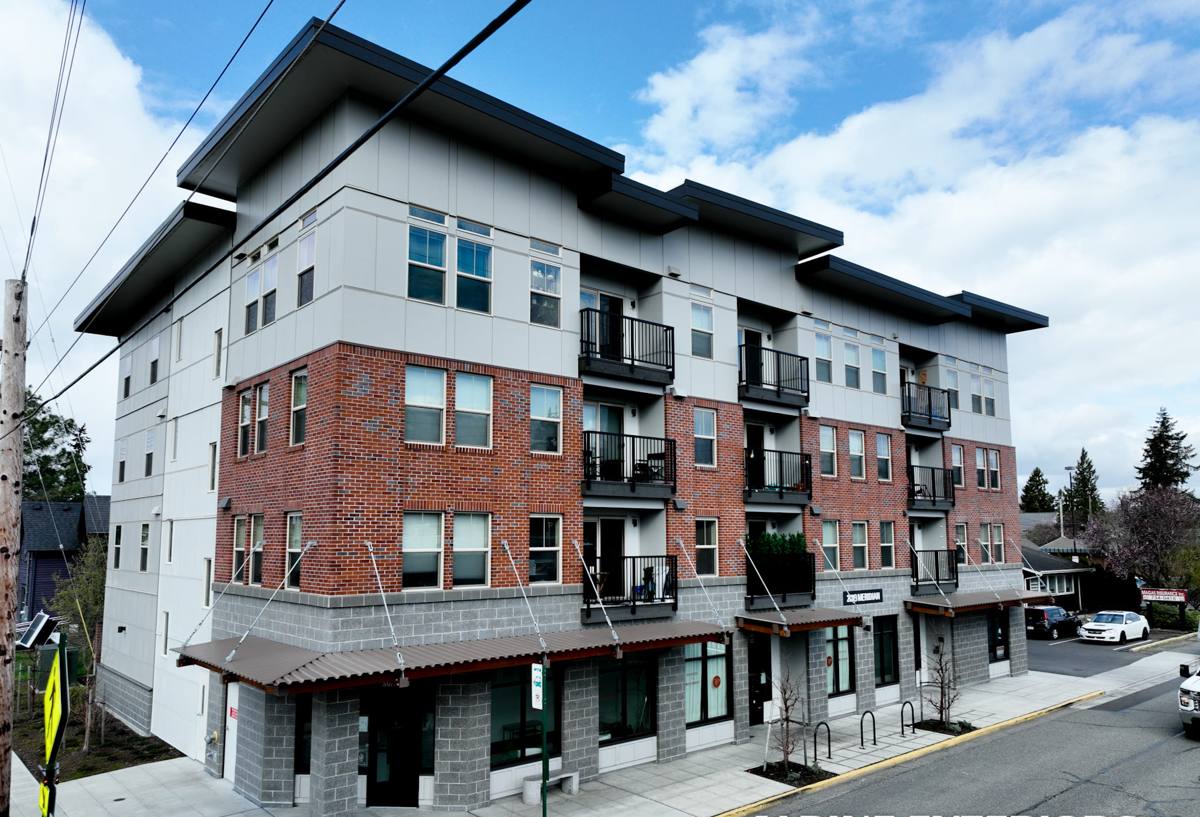
What Board & Batten Siding Actually Is
Board and batten is a siding pattern, not a single product. It's built from wide vertical boards (or panels) with narrower strips — the battens — covering the seams between them. The result is a rhythm of shadow lines running up the wall instead of the horizontal lines you get with lap siding. There are two common ways to build this with fiber cement:
- True board and batten: individual vertical boards installed with a gap between them, then separate battens fastened over each seam.
- Engineered vertical panel systems: factory-formed panels that replicate the board and batten look with fewer field seams and a more consistent reveal.
Both approaches can look excellent. Which one makes sense for a given Custer home usually comes down to the home's design, the wall height, and how much of the exterior is going to be vertical siding versus paired with trim, stone, or a different siding style on other elevations.
Why This Climate Punishes a Bad Board & Batten Job
Salt Air
Homes in and around Custer sit close enough to the water that airborne salt is a real factor on fasteners, flashing, and any exposed metal. Salt accelerates corrosion in fasteners that aren't rated for it, and once a fastener starts to fail, the board around it loosens and starts taking on water. This is one of the most common failure points we see on vertical siding that wasn't installed with coastal exposure in mind.
Driving Rain
Board and batten has more vertical seams per square foot of wall than lap siding does, which means more places where wind-driven rain can find its way behind the cladding if the installation isn't tight. In a driving rain event — which this part of Whatcom County gets regularly — water doesn't just fall straight down, it gets pushed sideways and upward into gaps that would stay dry in calmer weather.
Moss Season
Long, damp stretches without much drying time between rain events create ideal conditions for moss and algae growth on north-facing and shaded walls. Moss holds moisture against the siding surface far longer than the siding would otherwise stay wet, which matters more on a batten system where standing moisture near a seam has a direct path to the substrate underneath.
What a Correct Board & Batten Installation Involves
The visual style of board and batten is simple. Doing it correctly in a coastal, high-rainfall climate is not. Here's what separates a job that holds up from one that doesn't.
| Detail | Done Correctly | Common Shortcut We Won't Take |
|---|---|---|
| Water drainage behind siding | Rainscreen gap or drainage wrap installed to let incidental moisture escape and the wall assembly dry | Siding fastened directly against housewrap with no drainage path |
| Fasteners | Corrosion-resistant fasteners rated for coastal/high-moisture exposure, per Hardie spec | Standard fasteners that corrode faster in salt air |
| Vertical seams | Properly flashed and gapped per manufacturer instructions, sealed where required | Boards butted tight or caulked as the only water defense |
| Bottom edge / grade clearance | Correct clearance from grade, decks, and roof lines to avoid wicking | Siding installed too close to grade or hard surfaces |
| Cut edges | Factory or field-sealed per Hardie requirements before installation | Raw cut edges left exposed to weather |
None of these details show up in a photo of the finished wall. They show up five, ten, and fifteen years later — which is exactly why they matter more than the trim profile or the paint color.
The James Hardie Products We Use for This Style
We install board and batten exclusively with James Hardie fiber cement, using either HardiePanel vertical siding with applied battens or a vertical panel configuration suited to the home's design. Every option comes through in Hardie's ColorPlus factory finish, which bakes color onto the board in a controlled environment rather than relying on a field-applied paint job to hold up against salt air and constant moisture. Hardie's HZ5 product line is engineered specifically for climates with heavy moisture exposure, which fits this part of Whatcom County. We don't offer board and batten in vinyl, LP SmartSide, primed spruce, cedar, or other fiber cement brands — that's a standard we hold across every job, not just this one, because those materials carry moisture, maintenance, or longevity trade-offs we're not willing to install into a Custer home and stand behind.
Our Process, Start to Finish
- On-site assessment: we walk the exterior, check current siding condition, look at grade clearance, roof and deck intersections, and any moisture history on the walls.
- Design and layout: we plan board width, batten spacing, and reveal to fit the home's proportions and existing trim.
- Written estimate: a clear scope covering materials, prep work, flashing and drainage details, and timeline.
- Removal and prep: old siding comes off, sheathing is inspected and repaired where needed, and a drainage layer goes on before a single board is hung.
- Installation: boards and battens go up to Hardie's fastening and clearance specifications, with attention to every seam, corner, and penetration.
- Final walkthrough: we go over the finished job with the homeowner and cover basic care going forward.
Cost Factors for Board & Batten Siding in Custer
Board and batten typically costs somewhat more per square foot to install than standard lap siding, largely due to the extra material (battens) and labor time per seam. Exact numbers depend on the home, but the factors below are what actually move the price:
| Factor | Why It Matters |
|---|---|
| Wall height and complexity | Taller walls and multiple gables mean more cuts, more scaffolding time, and more seams to detail |
| Current siding removal | Tear-off and disposal of existing siding adds labor before new siding can start |
| Sheathing condition | Water damage found during removal needs repair before new siding goes on — this is common on older coastal homes |
| True boards vs. panel system | Individual board-and-batten construction takes more field labor than a factory vertical panel system |
| Trim and accent work | Window trim, corner boards, and transitions to other materials add detail time |
Living With Board & Batten in a Moss-Prone, Salty Environment
A correctly installed Hardie board and batten system is genuinely low-maintenance compared to wood alternatives, but "low-maintenance" doesn't mean "no attention needed." A few habits go a long way in this climate:
- Rinse shaded, moss-prone walls periodically with a garden hose rather than letting moss build up over multiple seasons.
- Keep gutters clear so overflow doesn't run directly down siding seams during heavy rain.
- Trim back vegetation and tree cover that keeps a wall damp and shaded longer than the rest of the house.
- Have caulking and sealant at trim and penetration points checked every few years, since these are the first places wear shows up.
- Address any small moisture staining or discoloration early rather than waiting — it's cheaper to fix a sealant gap than a rotted sheathing section.
Why a Crew That Already Works in Custer Matters Here
Board and batten forgives fewer mistakes than lap siding because there are more seams, more cut edges, and more places for wind-driven rain to test the installation. A crew that already works this stretch of Whatcom County has seen how homes here actually perform through a wet winter and a mossy shoulder season — which walls take the worst of the weather, where salt air causes the earliest fastener wear, and how grade and drainage issues show up on this kind of lot. That's a different starting point than a crew installing board and batten for the first time in a marine climate. We'd rather get the drainage plane, fastener spec, and seam detailing right the first time than have a homeowner call us back in a few years with a problem that traces to a shortcut taken during installation.
If you're weighing board and batten siding for a home in Custer, we're happy to walk the exterior with you, talk through what the style would look like on your specific house, and put together a straightforward estimate. There's no pressure and no obligation — just a clear look at what the job would actually involve.