 Ferndale
 Why Everson Siding Takes a Beating in This Climate
Everson sits along the Nooksack River in Whatcom County, and while it's a few miles inland from Bellingham Bay, it still gets the same weather systems that move through the rest of the county for most of the year. Marine air carries salt and moisture up the river valleys, driving rain comes in sideways during fall and winter storms, and shaded, north-facing walls stay damp long enough to grow a genuine moss season that can run from October into April. None of that is dramatic on its own, but siding doesn't fail because of one bad storm — it fails because the same moisture problem gets ignored for two or three wet seasons in a row.
That's the pattern we see on repair calls in and around Everson: a small issue that was easy to fix a year or two ago has turned into something that needs more than a caulk gun and a Saturday afternoon. Catching it early is the difference between a repair bill and a full re-side.
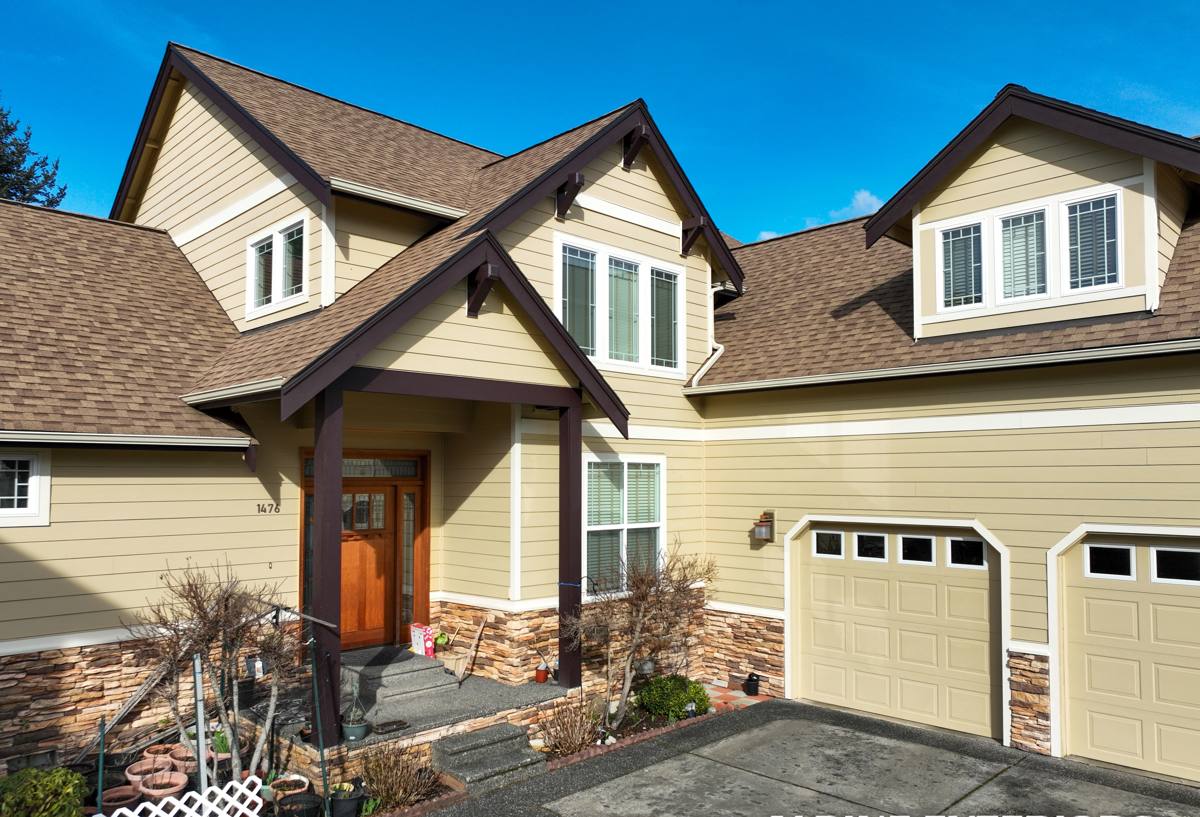
The Damage Patterns We See Most Often
Every siding material fails a little differently, but in this climate a few problems show up over and over on Everson homes:
- Moisture intrusion at seams and butt joints — the horizontal and vertical joints where siding pieces meet are the most common entry point for water, especially if they weren't sealed or flashed correctly during the original install.
- Moss and algae staining — shaded elevations, areas under overhangs that never get direct sun, and anywhere gutters overflow tend to hold moisture long enough for growth to take hold, which then traps even more moisture against the siding surface.
- Cracking, splitting, or warping — most common on wood-based or engineered wood siding that has absorbed water repeatedly and expanded and contracted with the seasons.
- Caulk and sealant failure — around window and door trim, at corner boards, and anywhere two materials meet. Caulk has a service life, and once it cracks or pulls away, water gets behind the siding with nowhere to drain.
- Impact damage — from wind-driven debris, falling branches, or accidental contact with ladders, equipment, or vehicles.
Some of these are cosmetic. Others are a sign that water has already reached the sheathing or framing behind the siding, which is a different — and more urgent — kind of job.
What a Correct Repair Actually Involves
A repair that just fills the visible gap or replaces the cracked board without asking why it happened is a repair that fails again. We treat every repair call as a diagnostic job first and a fix second.
Tracing the water, not just the symptom
Before we replace anything, we look at where water is actually getting in and where it's going once it's behind the siding. That means checking the condition of the water-resistive barrier (house wrap) where it's exposed, looking for soft or discolored sheathing, and confirming that flashing at windows, doors, and trim is actually doing its job — not just present.
Matching material and profile
Patching a repair with the wrong plank width, exposure reveal, or texture is one of the most common reasons a repair looks obviously "fixed" instead of blending in. We match profile and, where the original material allows it, finish color as closely as the product line permits.
Fastening, sealing, and finishing to spec
Correct nailing pattern and fastener type, proper caulking with a sealant rated for exterior movement, and a finish coat that matches the surrounding surface all matter more than they look like they should. Skipping any of them is how a "repair" turns into a callback six months later.
Repair or Replace? How We Help You Decide
Not every damaged section needs a full re-side, but not every problem should be patched either. We walk Everson homeowners through the same set of questions on every job:
| Factor | Leans toward repair | Leans toward replacement |
|---|---|---|
| Extent of damage | Isolated to one or two areas | Spread across multiple elevations |
| Moisture behind the siding | Surface only, sheathing is dry | Sheathing or framing shows rot or staining |
| Age of existing siding | Well within its service life | Already near or past expected lifespan |
| Material type | James Hardie fiber cement in otherwise good condition | Cedar, primed spruce, LP SmartSide, or vinyl showing widespread wear |
| Cost over time | Repair cost is a small fraction of replacement | Repeated repairs are adding up close to replacement cost |
We'll give you a straight answer either way. If a repair genuinely solves the problem, that's what we recommend — a homeowner who trusts our repair advice is a homeowner who calls us back when a bigger project makes sense.
Our Process for an Everson Siding Repair Call
- Inspection and diagnosis — we look at the damaged area and the surrounding siding, check for hidden moisture, and identify the root cause, not just the visible symptom.
- Written scope and options — you get a clear explanation of what's needed, what it costs, and why, including whether repair or replacement is the honest recommendation.
- The repair itself — removal of damaged material, correction of the underlying issue (flashing, sealant, barrier), and installation of matched replacement material.
- Finish work — caulking, priming, and finishing so the repaired section holds up the same way the surrounding siding does, not as a visibly different patch.
- Follow-up — a straightforward conversation about what to watch for and when, if ever, the rest of the siding might need attention.
Why We Repair Toward James Hardie Standards
We install James Hardie fiber cement siding exclusively, and that shapes how we approach repairs too. When we're repairing an existing James Hardie section, we work to the same specification the product was engineered for — correct fastening, proper joint treatment, and ColorPlus finish-matched material where available, so the repair holds up the way the rest of the siding does.
When we're called out to repair cedar, primed spruce, LP SmartSide, or vinyl siding, we'll do the work honestly and to a proper standard — but we'll also tell you what we see. Wood-based products absorb moisture and need ongoing maintenance to keep water out long-term. Vinyl can crack in cold snaps and fade or warp with UV and heat exposure, and it isn't repaired so much as replaced piece by piece since exact color matches fade over time. None of these are "bad" products — they're just products with real maintenance trade-offs, and repairing them repeatedly in a wet climate like this one is often what leads a homeowner to ask about something more durable.
That's why, when a repair conversation turns into a replacement conversation, we recommend James Hardie. It's non-combustible fiber cement, the HZ5 product line is engineered for climates like ours with significant moisture exposure, the ColorPlus factory finish holds color without the repainting cycle that wood and some engineered products require, and the warranty is transferable if you sell the home. We didn't standardize on it because it's the only option — we standardized on it because, installed correctly, it holds up to exactly the conditions Everson deals with every winter.
A Quick Self-Check Before You Call
A few minutes walking the exterior of your home can tell you a lot about whether you're looking at a minor fix or something that needs a closer look:
- Press gently on any area that looks discolored or stained — soft or spongy spots often mean moisture has already reached the material behind the siding.
- Look for paint that's bubbling, peeling, or flaking in patches rather than evenly across a wall.
- Check corners, window trim, and any place two materials meet for cracked or missing caulk.
- Note any boards that look warped, bowed, or misaligned compared to the rest of the wall.
- Look at shaded, north-facing sections for heavy moss or algae buildup, especially where gutters may be overflowing onto the wall below.
- Check for gaps or daylight visible at seams and butt joints.
If you find one or two of these, it's very likely a straightforward repair. If you're finding several across different parts of the house, that's worth a proper inspection before you decide how to move forward.
Why Local Experience in Everson Matters
A crew that already works this part of Whatcom County knows which failure patterns show up on which siding types here, understands how the wet season affects scheduling and drying times for repair work, and isn't guessing at local permitting or code requirements when a repair turns into something bigger. That familiarity shows up in small ways — knowing to check gutter overflow points before blaming the siding itself, or recognizing early moss growth as a maintenance flag rather than waiting until it's a structural one.
If you're dealing with damaged, stained, or failing siding on a home in Everson, we're happy to take a look and give you an honest read on what it needs. Reach out for a free, no-pressure estimate — there's a form below to get started.