 Ferndale
 Building Decks for the Fairhaven Area's Coastal Conditions
A deck in the Fairhaven area does a different job than a deck built fifty miles inland. Homes here sit close enough to the water that salt-laden air, near-constant winter rain, and a moss season that can stretch from October into May all work against ordinary construction. We build custom decks for homeowners in this part of Whatcom County who want something that still looks and performs well after five, ten, or twenty winters — not just something that looks good on installation day.
That means paying attention to details that don't matter much in a dry climate: how fasteners hold up to salt exposure, how water sheds off a ledger board, and how a decking material behaves when it's wet more often than it's dry. This page covers what a correctly built deck looks like for a Fairhaven property, and what our process involves from first estimate to finished project.
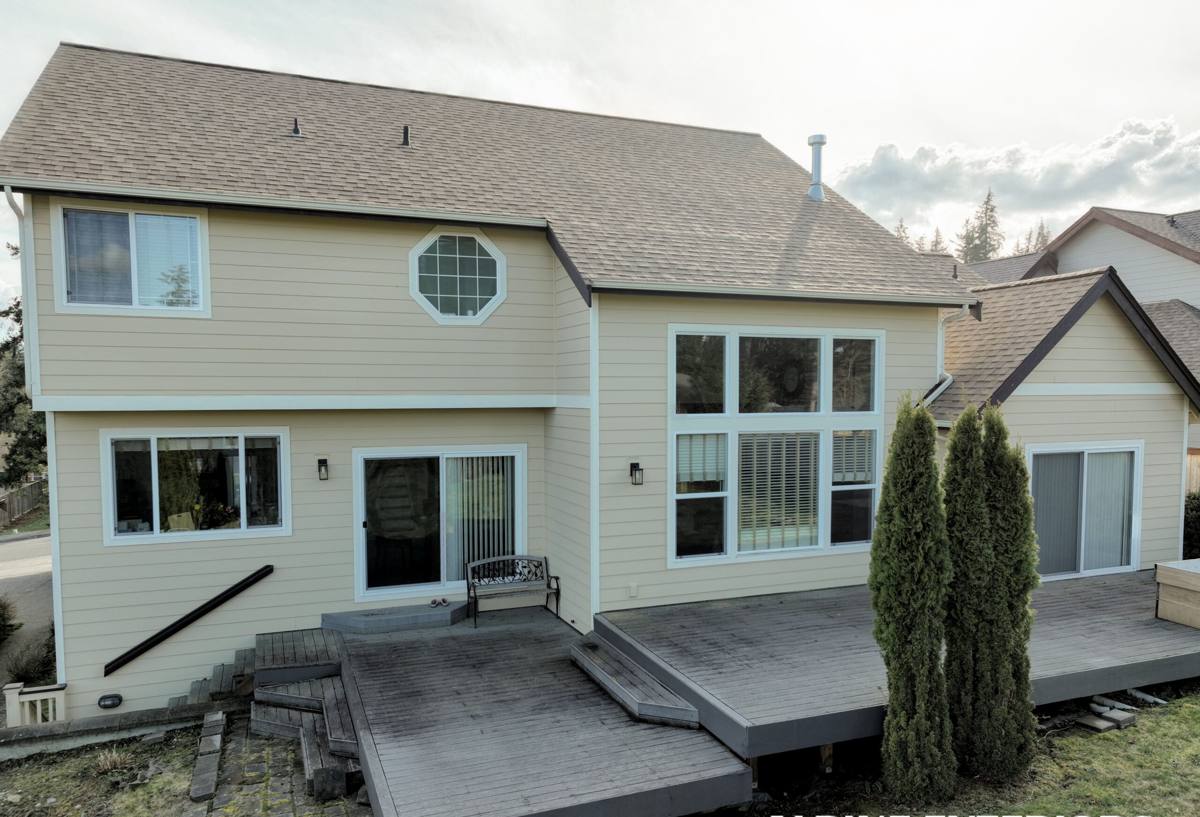
What Local Homes Actually Need From a Deck
Before we talk about materials or railing styles, it helps to understand the conditions a Fairhaven deck has to survive. Three factors drive almost every decision we make on these projects.
Salt Air and Corrosion
Proximity to marine air accelerates corrosion on anything metal — fasteners, joist hangers, railing brackets, even the heads on deck screws if the wrong grade is used. A fastener that would last decades in a drier, inland yard can start rusting and staining the decking within a couple of seasons out here. This is one of the most common shortcuts we see on older or budget-built decks in coastal Whatcom County: standard hardware used where marine-grade or stainless hardware was needed.
Driving Rain and Water Management
Rain here doesn't always fall straight down. Wind-driven rain gets under flashing, behind ledger boards, and into end grain that isn't properly sealed. A deck that isn't detailed for this will show it first at the house connection — the ledger board area — where trapped moisture leads to rot in the rim joist and sometimes the framing behind the siding.
Moss and Prolonged Dampness
Whatcom County's moss season is long, and a deck that stays shaded or doesn't drain well will grow moss and algae on its surface for months at a stretch. Beyond looking bad, a mossy deck surface stays damp longer, which shortens the life of the wood or composite underneath and turns the walking surface slick and genuinely dangerous.
Choosing the Right Decking Material
There's no single "best" decking material — there's a best material for a given budget, sun exposure, and maintenance appetite. Here's how the common options actually perform in Fairhaven's conditions, based on what we see holding up over time.
| Material | How It Handles Rain & Moss | Maintenance | Typical Lifespan Here |
|---|---|---|---|
| Pressure-treated wood | Absorbs moisture readily; needs a sealed finish to resist moss and staining | Annual cleaning and re-sealing recommended | 10–15 years with upkeep |
| Cedar | Naturally rot-resistant but still needs sealing against constant damp | Periodic cleaning and oiling | 15–20 years with upkeep |
| Composite decking | Doesn't absorb water like wood, but moss and algae can still grow on the surface film | Occasional washing; no sealing or staining | 25+ years |
| PVC / capped polymer | Fully water-resistant; easiest surface to keep moss-free | Occasional washing | 25–30+ years |
Composite and capped polymer boards cost more up front, but for a deck in a shaded, damp yard near the water, the reduced maintenance often makes them the more practical choice over the life of the deck. Wood is still a reasonable choice for homeowners who like the look and are willing to keep up with sealing — we're honest with clients about that trade-off rather than steering everyone toward the same product.
Framing and Structure Done Right
The decking surface is what people see, but the framing underneath determines whether the deck is actually safe and long-lived. This is where a lot of corner-cutting happens because it's invisible once the boards go down.
Ledger Board Flashing
The ledger board — where the deck attaches to the house — is the single most common failure point on decks in wet climates. It needs proper flashing that directs water away from the house framing, not just caulk or a wrap that will fail in a few seasons. We flash this connection correctly every time, because it's the one detail that's genuinely difficult and expensive to fix after the fact.
Footings Sized for Wet Soil
Whatcom County soil holds a lot of moisture through the winter. Footings need to be sized and set to local frost and soil conditions, not just to the minimum code allows on paper. Undersized or shallow footings are a common cause of decks that develop a slight lean or bounce within a few years.
Joist Spacing and Hardware
Joist spacing should match the decking material's requirements — composite and PVC boards often call for tighter spacing than solid wood to prevent sagging between joists. All structural hardware — joist hangers, post bases, structural screws — should be rated for exterior, corrosion-prone environments, not general construction-grade.
Railings, Fasteners, and Hardware That Won't Corrode
Railings take a lot of abuse near the coast: they're touched constantly, exposed on all sides, and often the first thing to show rust streaks or loose connections. We use fasteners and brackets rated for coastal/marine exposure on every deck we build in this area, and we specify the same standard for railing posts and baluster hardware. It costs a little more than standard-grade hardware, but it's the difference between railings that stay tight and rust-free for decades and ones that need hardware replacement within five or six years.
Cable railing and metal baluster systems look great but deserve extra scrutiny in salt air — some finishes hold up far better than others. We'll walk through the realistic maintenance expectations for whatever railing style you're considering before you commit to it.
Our Process, From Estimate to Finished Deck
Every custom deck project follows the same basic sequence, though the details vary with the site and design.
- Free on-site estimate. We look at your yard, discuss how you'll use the space, and talk through material and layout options honestly — including what fits your budget.
- Design and material selection. We finalize decking material, railing style, footprint, and any features like built-in seating or stairs, with a clear written quote.
- Permitting. Most custom decks in this area require a building permit; we handle that process so you don't have to chase it down yourself.
- Site prep and framing. Footings, posts, and framing go in first, with ledger flashing and structural hardware specified for the coastal conditions described above.
- Decking, railings, and finish work. Surface boards, railings, stairs, and any trim or lighting are installed and inspected.
- Final walkthrough. We go over the finished deck with you, including basic care and what to expect from your specific material choice.
Keeping a Fairhaven Deck Looking Good Year-Round
Even a well-built deck needs some seasonal attention in this climate. A little consistency goes a long way toward preventing the slick, moss-covered surfaces that show up on neglected decks every winter.
- Sweep debris and standing leaves off the surface regularly through fall, when moss growth accelerates
- Rinse or lightly scrub the surface a few times a year to keep moss and algae from taking hold
- Check that gaps between boards stay clear so water can drain instead of pooling
- Inspect railings and fastener heads yearly for early signs of rust or loosening
- Re-seal wood decking on the schedule recommended for that specific product — don't wait until it's visibly gray or worn
- Trim back overhanging branches or vegetation that keeps the deck shaded and damp longer than necessary
Why It Matters That We Already Work in This Area
A crew that mostly builds decks in drier, inland conditions doesn't always think about ledger flashing, hardware grade, or moss drainage the same way — because they haven't had to watch what happens to a deck here after a few wet winters. We work in Ferndale and the surrounding Whatcom County communities, including the Fairhaven area, regularly enough that these details are just standard practice for us, not an afterthought. That familiarity with the specific conditions your deck will actually face is worth more than a slightly lower bid from a crew that's guessing.
Get a Free, No-Pressure Estimate
If you're planning a new deck or replacing one that hasn't held up to the weather out here, we're happy to take a look and give you an honest assessment — what materials make sense for your yard, what the framing needs, and a clear estimate with no pressure to commit on the spot. Use the form below to get started.