 Ferndale
 Why Fairhaven Windows Take More Abuse Than Most
Homes near the water in the Fairhaven area deal with a combination of weather that inland Whatcom County properties simply don't see as often. Salt-laden air moves in off the water and settles on everything, including window frames, hardware, and glazing seals. Add in driving rain that comes in sideways during winter storms, plus a moss season that can stretch across most of the year in shaded, damp conditions, and you've got a recipe for windows that fail faster than their warranty paperwork would suggest.
None of this shows up overnight. It shows up as a frame that's started to swell at the corners, a sash that doesn't glide the way it used to, or a faint musty smell near the sill that nobody can quite place. By the time it's obvious, the damage is usually already inside the wall cavity, not just at the surface. That's the pattern we see over and over in this part of Ferndale and the surrounding coastal pockets of Whatcom County, and it's why a window job here needs to be approached differently than the same job would be forty miles inland.
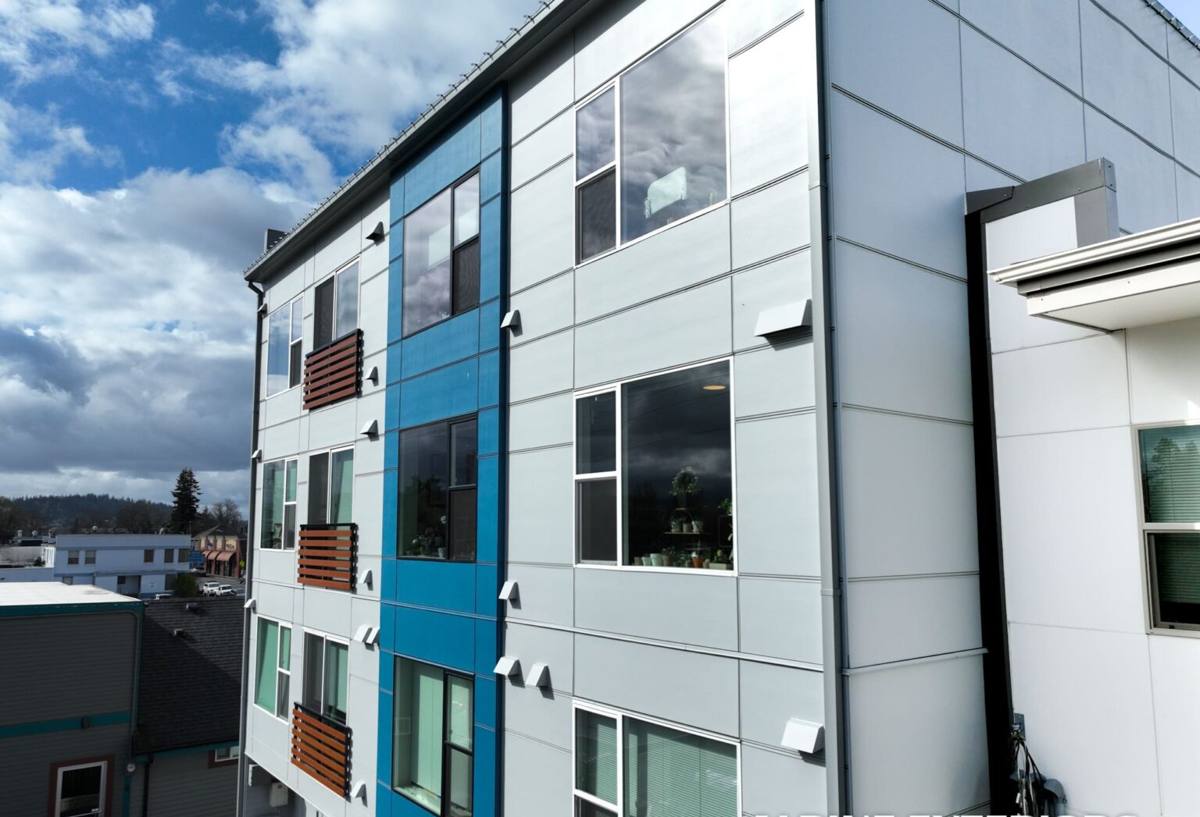
What "Custom" Actually Means for a Window Job
"Custom" gets used loosely in this trade, so it's worth being specific. For us it means two things: the window is built to fit the actual opening in your home, not the other way around, and the style, grid pattern, and trim detail match the character of the house instead of looking bolted on.
Matching Openings That Aren't Standard Sizes
A lot of homes in and around Fairhaven were built or added onto in different eras, which means openings are rarely a clean match to today's stock window sizes. Forcing a standard-size unit into a non-standard opening usually means shimming, gapping, or trimming that compromises the weather seal right where you need it most. Custom sizing means the window is manufactured to the actual rough opening, so the flashing and sealing work can be done correctly instead of patched around a bad fit.
Matching the Home's Original Style
Grid patterns, sightlines, and trim profiles vary a lot between a 1940s bungalow, a 1970s rambler, and a newer build. We match sash proportions and grille patterns to what's already on the house, or to what you're trying to achieve if you're changing the look intentionally. A mismatched window style is one of the fastest ways to make a nice house look like it had cheap work done on it, even if the window itself performs fine.
Frame Materials That Actually Hold Up Near Salt Air
Not every frame material behaves the same way once it's exposed to salt air and constant moisture cycling. Here's how the common options compare for a coastal Whatcom County property.
| Frame Material | How It Handles Salt Air & Moisture | Maintenance | Typical Trade-Off |
|---|---|---|---|
| Vinyl | Won't corrode or rot; UV-stable coatings resist chalking | Low — occasional rinse | Fewer color/paint options, limited structural spans |
| Fiberglass | Excellent — dimensionally stable, doesn't expand/contract with moisture swings | Low | Higher upfront cost than vinyl |
| Aluminum-clad wood | Good exterior protection, but any seal failure exposes wood underneath | Moderate — seams need monitoring | Interior warmth of wood, but higher moisture risk if installed wrong |
| Bare wood | Poor without diligent upkeep — most vulnerable to rot in this climate | High — regular painting/sealing | Classic look, but demands ongoing maintenance near salt air |
We don't install bare wood frames on homes with direct salt air exposure as a matter of professional standard — it's not that wood can't be beautiful, it's that the maintenance schedule required to keep it sound in this specific environment is more than most homeowners want to sign up for. Vinyl and fiberglass are where most of our Fairhaven-area installs land, with fiberglass earning its higher price tag on larger openings or homes taking the brunt of wind-driven rain.
Glass Packages Worth Paying For
The frame gets most of the attention, but the glass package matters just as much for comfort and condensation control. In a marine climate, the biggest practical concerns are heat loss through single-pane or older double-pane units, and interior condensation on cold, damp mornings.
- Double-pane, low-E coated: the baseline we recommend for any replacement in this area — cuts heat loss and reduces interior condensation compared to older glass
- Argon-filled units: a modest upgrade that improves insulating performance without changing how the window looks
- Triple-pane: worth considering on north-facing or wind-exposed walls where comfort complaints are worst, though it adds weight and cost
- Warm-edge spacers: reduce the cold spot at the glass edge where condensation and even mold tend to start first
We size the glass package to the wall it's going into rather than specifying one package for the whole house. A window facing the prevailing weather deserves a different spec than one tucked under an eave on a protected side.
Signs Your Windows Are Already Losing the Battle
Because damage in this climate tends to start hidden and work its way outward, it helps to know what to check for before it becomes a bigger repair than a window replacement.
- Fogging or a permanent haze between the panes — the seal has failed and the insulating gas is gone
- Soft or spongy wood trim around the frame when pressed
- Moss or dark streaking building up on the sill or frame that returns soon after cleaning
- Drafts you can feel with a hand near the frame on a windy day
- Paint that's bubbling or peeling specifically around the window, even if the rest of the wall looks fine
- Sashes that stick, drag, or won't stay open on their own
- A musty smell near the window that isn't explained by anything else in the room
Any one of these on its own isn't necessarily an emergency. Two or three together, especially on a wall that takes direct weather, is usually a sign the window has stopped doing its job as a barrier.
How the Job Actually Works
A window replacement done right is mostly about what happens before and around the window itself, not just the unit that gets set into the opening.
Assessment and Measurement
We start by looking at the opening itself, not just the window that's currently in it. That includes checking the condition of the framing, sill, and any existing flashing, and noting which walls are taking the worst weather exposure. Measurements are taken for the actual rough opening, since assuming a standard size is one of the most common ways a job goes sideways later.
Removal and Opening Prep
Old units come out carefully so we can see the condition of the framing underneath before anything new goes in. This is often the first real look anyone's had at that part of the wall in years, and it's where hidden moisture damage from a failed seal or bad flashing usually turns up. If there's rot or damage, that gets addressed before the new window goes in — installing a good window into a compromised opening just repeats the same failure down the road.
Flashing and Sealing
This is the step that determines whether a window job holds up for twenty years or leaks again in three. Flashing gets layered correctly — sill pan first, then side flashing, then head flashing — so that any water that does get behind the siding is directed back out, not trapped against the framing. Sealant is used at the right joints, not as a substitute for proper flashing.
Installation and Finish Work
The window is set, shimmed level and square, and fastened per the manufacturer's specification so the warranty stays intact. Insulation is added around the frame without overpacking it, which can bow the frame and cause operational problems. Interior and exterior trim is finished to match the surrounding wall, and everything is tested — opening, closing, locking — before we call it done.
What Drives the Cost
Every window job is priced around the specifics of the opening and the home, but the same handful of factors move the price up or down on almost every project.
| Factor | How It Affects Cost |
|---|---|
| Frame material | Fiberglass and higher-end vinyl cost more upfront than basic vinyl, but hold up better long-term in salt air |
| Opening condition | Rot or framing repair discovered during removal adds labor beyond the window itself |
| Glass package | Argon fill, triple-pane, and warm-edge spacers each add cost on top of a standard low-E double pane |
| Wall exposure | Walls taking direct wind-driven rain often justify a higher-spec window and more careful flashing work |
| Custom sizing | Non-standard openings cost more to manufacture for than stock sizes |
| Trim and finish work | Matching existing trim profiles or repainting/staining adds to the finish labor |
We won't quote a job sight unseen, because the opening condition is often the single biggest cost variable and that's not something anyone can judge from a photo. A walkthrough estimate is the only honest way to give you a number you can actually plan around.
Why Hiring a Crew That Already Works Fairhaven Matters
Window performance in this climate isn't really about the product on the showroom floor — it's about how it's installed relative to the specific exposure that wall is going to see year after year. A crew that regularly works homes in Fairhaven and the surrounding Ferndale area already knows which walls tend to take the worst of the driving rain, how moss and moisture build up differently on shaded versus exposed sides of a house, and what kind of flashing detail actually holds up here versus what looks fine on paper.
That local pattern recognition is hard to substitute for. It's the difference between a window install that's technically correct and one that's actually built for the conditions it has to survive. It also means we're not learning on your house — we've already seen how salt air and Whatcom County winters treat window installations that were done a little too fast or a little too generically.
If your windows are drafty, fogged, sticking, or just showing their age, we're happy to take a look and walk you through honest options — no pressure, no inflated urgency. Reach out for a free estimate and we'll assess your home's specific exposure before recommending anything.