 Ferndale
 Roofing in Fairhaven's Coastal Microclimate
Fairhaven sits close enough to Bellingham Bay that its homes deal with a different mix of weather stress than roofs a few miles inland in Ferndale. Salt-laden air off the water, wind-driven rain that gets pushed sideways under poorly flashed edges, and a moss season that can run eight months out of the year all combine to shorten the life of a roof that wasn't built with this specific exposure in mind. A roof system that works fine in a dry inland subdivision can fail early here — not because the materials are bad, but because they weren't matched to the site.
When we install a new roof for a Fairhaven or greater Ferndale home, we're not just laying shingles to a manufacturer's spec sheet. We're accounting for prevailing wind direction off the water, the amount of tree cover shading the roof deck, and how much of the year that deck stays damp. That context changes underlayment choices, fastener selection, and how aggressively we detail flashing at every penetration.
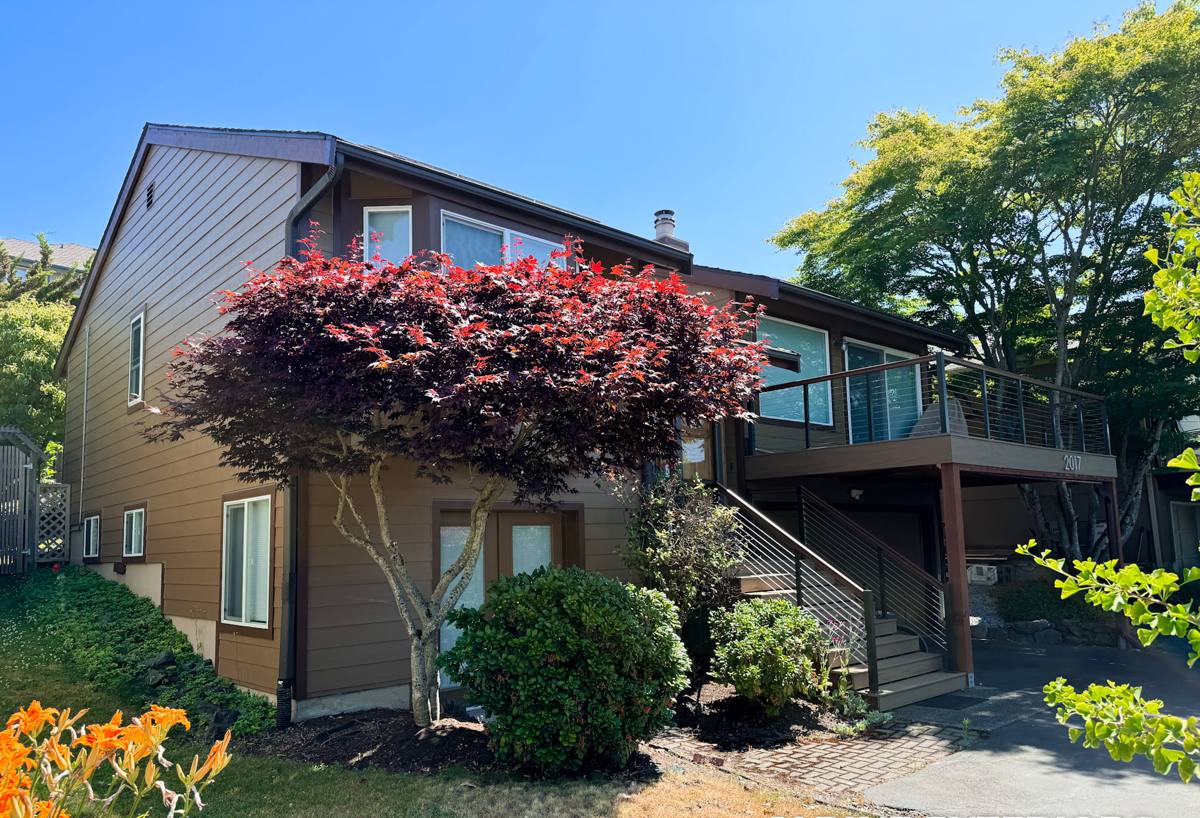
What Salt Air, Rain, and Moss Actually Do to a Roof
Salt Air
Airborne salt accelerates corrosion on any exposed metal — nail heads, flashing, drip edge, and roof vents. Standard electro-galvanized fasteners can start showing rust streaks within a few years this close to the water. Once a fastener corrodes, it loses holding power and the seal around it degrades, which is how small leaks start at the least visible points on a roof.
Driving Rain
Whatcom County storms rarely fall straight down. Wind pushes rain sideways and up under shingle edges, around chimneys, and along valleys — areas where a roof depends on proper flashing and underlayment rather than the shingles alone. A roof that looks fine from the ground can still be taking on water at these transition points if they weren't detailed correctly during installation.
Moss and Prolonged Moisture
Shade, humidity, and mild temperatures make this region ideal for moss growth. Moss holds moisture against the roof surface long after rain has stopped, which speeds up granule loss on asphalt shingles and can lift shingle edges as it grows. Left unaddressed, moss doesn't just look bad — it shortens roof life and creates the damp conditions that lead to deck rot underneath.
What a Correct Installation Looks Like Here
A quality roof installation isn't only about the shingles or metal panels you can see. Most roof failures we get called out to inspect trace back to what's underneath — the deck, the underlayment, and the flashing details — not the field material itself. For a Fairhaven home, we pay particular attention to:
- Full deck inspection and repair of any soft, delaminated, or rotted sheathing before anything new goes down
- Ice-and-water shield or high-quality synthetic underlayment at eaves, valleys, and low-slope transitions where wind-driven rain concentrates
- Corrosion-resistant fasteners and flashing rated for coastal exposure rather than standard-grade hardware
- Properly lapped and sealed step flashing at chimneys, walls, and dormers
- Balanced intake and exhaust ventilation to keep the deck dry from underneath, not just the surface dry from above
- Drip edge and gutter apron detailing that actually sheds water away from fascia and siding
- Material selection suited to shade level and moss exposure on that specific roof plane
Skipping any one of these doesn't usually cause an immediate problem. It shows up two, five, or ten years later as a leak, premature granule loss, or a soft spot in the decking — after the labor to get to that point has to be redone anyway.
Choosing a Roofing System for This Climate
There's no single "best" roofing material for every home — the right choice depends on the roof's pitch, sun and shade exposure, budget, and how the home is used. Here's how the common options compare for a coastal Whatcom County property:
| Material | Coastal Durability | Moss Resistance | Maintenance | Typical Lifespan |
|---|---|---|---|---|
| Architectural asphalt shingle | Good with proper fasteners/flashing | Moderate — benefits from zinc/copper strips | Periodic moss treatment recommended | 25-30 years |
| Standing seam metal | Excellent with coated/marine-grade fasteners | High — moss struggles to hold on smooth panels | Low | 40-50+ years |
| Synthetic/composite shingle | Good | Moderate to high depending on product | Low to moderate | 30-50 years |
| Cedar shake | Fair — needs diligent upkeep near salt air | Low without regular treatment | High | 20-30 years with upkeep |
We install and stand behind asphalt shingle and metal roofing systems because, in our experience on this coastline, they offer the most predictable long-term performance for the maintenance effort most homeowners are willing to put in. Cedar shake can look great, but it demands a level of ongoing upkeep in this moisture and moss environment that a lot of homeowners underestimate before they commit to it.
Our Installation Process
1. On-Site Assessment
We walk the roof, check attic ventilation, and look at sun/shade patterns and tree cover specific to your property. We also check for existing moisture damage before quoting the job, so there are no surprise costs once we open up the roof.
2. Tear-Off and Deck Inspection
Old roofing is removed down to the deck. Any damaged sheathing is identified and replaced — this is the step that gets skipped by crews trying to keep a bid low, and it's the one that matters most for long-term performance.
3. Underlayment and Flashing
We install underlayment and flashing detailed for this climate's driving rain, not just a generic install pattern. Valleys, eaves, and every penetration get extra attention.
4. Field Material Installation
Shingles or metal panels go down to manufacturer spec, with fastener selection matched to the coastal exposure at your address.
5. Ventilation and Final Detailing
We confirm intake and exhaust ventilation are balanced, install ridge and roof vents as needed, and finish drip edge, gutter apron, and cleanup.
6. Walkthrough
We review the finished roof with you, explain what was done and why, and go over any moss-prevention steps worth considering for your specific tree cover and shade situation.
Why It Matters to Hire a Crew That Already Works This Area
Roofing crews that mostly work drier, inland jobs don't always think in terms of salt exposure, moss cycles, and wind-driven rain by default — those aren't things you deal with daily unless you're routinely working roofs near the water. A crew that regularly installs roofs in Fairhaven and around Ferndale already has fastener and flashing decisions dialed in for this exposure before they show up, instead of learning it on your roof.
Local experience also means faster, more accurate estimates. We already understand what Bellingham Bay-adjacent exposure does to different materials over time, so we can recommend a system that fits your home's actual site conditions rather than a one-size-fits-all package.
Signs Your Fairhaven Roof May Need Replacement, Not Repair
- Granule loss heavy enough to see bald patches or granules collecting in gutters
- Shingles that are cupping, curling, or cracking, especially on the shaded side of the roof
- Persistent moss growth that returns quickly after cleaning
- Soft spots or visible sagging when walking the roof or viewing the deck from the attic
- Daylight visible through the roof deck from inside the attic
- Leaks appearing at flashing points — chimneys, skylights, wall intersections — rather than open field areas
- A roof approaching or past the upper end of its expected material lifespan, especially if maintenance history is unknown
Any one of these on its own might mean a targeted repair is enough. Several at once, or a roof already past its expected service life, usually means a repair is a short-term patch on a longer-term problem.
Planning Your Project
Roof replacement is disruptive, and we plan around that. We coordinate timing to minimize the number of days your roof is open to weather, protect landscaping and gutters during tear-off, and handle debris removal and magnetic sweeps for stray fasteners as part of the job, not as an upsell. For coastal-exposed homes like those in Fairhaven, we also talk through material and fastener upgrades at the estimate stage, so cost trade-offs are clear before work starts, not discovered afterward.
If your roof is showing its age, if you're dealing with recurring moss, or if you just want an honest read on how many years you have left before replacement makes more sense than another repair, we're happy to take a look. Reach out for a free, no-pressure estimate — we'll walk the roof, tell you what we actually see, and lay out your options plainly.