 Ferndale
 Why Siding Installation Is Different Near the Water
Homes in the Fairhaven area sit close enough to the water and the weather that comes with it that siding gets tested harder here than it does a few miles inland. Salt-laden air accelerates corrosion on fasteners and trim. Driving rain, pushed sideways by wind off the water, finds every gap in a poorly lapped joint or a badly caulked seam. And the long, damp moss season that Whatcom County is known for means anything that stays wet for weeks at a time becomes a growth surface. Siding installation here isn't just about covering the walls — it's about choosing a material and a method that can shrug off all three of those conditions for decades, not just for the first few winters.
That's the lens we bring to every Fairhaven-area project: what does this specific house, on this specific lot, need to hold up against salt, rain, and moss without turning into a maintenance chore for the homeowner.
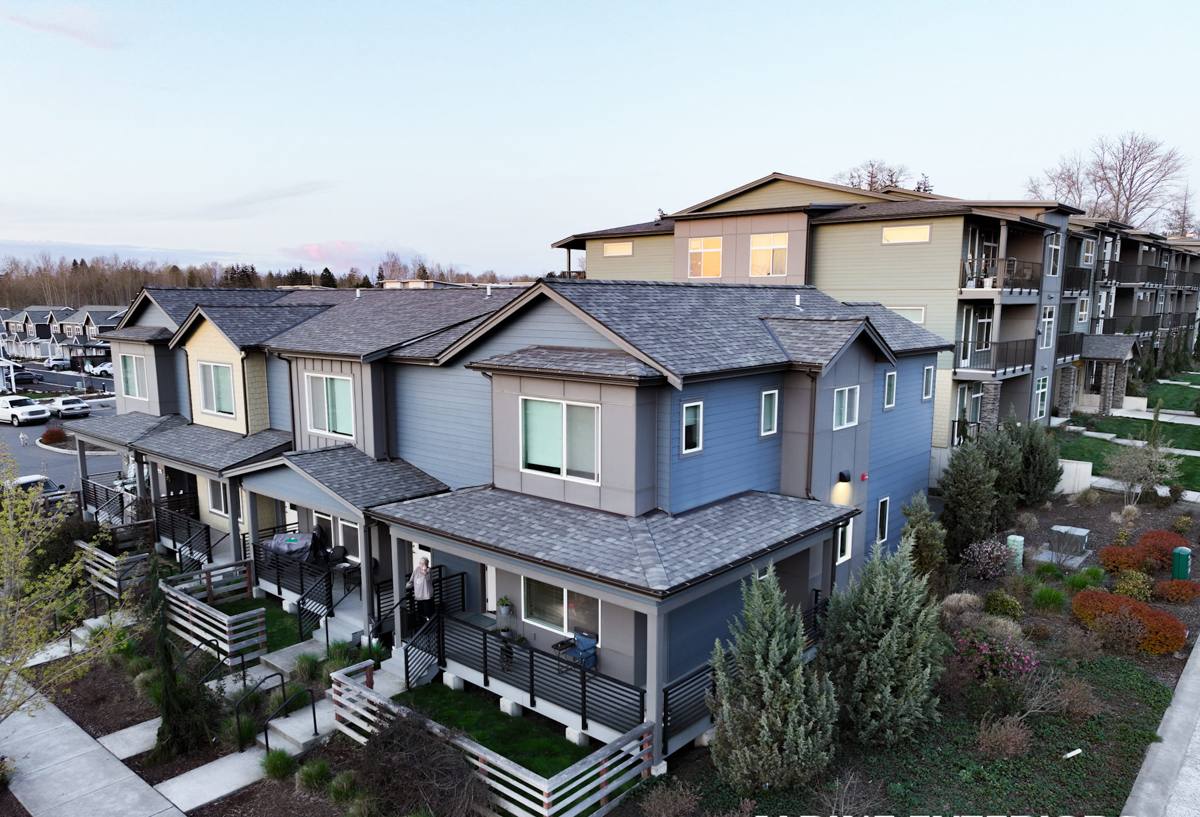
What Local Homes Are Up Against
Salt Air and Metal Fatigue
Salt air doesn't just affect boats and railings. Over years, it accelerates corrosion on exposed fasteners, flashing, and trim — especially anything installed with the wrong hardware or left uncoated. A siding job that looks fine in year one can show rust streaks and loosening fasteners by year five if the wrong materials were used underneath the finish.
Driving Rain and Wind-Driven Moisture
Rain that falls straight down is easy to shed. Rain that's pushed sideways by wind off open water behaves differently — it gets under laps, around window trim, and into any seam that wasn't flashed correctly. Siding installation in this kind of exposure depends more on the details behind the surface (flashing, house wrap, drainage gaps) than on the siding material alone.
Moss, Algae, and Prolonged Dampness
Whatcom County's wet season runs long, and shaded, north-facing, or tree-covered walls can stay damp for weeks at a stretch. That's exactly the environment moss and algae need to take hold. Siding that holds moisture against its surface, or that has organic content in the material itself, gives moss a head start. Siding that sheds water and dries quickly denies it that foothold.
What a Correct Installation Actually Involves
A siding job holds up or fails based on what's underneath the visible surface. For a home exposed to salt air, driving rain, and a long moss season, the fundamentals matter more than they would in a milder climate.
- A continuous, correctly lapped weather-resistant barrier behind the siding, with no gaps at seams or penetrations
- Properly flashed window and door openings, so wind-driven rain can't track behind the trim
- A drainage gap or rainscreen approach that lets any moisture that does get behind the siding drain and dry out instead of sitting against the wall sheathing
- Corrosion-resistant fasteners driven to the manufacturer's specified pattern and depth — not just "close enough"
- Correctly caulked and sealed joints at trim, corners, and penetrations, using sealants rated for the material and the exposure
- Proper clearance between the bottom of the siding and grade, decks, or roof lines, so splash-back and standing water don't sit against the bottom course
Skip any one of these and the siding might still look fine on installation day — the problems show up two, five, or ten years later, usually as trapped moisture, rot, or premature paint failure.
Why We Install Only James Hardie Fiber Cement
We made a deliberate decision to install one product system — James Hardie fiber cement — and nothing else. Not vinyl, not LP SmartSide, not Cemplank or Allura, not primed spruce or cedar. That's not a marketing position; it's because fiber cement is the only material we've found that consistently holds up to the specific combination of salt air, wind-driven rain, and moss exposure that homes in this part of Whatcom County deal with, without asking the homeowner to babysit it.
Non-Combustible and Dimensionally Stable
Fiber cement doesn't burn, and it doesn't expand and contract with moisture and temperature the way wood-based products do. That dimensional stability matters directly for this climate — it's part of why joints and caulk lines stay sealed instead of working loose after repeated wet-dry cycles.
ColorPlus Factory Finish
Hardie's ColorPlus finish is baked on at the factory under controlled conditions, rather than field-applied paint. That finish is engineered to resist fading and to shed moss and mildew growth better than a standard field-painted surface, which matters directly during a long, damp season.
HZ Product Lines Engineered for This Climate
James Hardie makes region-specific formulations — HZ5 for the moisture-heavy, freeze-thaw-variable climates of the Pacific Northwest and similar zones. That's not a marketing distinction; the moisture-management performance of the product is tuned to the climate it's rated for, which is exactly the climate a Fairhaven-area home sits in.
A Warranty Backed by the Manufacturer
Hardie's warranty structure is transferable and backed by a large, established manufacturer — which matters if you sell the home before the siding's functional life is up. A warranty is only worth as much as the company standing behind it, and that's part of why we standardized on this product rather than a smaller or newer entrant.
How Hardie Compares to the Alternatives
| Material | Behavior in Salt Air / Driving Rain | Moss & Algae Resistance | Long-Term Maintenance |
|---|---|---|---|
| James Hardie Fiber Cement (HZ5) | Dimensionally stable, non-combustible, engineered for wet climates | ColorPlus finish resists growth better than field-painted surfaces | Low — periodic wash, no repainting for years with ColorPlus |
| Vinyl Siding | Can warp or loosen with wind-driven rain infiltration behind panels | Moderate — traps moisture at laps in shaded, damp areas | Low cost, but limited repair options and can fade unevenly |
| LP SmartSide (engineered wood) | Wood-based; more sensitive to sustained moisture exposure at cut edges and seams | Requires diligent sealing and maintenance to resist growth | Higher — edge sealing and touch-up are installation-critical |
| Cedar / Primed Spruce | Natural material; moves with moisture, needs consistent finish upkeep | Susceptible without frequent treatment in a long moss season | Highest — refinishing cycle required to prevent decay |
This isn't a claim that the alternatives are junk — each has a place. It's why, for the specific combination of conditions homes face near the water in this region, we standardized on one system rather than offering several and hoping the homeowner picks the right one.
Our Installation Process
- On-site assessment — we look at exposure (which walls face the weather, how much shade and moss pressure exists), the condition of the existing wall assembly, and any trouble spots like poorly flashed windows or trim.
- Tear-off and inspection — old siding comes off and we inspect the sheathing underneath for hidden rot or moisture damage before anything new goes up.
- Weather barrier and flashing — a continuous, correctly lapped water-resistive barrier goes on, with flashing detailed at every window, door, and penetration.
- Drainage plane — furring or a rainscreen gap is used where appropriate so any moisture that does get behind the siding can drain and the wall can dry.
- Hardie installation to spec — panels or planks are installed following James Hardie's fastening and clearance specifications, not shortcuts.
- Trim, caulking, and finish details — corners, trim, and joints are sealed with the right products for a coastal, wet climate.
- Final walkthrough — we go over the finished work with the homeowner before calling the job done.
What to Expect After Installation
Even the right product, installed correctly, isn't a "never think about it again" surface — it's a low-maintenance one. Homeowners in this area should expect to occasionally rinse down shaded or north-facing walls where moss pressure is highest, keep gutters clear so runoff isn't sheeting down the siding face, and keep vegetation trimmed back from walls so airflow can help sections dry between rains. None of that is the intensive upkeep that a wood-based product demands — it's routine care, not remediation.
Questions to Ask Before Hiring a Siding Contractor in This Area
- Do they have direct experience with homes exposed to salt air and driving rain, not just general siding work?
- Can they explain their flashing and drainage approach in plain terms, not just "we install siding"?
- Are they installing to the manufacturer's specified fastening pattern and clearances, or improvising?
- Do they carry proper licensing and insurance, and will they put warranty terms in writing?
- Will they walk you through why they recommend one product over another for your specific home, rather than pushing whatever they have on hand?
Why Local Experience Matters
A crew that already understands what salt air, driving rain, and a long moss season do to a wall assembly makes fewer assumptions and catches problems a generalist crew might miss — a flashing detail that needs extra attention on a water-facing wall, a shaded section that needs a drainage gap it wouldn't need elsewhere, a trim detail that needs a different sealant because of the exposure. That's the value of hiring a crew that already works in this area regularly, rather than one encountering these conditions for the first time on your house.
If you're considering new siding for a home in the Fairhaven area, we're happy to take a look and walk you through what your specific walls need. There's no cost and no pressure for a straightforward estimate — just a clear look at what correct installation would involve for your home.