 Ferndale
 Storm Damage Roofing in Kendall, Washington
Kendall sits inland from Ferndale, in the wooded, hilly stretch of Whatcom County where tall conifers, exposed rooflines, and long wet stretches of the year put real stress on a roof. It's a different set of conditions than a roof faces in town — more tree cover, more wind funneling through the foothills, and storms that can drop a lot of rain and debris in a short window. When a windstorm or heavy weather event does damage to a roof out here, the fix needs to account for that setting, not just patch what's visible from the ground.
We've worked storm damage repairs across Whatcom County long enough to know the difference between damage that needs a targeted repair and damage that's a warning sign of a bigger problem underneath. This page walks through what storm damage actually looks like on a Kendall roof, what a correct repair involves, and how we handle the job from the first call to the last shingle.
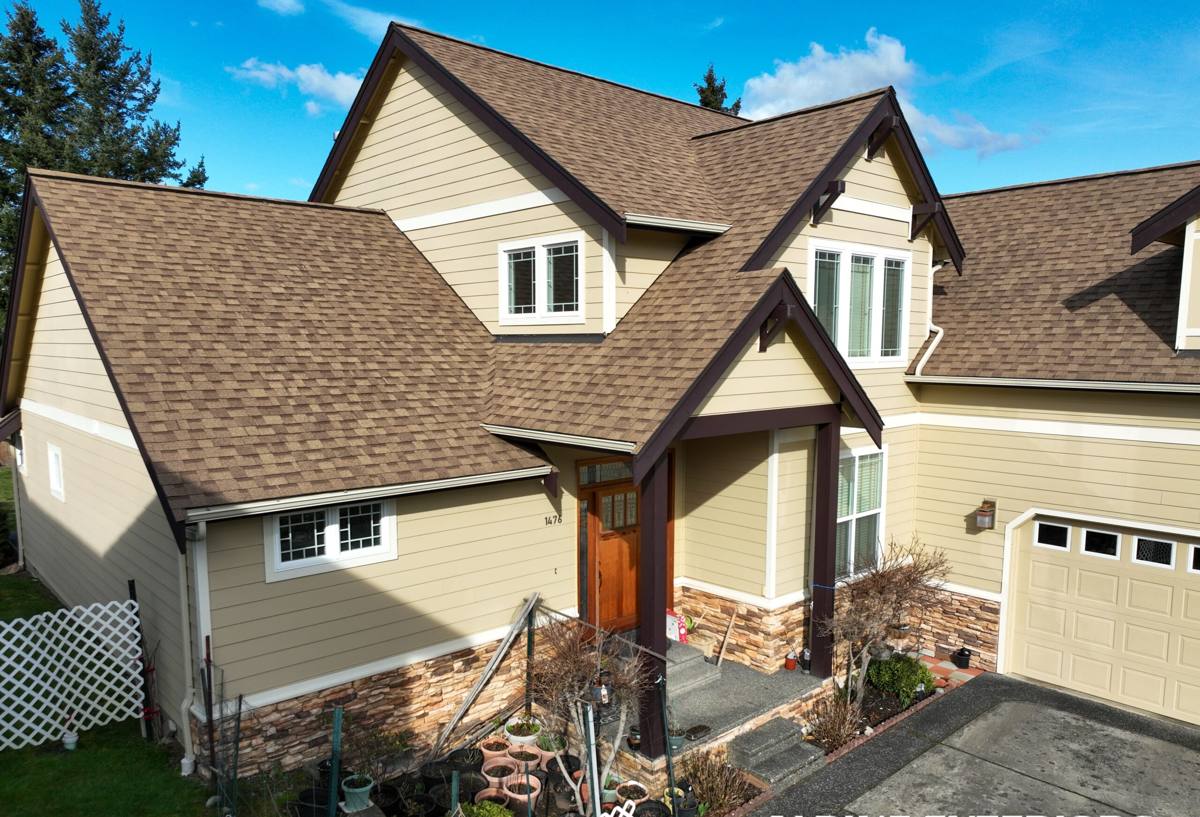
What Whatcom County Weather Does to a Roof Over Time
Storm damage rarely happens to a roof that was already in perfect shape. In this part of the state, roofs are already working against a few things year-round, and a storm tends to exploit whatever weakness was already there.
Wind and Wind-Driven Rain
Kendall's terrain means wind doesn't always hit a roof straight on — it can funnel and gust unpredictably around trees and hillsides. That kind of wind gets up under shingle tabs and flashing edges that would hold fine against a steady, even wind. Combined with driving rain, it doesn't take a full-blown windstorm to force water sideways into a seam that was never quite sealed right to begin with.
Moss and Trapped Moisture
Whatcom County's moss season runs long — shaded, tree-covered lots like many in and around Kendall are especially prone to it. Moss holds moisture against the roofing material far longer than open sun would allow, softening shingles and slowly working under edges. A roof with an existing moss problem is more vulnerable when a storm hits, because the material underneath is already weakened.
Falling Debris
Heavily treed properties come with a tradeoff: shade and privacy, but also limbs and cones coming down in high wind. Impact damage from falling debris is one of the most common storm-related calls we get in wooded areas — sometimes it's obvious, sometimes it's a cracked shingle or dented vent that's easy to miss from the ground.
Common Types of Storm Damage We See on Kendall Roofs
- Lifted or torn shingles along ridges, edges, and any area with wind exposure
- Damaged or displaced flashing around chimneys, skylights, and roof-to-wall transitions
- Impact damage from branches, cones, or wind-thrown debris
- Granule loss on shingles from wind-driven rain and hail, which accelerates aging
- Gutter and downspout damage that lets water dump against the fascia or foundation instead of draining away
- Water intrusion at seams or penetrations that only shows up as a stain days after the storm
That last one is why we tell homeowners not to assume a roof is fine just because nothing looks obviously broken from the driveway. Storm damage often shows up as an interior stain or a soft spot underfoot weeks after the actual weather event.
What a Correct Storm Damage Repair Actually Involves
A storm repair done right isn't just replacing the shingles you can see. It's a sequence, and skipping steps is how a "repaired" roof leaks again in the next storm.
1. A Full Inspection, Not Just a Spot Check
We look at the whole roof plane, not just the area the homeowner points to. Wind damage in particular tends to have a pattern — if one section lifted, nearby areas under similar exposure are worth checking even if they look fine.
2. Checking the Decking Underneath
If water got past the shingle layer, the plywood or OSB decking underneath may be soft, delaminating, or stained. Laying new shingles over compromised decking is a short-term fix that fails again. Any soft decking gets replaced before anything else goes back on.
3. Underlayment and Flashing
Underlayment is the roof's backup layer if water gets past the shingles — it needs to be intact, not just the shingles above it. Flashing at chimneys, vents, and wall transitions is one of the most common failure points in a storm, and it has to be re-sealed or replaced correctly, not just caulked over.
4. Matching Materials
Where we can match the existing shingle color and profile closely, we do. Where an exact match isn't available — which happens with older roofs — we're upfront about that before starting the work, not after.
Our Process, Start to Finish
- Call or estimate request — tell us what you're seeing (a leak, missing shingles, debris on the roof) and roughly when the storm happened.
- On-site inspection — we walk the roof and attic where accessible, and document what we find with photos.
- Honest assessment — we tell you plainly whether this is a repair, and if there's any sign it might be more, we explain why before recommending it.
- Written estimate — scope of work and cost factors laid out before anything is scheduled.
- The repair — decking, underlayment, flashing, and shingles addressed in the right order, cleanup included.
- Final walkthrough — we show you what was done and what to keep an eye on going forward.
Insurance Claims: What Kendall Homeowners Should Know
Many storm repairs get filed as insurance claims, and a documented, dated inspection makes that process smoother. We provide clear photo documentation and a written scope of damage that homeowners can hand to their adjuster. We aren't able to guarantee what an insurance company will approve or how they'll value a claim — that decision sits with the insurer — but we can make sure the roof itself is assessed honestly and documented well enough to support your case.
One thing worth knowing: filing quickly after a storm event, before moss or ongoing rain has a chance to make old damage look like new damage (or vice versa), generally makes for a cleaner claim.
Repair vs. Full Replacement: How We Make That Call
Not every storm-damaged roof needs to come off. But sometimes storm damage is the moment that reveals a roof was already near the end of its useful life. Here's generally how that decision plays out:
| Factor | Points Toward Repair | Points Toward Replacement |
|---|---|---|
| Extent of damage | Localized to one section or a few spots | Widespread across multiple roof planes |
| Roof age | Roof is well within its expected lifespan | Roof was already near end-of-life before the storm |
| Decking condition | Decking is sound under the damaged area | Decking is soft or rotted in multiple areas |
| Prior moss/moisture history | Minimal history of trapped moisture | Long-standing moss growth or repeated past leaks |
| Material match | Existing shingles are readily available or close matches exist | Discontinued shingle line, patchwork look would result |
We'll always start with the repair conversation. If the roof genuinely needs more than that, we explain why in plain terms, backed by what we actually found during the inspection — not a sales pitch.
Reducing Storm Damage Before the Next One Hits
You can't control the weather coming through Whatcom County, but a few maintenance habits meaningfully reduce how much damage a storm does to a Kendall roof.
- Keep overhanging limbs trimmed back from the roofline where it's safe to do so
- Clean gutters and downspouts before the wet season ramps up, so storm runoff actually drains
- Address moss growth before it spreads — a light, established moss patch is a much smaller job than a roof that's been green for a couple of seasons
- Have flashing and seals around chimneys and vents checked periodically, since these are usually where storm leaks start
- Walk the yard after any significant windstorm and look up — spotting a lifted shingle or a hanging limb early prevents a small problem from becoming a ceiling stain
Why Hire a Crew That Already Works in Kendall
Storm damage repair isn't the place to learn a new area on the fly. A crew that already works Kendall and the surrounding parts of Whatcom County knows what these roofs are up against — the tree cover, the wind patterns through the foothills, the long moss season, and the driving rain that catches weak seams. That familiarity shows up in faster, more accurate assessments and repairs that actually hold through the next storm, not just until the next one.
It also matters for response time. After a storm event, roofs across the county need attention at once, and a crew that already routes through this area can typically get to you faster than one working from farther out.
Get an Honest Look at Your Roof
If a recent storm left you with missing shingles, a new stain on the ceiling, or debris on the roof you'd rather not climb up and check yourself, we're glad to take a look. Request a free, no-pressure estimate using the form below — we'll give you a straight answer on what happened, what it'll take to fix it, and what it should cost.