 Ferndale
 Roof Repair for Lummi Island's Marine Climate
Homes on Lummi Island sit right at the edge of the Salish Sea, and that location shapes everything about how a roof ages here. Salt-laden air drifts off the water and settles on every exposed surface. Storms roll in off Rosario Strait with driving, wind-pushed rain that finds its way into gaps a calmer climate would never expose. And for a good stretch of the year, shaded roof slopes stay damp long enough for moss and algae to take hold and spread. None of this is unique to any one house — it's the baseline condition every roof on the island has to withstand, year after year.
A roof repair here isn't just patching a leak. It's addressing the specific combination of salt exposure, wind-driven moisture, and organic growth that caused the problem in the first place. Get that wrong and the same failure shows up again in a year or two, often worse than before.
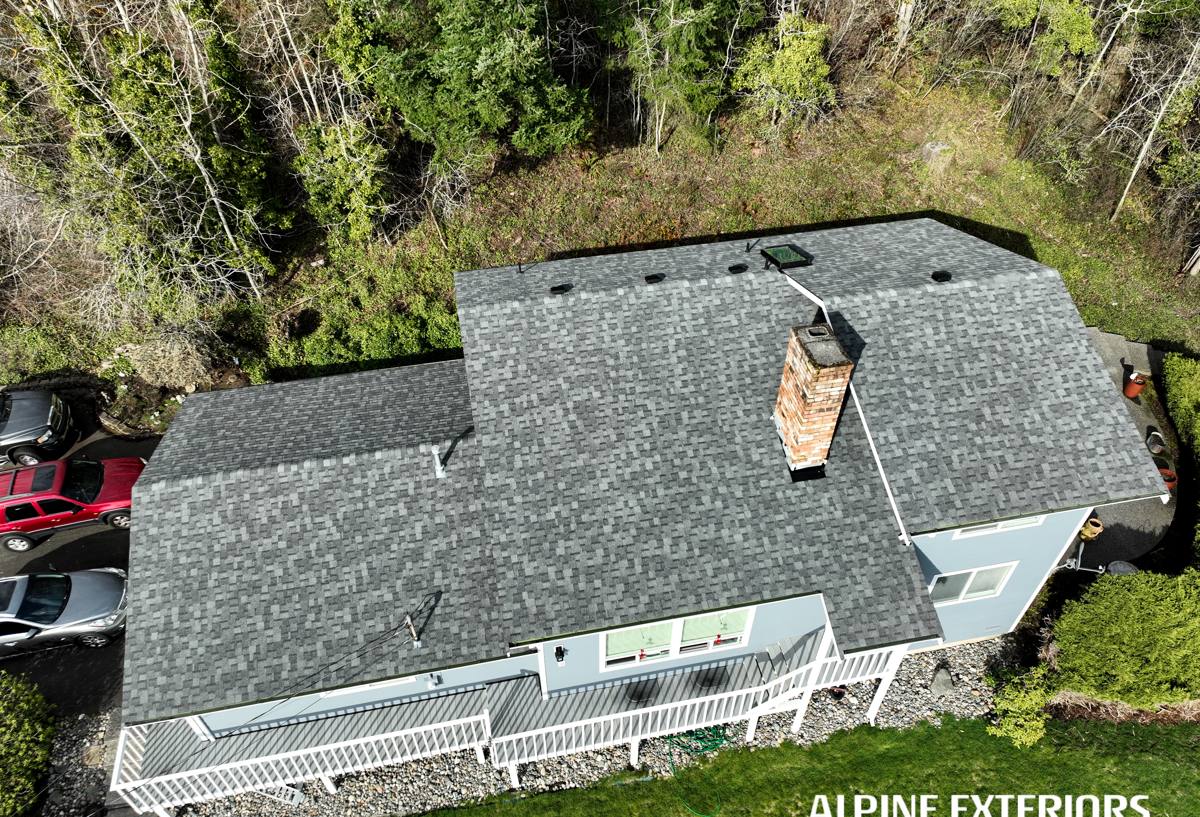
What Lummi Island Roofs Are Actually Up Against
Salt Air and Corrosion
Salt in the air is corrosive to metal. Roof flashing, fasteners, gutter hangers, and vent caps all take a slow beating from it. A galvanized nail or an unprotected flashing seam that would last decades inland can start rusting through in a fraction of that time this close to the water. Once a fastener corrodes, it loses its grip, seals fail around it, and water finds a path underneath the roofing material.
Wind-Driven, Not Just Heavy, Rain
Whatcom County gets plenty of rain generally, but the driving, sideways rain common near the water behaves differently than a straight-down downpour. It gets pushed under shingle edges, into flashing laps, and around chimney and vent penetrations that would shed a vertical rain just fine. Repairs that don't account for wind direction and water intrusion angles tend to fail at the exact same spot within a season or two.
Moss, Algae, and Prolonged Dampness
Shaded roof sections, north-facing slopes, and areas under tree cover stay damp longer here than they would in a drier climate. That moisture supports moss and algae growth, and once established, moss holds water against the roofing surface, lifts shingle edges as its root structure grows, and accelerates granule loss. A roof with active moss growth is aging faster than its neighbor without it, even if both were installed the same year.
Signs a Repair Is Needed — Not a Full Replacement
Most roofs don't fail all at once. They show localized signs first, and catching those early is usually the difference between a repair bill and a replacement bill. Watch for:
- Water stains on interior ceilings or the underside of roof decking, especially near chimneys, skylights, or vent pipes
- Visible moss or thick algae streaking on one section of roof while the rest looks clean
- Shingles that are curling, cupping, or missing granules in patches rather than across the whole roof
- Rust staining running down from metal flashing, vent caps, or gutter straps
- Soft or spongy spots underfoot in the attic near the eaves or valleys
- Daylight visible through the roof deck from inside the attic
- Debris buildup or standing water in valleys where two roof planes meet
Any one of these, caught early, is usually a contained repair. Left alone through another wet season, they tend to spread into decking damage that costs considerably more to fix.
What a Correct Repair Actually Involves
A roof repair done right isn't just replacing the shingles you can see are damaged. It starts with figuring out why that spot failed, then fixing the underlying cause so the same failure doesn't recur.
Diagnosis Before Patching
Water rarely shows up where it enters. A stain on a ceiling can trace back several feet to a failed flashing seam, a cracked pipe boot, or a nail hole from a satellite mount installed years earlier. A proper repair traces the path back to the actual entry point rather than covering the visible symptom.
Flashing and Fasteners
Given how hard salt air is on metal, flashing condition matters as much as the shingles themselves. Corroded flashing around chimneys, skylights, and roof-to-wall transitions needs to be replaced with materials suited to a marine environment, not just re-sealed with caulk, which is a temporary fix at best.
Decking and Underlayment
If water has been getting in for a while, the plywood or OSB decking underneath may be soft, delaminated, or rotted. Shingles installed over damaged decking will fail again quickly no matter how well they're laid. Underlayment — the water-resistant barrier beneath the shingles — also needs to be intact and properly lapped for the direction wind-driven rain typically hits the roof.
Moss and Algae Removal
Where moss has taken hold, it needs to be removed correctly — not just brushed off, which can strip granules and damage the shingle surface. That usually means low-pressure cleaning methods and, where appropriate, zinc or copper strips at the ridge that let rain carry trace metals down the roof slope to inhibit regrowth over time.
Our Process for Lummi Island Repair Calls
Working on Lummi Island means planning around the ferry, and we build that into scheduling rather than treating it as a surprise. Here's how a typical repair call goes:
- Initial conversation: We talk through what you're seeing — stains, missing shingles, moss — before we ever set a date, so we know roughly what to expect and can bring the right materials the first trip.
- On-site inspection: We walk the roof and the attic, tracing any leak back to its actual source rather than assuming the obvious spot is the cause.
- Written estimate: You get a clear explanation of what's failing, why, and what the repair involves — no vague line items.
- The repair itself: Scheduled around ferry timing and tide-dependent access where relevant, so the crew isn't rushing a job to catch a boat.
- Cleanup and walkthrough: We clear debris, check gutters for anything that fell during the work, and walk you through what was done.
Because we already work this area regularly, a trip to Lummi Island isn't a special logistics project for us — it's a normal part of the route.
Repair or Replace? What Actually Drives That Decision
Homeowners often ask whether a repair is worth it or whether they should just plan for full replacement. The honest answer depends on the roof's age, how localized the damage is, and how the rest of the roofing material is holding up. This is a general guide, not a quote — every roof needs its own inspection.
| Factor | Favors Repair | Favors Replacement |
|---|---|---|
| Roof age | Under roughly 15 years, still within expected lifespan | Near or past the material's typical service life |
| Damage extent | Isolated to one section or penetration | Widespread granule loss, curling, or moss across most slopes |
| Decking condition | Solid, no soft spots found in inspection | Soft, delaminated, or rotted in multiple areas |
| Cause of failure | A single failed flashing seam or fastener | Material breakdown from age and prolonged exposure |
| History of repairs | First repair in this area of the roof | Same area has already been patched more than once |
When a roof is genuinely near the end of its service life, patching one section is often just deferring a bigger cost — we'll tell you that plainly rather than sell you a repair that won't hold.
Keeping a Repaired Roof in Good Shape
Once a repair is done, a little seasonal attention goes a long way toward not needing another one soon — especially given how much moss and salt exposure this area sees.
- Clear gutters and downspouts before the fall rains start, so water isn't backing up under the roof edge
- Trim back tree branches that keep a roof section shaded and slow to dry
- Have moss and algae growth addressed early in the season rather than letting it establish over a full wet season
- Check attic ventilation — poor airflow traps moisture and speeds up decking and shingle wear
- Have flashing and fastener condition checked every few years, since salt-air corrosion is gradual and easy to miss until it fails
- After any major windstorm, do a quick visual check for lifted or missing shingles rather than waiting for a leak to show up inside
Why Local Experience on Lummi Island Matters
A crew that only occasionally works the island doesn't have a feel for how quickly moss regrows in a shaded corner here, or how a chimney flashing detail that's fine forty miles inland corrodes faster this close to the water. Working Whatcom County's coastal areas regularly means recognizing the patterns — which roof orientations tend to fail first, which flashing details hold up and which don't, and how to plan a repair trip so ferry timing doesn't turn a half-day job into an all-day one. That familiarity shows up in fewer callbacks and repairs that actually address the cause rather than the symptom.
If you're seeing a stain, a patch of moss that won't quit, or shingles that look tired in one section of an otherwise sound roof, it's worth getting a straight answer on what's actually going on before it spreads. We offer free, no-pressure estimates for Lummi Island homes — use the form below to get one scheduled.