 Ferndale
 Lummi Island's Climate Is Harder on Siding Than the Mainland
Homes on Lummi Island sit right where the Salish Sea and the Pacific Northwest's wet-season weather meet, and that combination is tougher on exterior siding than what most inland Whatcom County homes deal with. Salt-laden air off the water works into seams, fasteners, and any exposed wood fiber, driving corrosion and rot faster than a dry-climate home would ever see. Add in driving, wind-pushed rain that hits walls at an angle instead of falling straight down, and siding gets wet in places it was never designed to shed water from.
Then there's moss. Much of the island sits under tree cover, and the same shade and moisture that make it a beautiful place to live also keep north- and west-facing walls damp for weeks at a stretch during the wet season. Moss and algae take hold on anything that stays damp long enough, and once established, they hold moisture directly against the siding surface — which is exactly the condition that rots wood-based products and warps a lot of engineered ones.
None of this means Lummi Island homes need exotic materials. It means the ordinary rules of siding installation — flashing, drainage, fastening, material choice — have to be followed correctly, with zero shortcuts, because the margin for error here is smaller than it is a few miles inland in Ferndale.
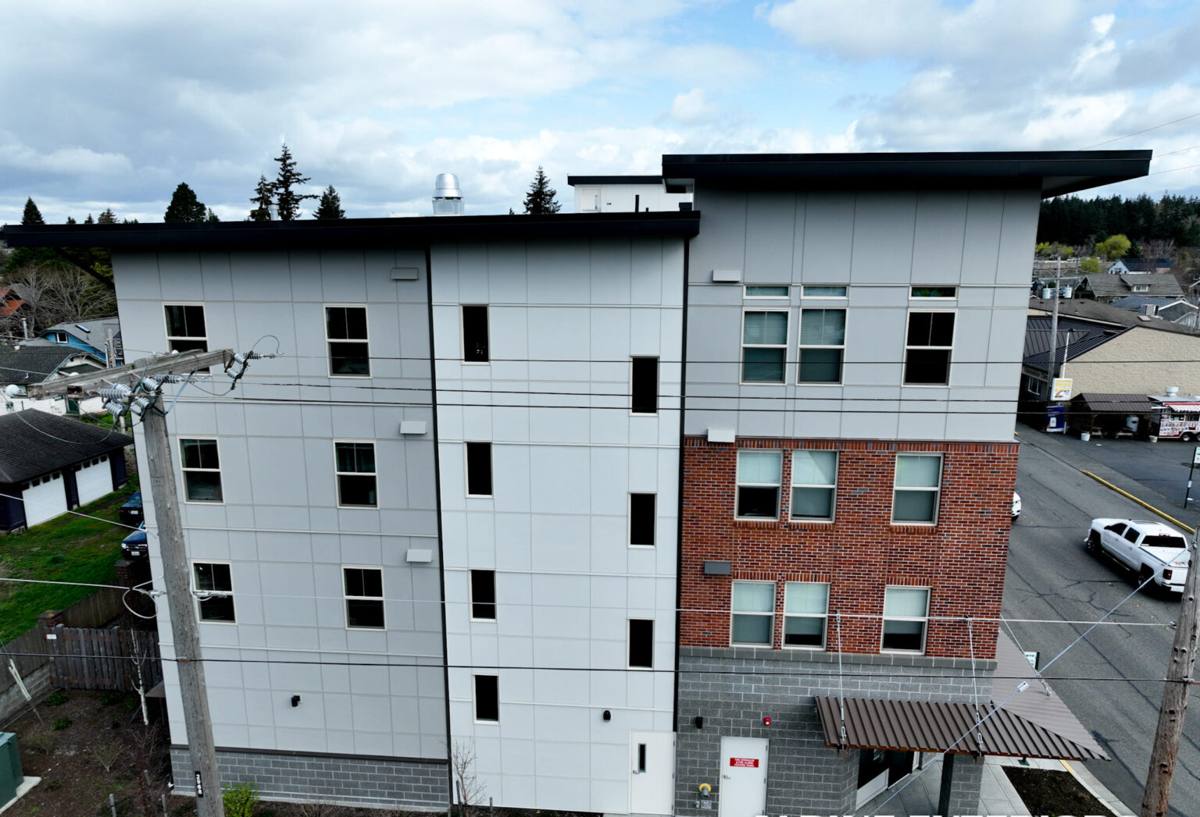
What a Correct Siding Replacement Involves
What's under the old siding matters as much as what goes over it
A siding replacement isn't just swapping old panels for new ones. Once the old siding comes off, we're looking at the sheathing, the house wrap or building paper, and the framing underneath — because on a marine-exposed home, this is often where years of slow moisture intrusion have actually done their damage. Soft or delaminated sheathing, rusted fasteners, and rot around window and door openings all need to be found and fixed before a single new course of siding goes up. Covering that kind of damage with new siding just hides a problem that keeps getting worse.
Flashing and drainage do the real work
Siding sheds most of the water that hits a wall, but flashing and a properly lapped weather-resistive barrier handle the water that gets behind it — and on a wind-driven-rain site like this, some water always gets behind it. Window and door flashing, kick-out flashing at roof-wall intersections, and correct overlap at every horizontal joint aren't optional details; they're the difference between a wall that dries out and one that slowly rots from the inside.
Fastening for wind exposure
Island and waterfront properties see more sustained wind than sheltered inland lots. Fastener spacing, type, and embedment need to match the exposure the wall actually sees, not just a generic minimum. This is a detail that's easy to under-build and impossible to inspect once the siding is up, so it has to be right the first time.
Why We Install Only James Hardie Fiber Cement Here
We stopped installing vinyl, LP SmartSide, primed spruce, and cedar lap siding a long time ago, and a climate like Lummi Island's is a big part of why. Vinyl can warp and gap at its seams under repeated wetting and temperature swings, and once a seam opens, salt-laden moisture finds its way behind the panel with nothing but house wrap to stop it. Wood-based products — cedar, primed spruce, and engineered wood siding like LP SmartSide — perform fine when kept dry and maintained on schedule, but they depend on that maintenance. Miss a repaint cycle in a moss-prone, high-moisture environment and the wood fiber underneath starts absorbing water it can't shed fast enough.
James Hardie fiber cement is non-combustible and dimensionally stable, meaning it doesn't expand, contract, or absorb moisture the way wood fiber or vinyl do. The ColorPlus factory finish is baked on under controlled conditions rather than field-applied, which matters directly for moss and mildew resistance — a consistent, properly cured finish sheds algae growth and washes off far more easily than a field-painted or bare wood surface. Hardie also engineers its siding by climate zone; the HZ5 product line used in the Pacific Northwest is formulated for exactly this kind of wet, moderate, moisture-heavy environment rather than a one-size-fits-all national spec.
| Material | Salt Air / Moisture Resistance | Moss & Algae Behavior | Maintenance Burden |
|---|---|---|---|
| Vinyl siding | Seams can open under repeated thermal cycling; moisture then gets behind panel | Grows on surface film; pressure-washing needed regularly | Low routine care, but no real fix once seams fail |
| Cedar / primed wood | Absorbs moisture at end grain and any finish failure point | Prone to growth in shaded, damp wall sections | High — repaint/reseal on a strict schedule |
| LP SmartSide | Engineered wood strand core; sensitive to sustained moisture at cut edges and seams | Can support growth if finish wears or edges aren't sealed | Moderate — finish and edge maintenance matter |
| James Hardie fiber cement | Dimensionally stable, non-combustible, engineered for HZ5 wet climates | Factory finish resists and sheds growth better than field-applied finishes | Low — periodic cleaning, no repainting cycle required |
Our Process for a Lummi Island Project
Working on the island adds a logistics layer that doesn't exist on a typical Ferndale mainland job — everything, from the crew to every board of siding, crosses on the ferry, so scheduling and material staging get planned around that from day one rather than treated as an afterthought.
- Onsite assessment of existing siding, trim, and any visible moisture or moss damage, with photos documenting current conditions
- Material takeoff and staging plan built around ferry capacity, so full crews and full loads arrive together rather than in inefficient partial trips
- Tear-off and inspection of sheathing, house wrap, and framing, with any rot or damage repaired and documented before new material goes up
- Installation of house wrap, flashing at every penetration and joint, and James Hardie panels or lap siding fastened to the specification for the site's wind exposure
- Trim, caulking at manufacturer-specified joints only, and a final walk-through against the original assessment
Signs Your Lummi Island Home May Need Siding Replacement
- Soft spots, bubbling, or visible warping anywhere on the siding surface
- Persistent moss or dark staining on north- or west-facing walls that returns soon after cleaning
- Paint that's failing or peeling repeatedly in the same spots, especially near trim and corners
- Visible gaps, cracking, or separation at siding seams and butt joints
- Soft or spongy sheathing felt when pressing near the base of exterior walls
- Rising energy bills with no other explanation, which can point to moisture-compromised insulation behind the siding
- Siding that's more than 20-25 years old, regardless of visible condition, given the marine exposure here
Cost Factors for a Siding Replacement
Every Lummi Island home is different, and we don't publish blanket prices because tear-off condition, wall complexity, and access all move the number. What we can lay out honestly is what actually drives cost on a job like this.
| Factor | Why It Matters Here |
|---|---|
| Extent of hidden moisture/rot damage | Salt air and driving rain make sheathing and framing repair more common than on a sheltered inland home |
| Home size and wall complexity | More corners, gables, and dormers mean more flashing detail and labor time |
| Ferry and staging logistics | Material and crew transport is planned into scheduling, not an extra line item, but it does shape sequencing |
| Trim and accent work | Window and door trim, fascia, and any custom detailing add to scope beyond flat wall siding |
| Existing siding removal and disposal | Full tear-off costs more than installing over an existing layer, but it's the only way to inspect what's underneath |
Living With Hardie Siding After It's Installed
One of the practical advantages of switching to fiber cement on an island property is how little upkeep it asks for afterward. There's no repaint cycle to track, no annual sealing of end grain, and no seams to watch for warping. During the wettest months, an occasional rinse to knock moss spores off the surface before they establish is about all it needs — the factory finish does most of the work of shedding growth on its own. That's a meaningful difference from a maintenance schedule that, if missed even once in a marine climate, can let moisture get a foothold that's expensive to reverse.
James Hardie also backs its products with a strong transferable warranty, which matters more on a property exposed to this much weather than it would somewhere drier — it's coverage built for the conditions it's actually going to face, not a best-case scenario.
Why a Crew That Already Works Lummi Island Matters
Ferry scheduling, tide-dependent timing for some deliveries, and limited on-island staging space aren't things you learn from a spec sheet — they're things a crew learns by doing the work here repeatedly. A contractor unfamiliar with island logistics can end up wasting a job's first day or two just figuring out how material gets from the mainland to the wall, which shows up as delays and inefficiency the homeowner ends up absorbing. We've done the tear-offs, found the same kinds of hidden moisture damage, and installed Hardie siding on enough homes in this exact environment to plan around its realities instead of discovering them mid-project.
That local familiarity also extends to knowing which details actually matter for a Whatcom County marine-exposure home versus which ones are just generic best practice — the flashing at a roof-wall intersection facing prevailing wind-driven rain gets more attention here than it would on a sheltered wall, because we've seen what happens when it doesn't.
If your Lummi Island home's siding is showing moss buildup, failing paint, or you're simply not sure how much longer it has, we're happy to take a look and give you a straight, no-pressure assessment of what it actually needs. Use the form below to request a free estimate.