 Ferndale
 Building Custom Decks for Lummi Nation's Coastal Conditions
Homes in and around Lummi Nation sit close to the water, and that changes what a deck has to survive. This isn't the same climate load a deck in a sheltered inland neighborhood deals with. Between the salt-laden air coming off Bellingham Bay and Hale Passage, the driving rain that blows in sideways off the water, and a moss season that can stretch from fall through spring, a deck out here is under near-constant pressure from moisture and corrosion. We build decks for this specific environment, not a generic one, and that shows up in every material choice, fastener, and detail we plan for.
A deck that's designed and built the same way you'd build one in a dry, inland part of Whatcom County will show its age fast near the water — soft spots in the decking, rust streaks bleeding from screw heads, slick moss buildup on north-facing boards, and hardware that seizes or corrodes years before it should. None of that is inevitable. It's a design and materials problem, and it's one we deal with regularly working in this area.
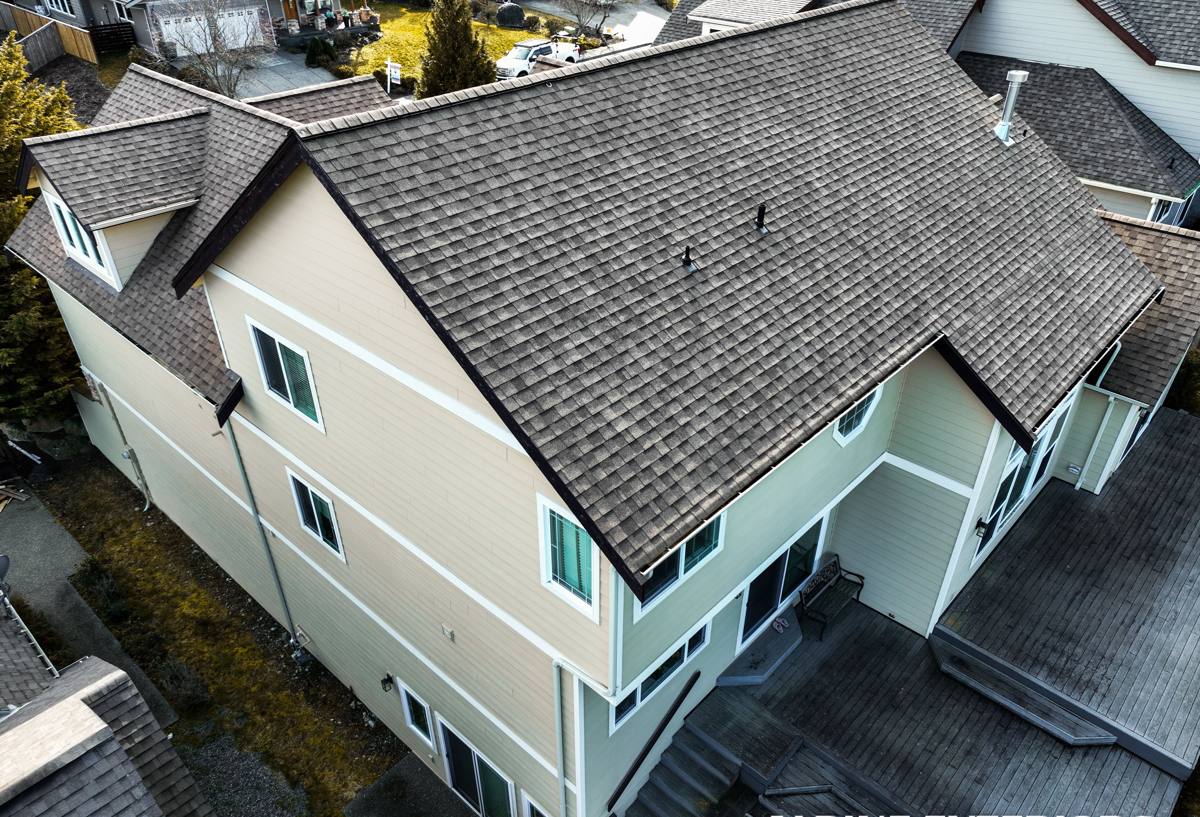
What Salt Air, Rain, and Moss Actually Do to a Deck
Corrosion From Salt Air
Airborne salt is chemically aggressive to metal. Standard galvanized fasteners and connectors that hold up fine twenty miles inland can start corroding within a few seasons this close to salt water. Corrosion doesn't just look bad — it weakens the structural connections that hold your deck together, particularly at ledger boards, joist hangers, and post bases, which are the highest-load points on the whole structure.
Driving Rain and Wood Decay
Rain that comes in at an angle off the water gets into places vertical rain never reaches — the undersides of rail caps, the backs of fascia boards, gaps behind ledger flashing. Wood that stays damp for extended stretches is exactly what decay fungi need to get established. This is less about total rainfall and more about how long surfaces stay wet between dry spells, which around here can be a long time in winter.
Moss and the Slip Hazard It Creates
Moss needs shade, moisture, and time — and a long Pacific Northwest wet season gives it plenty of all three. On decking, moss isn't just a cosmetic nuisance. A moss-covered board is a genuine slip hazard, and moss holds moisture against the board surface, accelerating whatever decay process is already underway underneath it. Decks with poor drainage, tight board spacing, or heavy shade develop moss noticeably faster than decks designed with airflow and drainage in mind from the start.
Designing a Deck That Holds Up Here, Not Just Looks Good on Day One
Footings and Framing for Wet, Variable Soil
Soil conditions near the water can vary quite a bit within a short distance — sandy, well-draining ground in one spot, heavier and more saturated soil a few feet away. Footings need to be sized and set based on what's actually under your specific lot, not a one-size-fits-all assumption. We also frame with the understanding that ground-contact moisture near the water tends to run higher year-round, which affects post base selection and how much separation we build between untreated wood and the ground or concrete.
Fasteners and Hardware Rated for the Coast
For any deck near salt water, we treat corrosion-resistant hardware as the standard, not an upgrade. That generally means stainless steel or heavy coastal-rated coated fasteners and connectors at the framing level, especially at ledger attachments and structural hangers where failure has real consequences. It costs more upfront than standard galvanized hardware. It also means you're not looking at rust stains and loosening connections in year three.
Elevation, Views, and Wind
A lot of homes in this area are built to take advantage of water views, which often means decks sit higher off the ground or catch more open wind than a typical backyard deck. Guardrail strength, post spacing, and lateral bracing all need to account for that — a deck that's technically up to code minimums isn't necessarily built with the margin you want on an elevated, wind-exposed structure.
Decking Material Options for This Climate
There's no single "best" decking material for every home — it depends on how much maintenance you want to take on, your budget, and how close you are to the water. Here's how the common options actually compare for this specific environment.
| Material | Upfront Cost | Maintenance Needed | Salt Air / Moisture Performance |
|---|---|---|---|
| Composite decking | Higher | Low — occasional cleaning | Very good; resists rot and doesn't absorb salt moisture, though board color and surface can still gray or grow moss film if not cleaned periodically |
| Cedar | Mid | Moderate to high — periodic sealing/staining | Naturally decay-resistant but still needs upkeep near salt air; fasteners matter more here than the wood itself |
| Pressure-treated pine/fir | Lower | Moderate to high — sealing recommended | Treated for ground contact and rot resistance, but end grain and cut edges need extra attention near the coast |
| Tropical hardwood (e.g. ipe) | Highest | Moderate — periodic oiling to maintain color | Extremely dense and naturally rot-resistant; performs well near salt air but requires precise fastening due to hardness |
We'll walk through these trade-offs honestly based on your budget and how much ongoing maintenance you actually want to do — there's no wrong answer here, just different levels of upkeep for different upfront costs.
Permitting for Decks In and Around Lummi Nation
One thing that genuinely sets this area apart from a typical Ferndale project: not every property here falls under the same permitting authority. Depending on exactly where a home sits, a deck project may fall under Whatcom County's permitting process, or it may fall under tribal land use jurisdiction instead. Homeowners aren't always sure which applies to their specific lot, and it's not something you want to guess wrong on before you start building. Because we've worked on projects throughout this area, we're used to identifying which path applies and working through the correct process before framing begins, rather than discovering a permitting problem partway through the job.
Our Process for a Custom Deck Build
We keep the process straightforward and communicate clearly at each step, since a deck build touches your property for more than just a day or two.
- On-site assessment — we look at your soil, drainage, sun/shade exposure, and how close you are to salt water to inform material and hardware recommendations.
- Design and material selection — we go over decking, railing, and structural options with honest trade-offs, not just upsells.
- Permitting — we determine the correct permitting path for your property and handle the paperwork.
- Framing — footings sized for your actual soil conditions, corrosion-resistant structural hardware throughout.
- Decking, railing, and finish work — installed with attention to drainage gaps, flashing, and fastener placement that resists moss and moisture buildup.
- Final walkthrough — we go over basic care so the deck ages the way it's supposed to.
Maintaining a Deck Through a Long Moss Season
A well-built deck out here still needs some seasonal attention — the difference is that a properly designed and installed deck responds well to basic upkeep instead of fighting you the whole way.
- Sweep debris and standing leaves off the decking regularly, especially in shaded areas where moisture lingers longest.
- Rinse or lightly scrub visible moss growth before it gets established rather than letting it build up over a season.
- Check that drainage gaps between boards stay clear of debris so water can actually move through, not pool.
- Inspect visible fasteners and hardware periodically for early rust staining, which can signal a hardware issue worth addressing early.
- Reseal or re-stain wood decking on the manufacturer's recommended schedule rather than waiting until it's visibly weathered.
- Keep an eye on ledger board flashing and the area where the deck meets the house — this is the most common spot for hidden moisture problems to start.
Why a Local Ferndale Crew Matters for a Lummi Nation Project
A deck built by a crew that hasn't worked this specific stretch of coastline tends to make the same mistakes: standard hardware where coastal-rated hardware was needed, drainage details that work fine inland but leave water sitting where it shouldn't, or a permitting assumption that turns out to be wrong for the property. We work throughout Ferndale and the surrounding Whatcom County coastline regularly, and that familiarity with local soil, exposure, and permitting realities is exactly what keeps a deck project from turning into a slow-motion problem a few years down the road.
We also stand behind the work with a straightforward warranty and honest communication if something ever needs attention — no runaround, no disappearing after the final invoice.
If you're planning a custom deck for a Lummi Nation property, we're happy to come take a look, walk the site with you, and put together a straightforward, no-pressure estimate. Fill out the form below and we'll get in touch to schedule a time.