 Ferndale
 Siding Built for Lummi Nation's Coastal Exposure
Homes around Lummi Nation sit about as close to the water as houses in Whatcom County get, and that proximity shapes everything about how siding should be chosen and installed here. Salt-laden air off Bellingham Bay and the Strait of Georgia, wind-driven rain that comes in sideways during fall and winter storms, and a mossy, shaded understory in many yards all put more stress on an exterior wall than siding in a drier inland town ever sees. We install fiber cement siding on homes in this area because it's the one product we trust to hold up to that combination year after year without turning into a maintenance project.
This page is specifically about fiber cement siding for Lummi Nation homes and the surrounding shoreline neighborhoods near Ferndale — not a general overview of siding materials. If you're weighing options for a home in this stretch of Whatcom County, here's what actually matters for your walls.
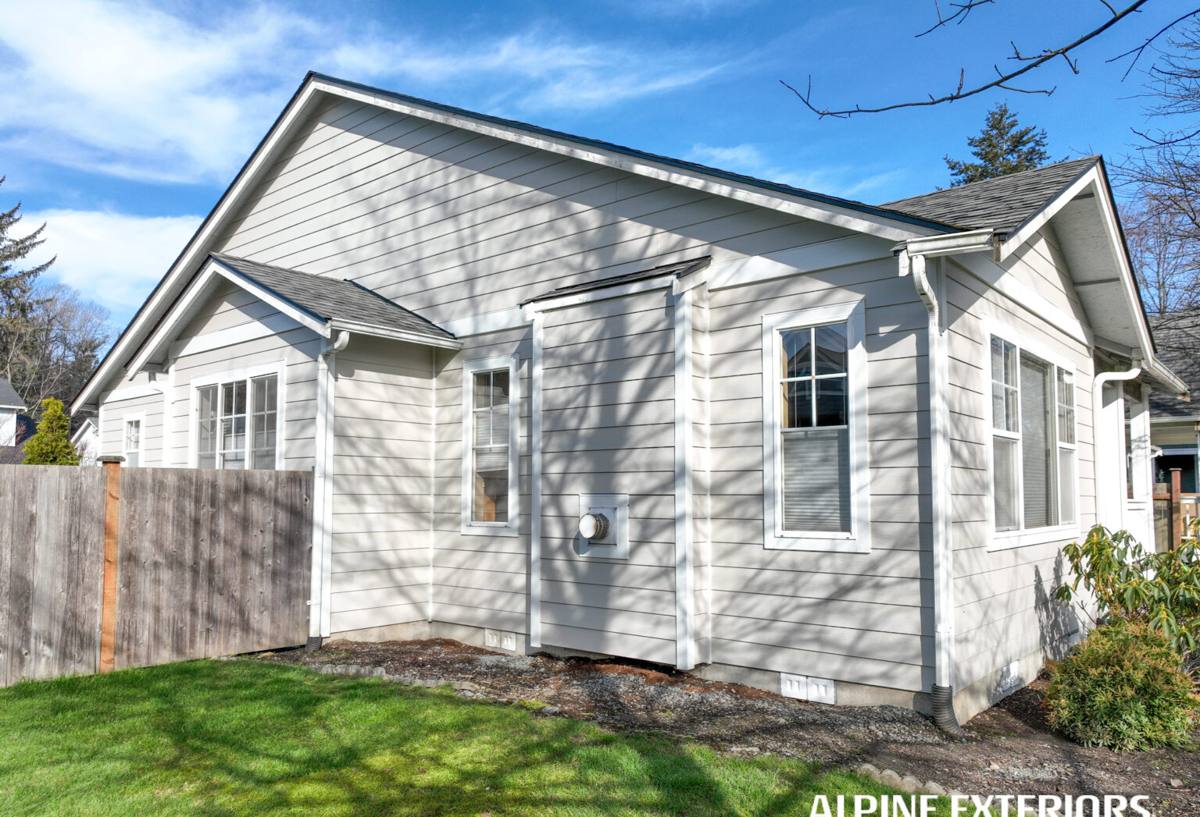
What Salt Air and Marine Moisture Do to Siding Over Time
Salt air isn't just a coastal cliché — it's a real chemical stressor on exterior materials. Airborne salt settles on siding, trim, and fasteners, and combined with the near-constant humidity of a Puget Sound winter, it accelerates corrosion of metal components and breaks down finishes that aren't formulated to resist it. On top of that, driving rain off the water finds every gap, seam, and under-lapped joint that a calmer inland climate would never test.
Then there's moss. Homes with mature tree cover or north-facing walls near Lummi Nation stay damp longer after every rain, and moss doesn't just grow on roofs — it colonizes siding surfaces, gutters, and trim, holding moisture against the wall assembly for weeks at a time. Over a few seasons, that constant damp cycle is what causes:
- Paint film failure and chalking on wood or engineered wood siding
- Swelling, delamination, or soft spots at butt joints and bottom edges
- Corroding or staining fasteners that weren't rated for coastal exposure
- Trim rot at windows, corners, and anywhere caulk has failed
- Moss and algae staining that requires regular pressure washing to control
None of this means a home near Lummi Nation is doomed to constant repairs — it means the siding material and the installation details both have to be chosen with this specific exposure in mind.
Why Fiber Cement Is the Right Material for This Exposure
We install James Hardie fiber cement siding exclusively, and this climate is exactly why. Fiber cement is made from cement, sand, and cellulose fiber — it doesn't absorb water the way wood-based products do, and it isn't a food source for moss or algae growth the way untreated wood can be. It won't swell, cup, or delaminate from repeated wetting and drying cycles, which is the failure pattern we see most often on older wood and engineered wood siding in shoreline neighborhoods.
We don't install vinyl, LP SmartSide, Cemplank, Allura, primed spruce, or cedar, and in a salt-air, high-moisture environment like this one, the reasons matter more than usual:
| Material | Behavior in salt air and driving rain | Long-term concern here |
|---|---|---|
| Vinyl siding | Doesn't rot, but panels expand and contract with temperature and can be driven by wind-loaded rain at laps | Fading, warping, and gaps that let moisture behind the panel over time |
| Engineered wood (LP SmartSide) | Wood-strand core is more moisture-resistant than solid wood but still wood-based | Edge swelling if caulking and flashing details aren't maintained perfectly |
| Cedar / primed spruce | Natural material, absorbs and releases moisture constantly | Repainting cycles, rot at end grain, and higher upkeep in a moss-prone climate |
| James Hardie fiber cement | Cement-based, doesn't absorb water into the substrate, resists moss adhesion | Requires correct installation details, but the material itself isn't the weak point |
The honest trade-off with fiber cement is that it's heavier and less forgiving of sloppy installation than some alternatives — it has to be cut, fastened, and flashed correctly. That's exactly why the installation section below matters as much as the product choice itself.
The James Hardie Product Lines We Use Here
James Hardie makes climate-specific formulations under its HZ5 and HZ10 engineering, and for this part of Washington we spec products built for cold, wet, marine-influenced climates rather than the hot, dry formulations sold in the Southwest. Depending on the home's style and budget, that typically means:
- HardiePlank lap siding — the most common choice for full re-sides, available in several exposure widths and textures (smooth or cedarmill)
- HardiePanel vertical siding — often used for accent sections, gables, or a modern board-and-batten look
- HardieTrim boards — for corners, window and door casing, and fascia, matched to resist the same moisture exposure as the field siding
- ColorPlus factory finish — a baked-on finish applied under controlled conditions, which holds up to UV and salt exposure better than field-applied paint and carries its own finish warranty
Choosing ColorPlus over field-painted primed siding is worth real consideration for a home this close to the water — repainting a full exterior every several years is a bigger and more expensive job here than it would be inland, and a factory finish shifts that maintenance burden off your calendar for a long time.
What a Correct Installation Actually Involves
Fiber cement performs the way it's supposed to only when it's installed the way James Hardie specifies — and in a high-moisture, salt-exposed area, cutting corners on these details shows up faster than it would in a milder climate. A correct job includes:
Water Management Behind the Siding
A properly installed weather-resistive barrier and drainage plane (often a rain-screen gap) let any moisture that does get past the siding drain out instead of sitting against the sheathing. This matters more near Lummi Nation than almost anywhere else in the county, given how much wind-driven rain the walls take on.
Fastening and Flashing
Corrosion-resistant fasteners, correct nailing patterns, and proper flashing at every window, door, and penetration keep water from finding a way behind the cladding. Standard fasteners that aren't rated for coastal or high-moisture exposure are a common shortcut that causes staining and loosening years down the road.
Clearances and Sealant
Hardie specifies minimum clearances from grade, roof lines, and decks, plus specific sealant types at joints and butt seams. Skipping these clearances is one of the most common causes of moisture problems on fiber cement installs we're called to fix.
Cut-Edge Sealing
Any field-cut edge needs to be primed or sealed before installation — an exposed raw edge is the one part of a Hardie board that isn't factory-protected, and in this climate it needs to be treated correctly every time.
Our Process, Start to Finish
For a Lummi Nation area project, our process looks like this:
- On-site assessment — we look at existing siding condition, moisture damage, moss/algae buildup, and any rot at trim, corners, or penetrations before quoting anything
- Product and color selection — matched to your home's style, with ColorPlus finish options reviewed side by side
- Tear-off and substrate check — we don't side over rotten sheathing; anything compromised gets addressed before new siding goes on
- Weather barrier and drainage plane installation — done to spec for this climate, not a generic inland install
- Siding, trim, and flashing installation — following James Hardie's fastening, clearance, and sealant requirements
- Final walkthrough — checking caulking, paint touch-up at cut edges, and overall fit before we call the job done
Living With Fiber Cement in a Moss and Salt-Air Climate
Fiber cement dramatically reduces maintenance compared to wood, but "low-maintenance" isn't "no-maintenance" anywhere near the water. A short seasonal checklist keeps a Hardie installation performing the way it should:
- Rinse siding periodically to clear salt residue and organic buildup, especially on shaded or north-facing walls
- Keep gutters and downspouts clear so overflow doesn't run down the siding face
- Trim back vegetation and tree cover that keeps walls damp and shaded longer than necessary
- Inspect caulking at trim joints and penetrations every year or two and re-seal as needed
- Address any moss growth on siding promptly rather than letting it establish and hold moisture
Why a Crew That Already Works This Area Matters
Siding installation isn't one-size-fits-all across Whatcom County. A crew that's used to drier, more sheltered inland sites can miss the details that matter most on a shoreline-exposed home — the extra attention to drainage planes, fastener corrosion resistance, and clearance details that this climate demands. Working regularly in and around Lummi Nation and the Ferndale shoreline means we're not guessing at how salt air and driving rain behave here; we're building to what we've already seen hold up and what we've seen fail.
It also means a faster, more accurate quote. We already know the moisture patterns, the moss pressure on shaded lots, and the kind of exposure a given elevation of your home is likely to see, so the plan we bring to your project is specific to your site rather than a generic template.
Get an Honest Look at Your Home
If your siding is showing moss staining, soft spots, or paint failure, or you're planning ahead for a re-side, we're happy to walk the exterior with you and give you a straight answer about what's going on and what it would take to fix it right. There's no pressure and no cost to get a estimate — just use the form below to get started.