 Ferndale
 Siding Installation Built for Lummi Nation's Coastal Exposure
Lummi Nation sits out on the peninsula west of Ferndale, close enough to open water that homes there deal with a heavier version of the weather the rest of Whatcom County only sees part-time. Salt-laden air moves off the bay almost constantly, rain arrives sideways as often as it falls straight down, and the combination of shade, dampness, and mild temperatures keeps moss active for most of the year. A siding installation done here has to account for all three of those conditions from the first panel to the last piece of trim, not just meet a generic weatherproofing standard built for a calmer inland lot.
This page is specifically about the installation itself — what the material and the workmanship need to deliver on a Lummi Nation property, and what our crew actually does differently to make sure a new siding job holds up under that exposure instead of just looking good for the first year or two.
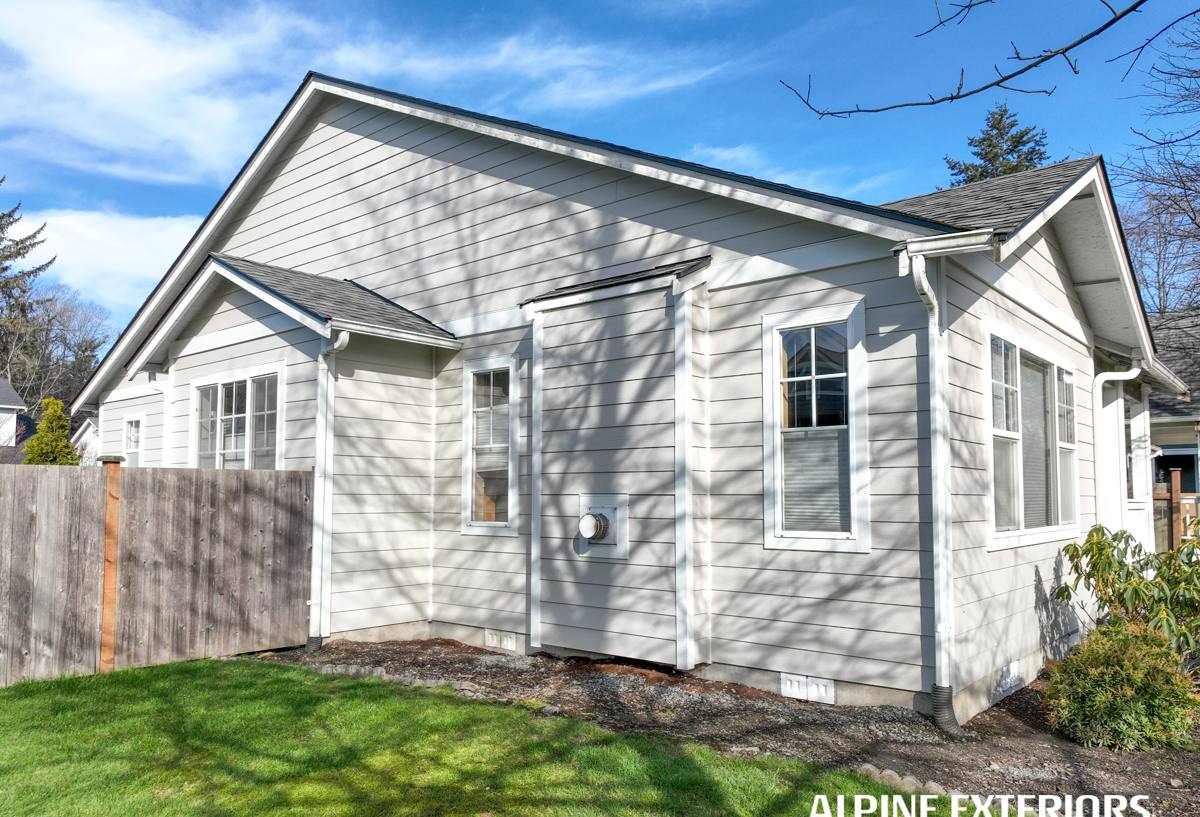
What Salt Air, Driving Rain, and a Long Moss Season Do to Siding
Salt Air and Corrosion
The closer a home sits to open water, the more salt-laden moisture settles on every exterior surface, and that salt is corrosive to fasteners, flashing, and hardware over time. It also breaks down lower-grade paints and site-applied finishes faster than a drier climate would, which is why the finish on the siding matters just as much as the siding material itself.
Wind-Driven Rain at Seams and Trim
Open water exposure means fewer windbreaks, and wind is what turns ordinary rain into a sideways problem. Driving rain gets pushed into lap joints, trim seams, and butt joints, and finds any gap where flashing isn't doing its job. A siding installation that relies on caulk to cover a poorly detailed joint tends to fail here faster than in a more sheltered part of the county, because the water pressure at seams is simply higher.
Moss, Shade, and Trapped Moisture
Peninsula terrain and tree cover keep some wall sections shaded and damp for much of the year, which is exactly what moss and mildew need to take hold. Beyond the cosmetic staining, sustained organic growth holds moisture directly against the wall assembly, and that trapped moisture is one of the more common paths to hidden rot behind siding that looks fine from the ground.
Why We Install Only James Hardie Fiber Cement
We install one siding system, James Hardie fiber cement, and we don't install LP SmartSide, vinyl, Cemplank, Allura, primed spruce, or cedar. That's a professional standard we settled on after years of seeing which materials actually hold up under sustained coastal exposure and which ones become maintenance problems within a decade. For a Lummi Nation home specifically, the case is stronger than in most of our service area:
- Non-combustible core: fiber cement doesn't feed a fire the way wood-based or wood-derived siding can, which matters for both safety and insurance underwriting.
- Factory-applied ColorPlus finish: baked on under controlled conditions instead of brushed on in the field, so it resists salt exposure, fading, and chalking far longer than site-applied paint.
- Climate-engineered HZ5 formulation: Hardie builds different product formulations for different climate zones, and HZ5 is engineered for regions with heavy, sustained moisture — a direct match for a Lummi Nation property.
- Dimensional stability: fiber cement doesn't swell, cup, or warp through repeated wet-season moisture cycles the way engineered wood products can.
- Strong transferable warranty: real protection for the homeowner, provided the installation follows manufacturer spec, not just a marketing claim.
Every one of those products has a place in the broader market, and plenty of owners elsewhere are satisfied with them. On a property that takes this much sustained salt and moisture, we'd rather stand behind one system completely than offer a cheaper option that quietly shifts maintenance risk back onto the homeowner.
What Correct Installation Involves in This Climate
Drainage Plane and Rainscreen Gap
Behind the siding, a properly installed weather-resistive barrier and drainage gap gives any water that gets past the outer layer a way to drain and dry out instead of sitting against the sheathing. On a wet peninsula lot, skipping or shortcutting this step is one of the fastest ways to end up with hidden rot a few years down the road, even with premium siding on the surface.
Flashing and Joint Detail
Every window, door, and penetration needs flashing that actually sheds water downward and outward, not just a bead of caulk covering a gap. Butt joints between siding pieces get flashed and lapped correctly, and trim is sealed at the details that take the most direct wind-driven rain — inside corners, window heads, and anywhere horizontal trim meets a vertical wall plane.
Fastening Spec for Wind and Salt Exposure
Fastener choice and pattern matter more here than on a sheltered inland lot. Corrosion-resistant fasteners, driven to the manufacturer's spec rather than however is fastest, keep hardware from rusting and telegraphing through the finish years before it should, and correct fastening patterns hold up better against the added wind load a waterfront-adjacent property sees during winter storms.
Our Installation Process, Start to Finish
- Inspection and estimate: we walk the exterior, check the substrate where we can, and give you an honest read on what the job actually involves before any work starts.
- Tear-off and substrate check: removing the old siding is when hidden moisture damage shows up; we address any rotted sheathing or framing before anything new goes on.
- Weather barrier and drainage gap: a correctly lapped weather-resistive barrier and rainscreen gap go on before a single piece of Hardie siding does.
- Flashing at every penetration: windows, doors, vents, and any other wall penetration get flashed properly, not caulked and called done.
- Siding and trim installation: Hardie panels or lap siding go on to manufacturer fastening spec, with joints and corners detailed for this climate's wind and rain.
- Final walkthrough: we go over the finished job with you, point out anything worth knowing for future maintenance, and make sure you're satisfied before we call it done.
Signs Your Current Siding Needs Replacing
- Moss or dark staining that returns quickly after cleaning, especially on shaded or north-facing walls
- Soft or spongy siding low on the wall or around window and door trim
- Rusting fasteners, corroding flashing, or chalky, faded paint on older siding
- Visible gaps or separation at seams, corners, or trim joints
- Cracked, warped, or missing siding sections, particularly after a winter storm
- Rising heating bills that may point to a wall assembly that's no longer sealing properly
- Siding that was never rated for this level of salt and moisture exposure in the first place
Cost Factors for a Lummi Nation Siding Installation
| Factor | What It Affects | Why It Matters Here |
|---|---|---|
| Tear-off vs. new construction | Labor scope and disposal costs | Removing old siding on an exposed lot often reveals moisture damage that needs repair first |
| Substrate condition | Sheathing and framing repair costs | Long-term trapped moisture from salt air and moss is common under aging siding here |
| Home size and wall complexity | Material quantity and labor hours | More corners, gables, and trim details mean more flashing work in a high-rain area |
| Siding profile and accessories | Material cost per square foot | Lap, panel, and shingle profiles price differently, and trim needs vary by home style |
| Site access | Labor time and equipment needs | Peninsula and waterfront lots can have tighter staging areas or limited access points |
These are the variables that move a price up or down, but exact numbers depend on the specific home. We walk each property in person before quoting rather than working off a generic price sheet.
Why a Crew That Already Works This Area Matters
A crew that installs siding on Lummi Nation and the surrounding peninsula regularly knows how salt air, wind-driven rain, and a long moss season actually behave on real homes over a full year, not just how a product performs on a spec sheet. That experience shapes real decisions on install day: which wall orientations stay wet the longest, where extra flashing attention is worth the added time, and which fastening details keep a homeowner from dealing with a callback after the next winter storm blows through off the water. Ferndale and the surrounding county see this weather pattern too, but proximity to open water means Lummi Nation properties get a heavier, more constant version of it — and an installation built for a milder inland lot doesn't always hold up the same way here.
If you're considering new siding for a Lummi Nation home, we're glad to take a look and give you a straight answer on what the job actually involves. Reach out using the form below to schedule a free, no-pressure estimate.