 Ferndale
 Building Decks for Marietta Homes
Marietta sits close enough to the water that its homes deal with a different set of conditions than decks built further inland in Whatcom County. Salt-laden air off the bay, wind-driven rain that finds its way under poorly flashed ledger boards, and a moss season that can stretch from October through April all put stress on outdoor structures that a generic deck build isn't designed to handle. We build decks for this specific stretch of Ferndale, and the choices we make on material, fasteners, and drainage reflect what actually happens to wood and composite out here, not what works in a drier climate.
A deck in Marietta isn't just an outdoor living space — it's an exterior structure attached to your house, exposed to the same moisture load as your siding and roofline. Treat it like a minor construction project (because it is one) and it will hold up. Treat it like a weekend add-on and you'll be replacing boards, or worse, dealing with rot at the ledger connection, within a handful of years.
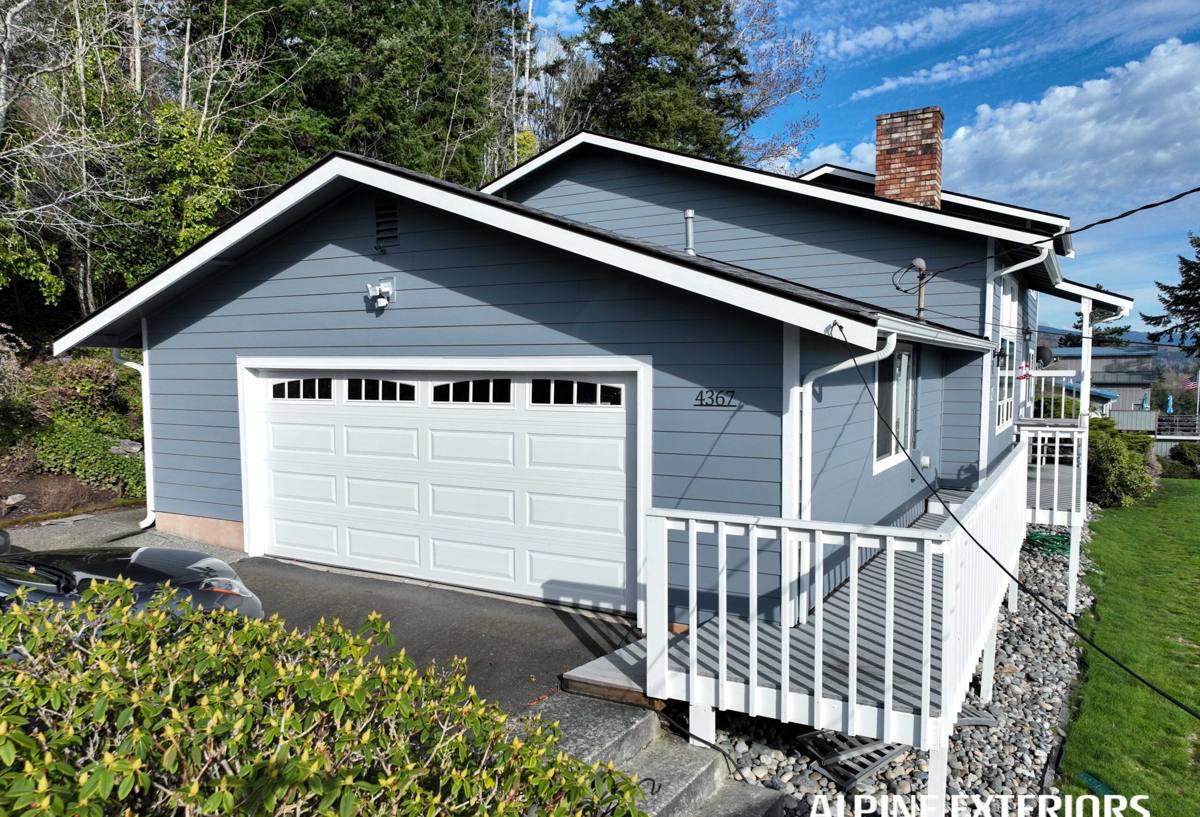
What the Marietta Climate Does to a Deck
The combination of coastal humidity and near-constant moisture cycling is harder on decks than straight rain volume alone. Wood and even composite decking go through repeated wet-dry cycles that regular inland weather doesn't produce at the same frequency. A few specific failure patterns we see on decks in this area:
- Ledger board rot — where the deck attaches to the house, if flashing wasn't installed correctly (or at all), water gets trapped between the ledger and the siding and rots the framing from the inside, often invisibly for years.
- Moss and algae buildup — the long moss season here means any deck surface that doesn't shed water quickly becomes a slip hazard and a place for organic growth to hold moisture against the wood.
- Fastener corrosion — salt air accelerates corrosion on standard fasteners and hardware. Once a fastener starts rusting, it weakens the connection long before it looks obviously bad.
- Joist and beam checking — repeated swelling and drying cycles cause structural lumber to crack and cup over time if it isn't properly rated for ground contact and exterior exposure.
- Substructure ventilation gaps — decks built low to the ground or against foundations without airflow underneath trap humidity and slow drying after every rain.
None of this means a deck in Marietta is a bad idea — it means the build has to account for these conditions from the framing stage forward, not just at the surface finish.
What a Correctly Built Deck Requires Here
Ledger Attachment and Flashing
This is the single most important detail on any deck attached to a house in this climate, and it's the detail most often done wrong on older or budget builds. Proper ledger flashing directs water away from the house rather than letting it pool behind the deck board. We install flashing that integrates with your existing siding and house wrap rather than just caulking a gap and hoping it holds — caulk is not a waterproofing strategy, it's a stopgap that fails silently.
Fastener and Hardware Selection
Given the salt exposure common near Ferndale's coastline, we use corrosion-resistant fasteners and structural hardware rated for exterior and coastal use — not general-purpose deck screws that will streak and weaken within a few seasons. This applies to joist hangers, structural screws, and post bases, not just the visible surface fasteners.
Framing Lumber and Ground Contact Ratings
Posts, beams, and any framing member near or in contact with soil need the correct pressure-treatment rating for ground contact, and everything else needs to be rated for above-ground exterior exposure at minimum. Mixing these up is a common shortcut on lower-bid jobs that shows up as premature rot five to eight years down the line.
Drainage and Airflow Underneath
Decks built tight to grade or against a foundation wall without a drainage path or ventilation gap hold moisture longer after every rain event. We grade and gap the substructure so air can move and water can leave, which matters more here than in drier parts of the state given how many wet days this region gets in a typical year.
Decking Surface Choice
Whether you go with wood or composite, the surface needs a profile and finish that sheds water and resists the moss and algae growth this climate encourages. We'll walk through the real trade-offs of each option for your specific deck rather than pushing one material by default.
Wood vs. Composite Decking for Marietta
| Factor | Wood (cedar / pressure-treated) | Composite |
|---|---|---|
| Moss/algae resistance | Needs regular cleaning and periodic sealing to resist growth | Better inherent resistance, but grooved profiles still need cleaning |
| Upfront cost | Lower material cost | Higher material cost |
| Long-term maintenance | Sealing/staining every 2-3 years in this climate | Occasional washing, no sealing required |
| Moisture behavior | Swells/dries with humidity cycles; needs proper gapping | More dimensionally stable but still needs correct substructure ventilation |
| Repair approach | Individual boards easily replaced | Board replacement possible but color-matching aged material can be harder |
| Typical lifespan (properly built) | 15-20+ years with maintenance | 25-30 years, manufacturer-dependent |
Neither option is automatically "better" — the right call depends on your budget, how much upkeep you want to do, and how the deck is used. What matters more than the material label is whether the framing, flashing, and fastening underneath it were done correctly. A composite surface on a poorly flashed ledger will still rot the framing behind it.
Our Process for a Marietta Deck Build
- On-site assessment — we look at your house's existing siding and moisture management, grade and drainage around the proposed deck footprint, and sun/shade exposure that affects how fast the deck will dry after rain.
- Design and material discussion — size, layout, railing style, and decking material, with honest input on what holds up in this specific microclimate versus what looks good in a catalog photo.
- Permitting — most deck builds in Whatcom County require a permit depending on height and size; we handle this so you're not guessing at code requirements.
- Framing and ledger work — this is where the flashing, fastener, and lumber-rating decisions described above actually get executed, not just specified.
- Decking and railing installation — surface material goes down with proper spacing for drainage and expansion.
- Final walkthrough — we go over maintenance expectations specific to your material choice and this climate before we consider the job done.
Why a Local Crew Matters for This Job
A deck built by a crew that doesn't regularly work near the water in Whatcom County can still look fine on installation day. The problems show up later — in the ledger flashing that wasn't detailed for driving rain, in fasteners that weren't rated for salt exposure, in a substructure that never got the airflow it needed. A crew that already works Ferndale and the Marietta area has seen what fails here and builds around it from the start, rather than learning it on your project.
There's also a practical side to being local: we're not driving in from out of the area for a warranty callback or a quick question six months after the build. If something needs attention, we're already working in this part of the county.
Maintenance Checklist for Marietta Deck Owners
Whatever material you choose, a few habits will meaningfully extend the life of your deck given the moss season and moisture load typical to this area:
- Sweep debris off the surface regularly, especially in fall when leaves and needles trap moisture against the boards.
- Wash the deck surface at least once a year to remove early moss and algae growth before it takes hold.
- Check the ledger flashing area annually for any signs of water staining on the siding above or below the attachment point.
- Inspect fasteners and hardware periodically for rust streaking, which signals it's time to address corrosion before it affects structural connections.
- Keep planters and rugs from sitting in one spot for long stretches — they trap moisture underneath and accelerate localized wear.
- Confirm gaps between boards haven't closed up from swelling, which can restrict drainage.
Getting Started
Every deck we build in the Marietta area starts with a look at your specific site — the grade, the sun exposure, how your house's existing moisture management works, and what you actually want to use the space for. If you're planning a new deck or replacing an aging one that's starting to show the wear this climate causes, we're happy to walk the property with you and give straightforward input on what will actually hold up here. Reach out for a free, no-pressure estimate using the form below.